Furniture floor protector cleaning and maintenance
Furniture floor protectors need cleaning and maintenance when dirt, dust, grit, residue, or visible wear build up on the surfaces that contact the floor or furniture legs. Regular inspection and cleaning can help keep the contact surface clear, but the outcome can vary based on the protector material, adhesive condition, usage pattern, and overall wear.
Furniture floor protectors include pads, caps, glides, and similar floor-contact components designed to separate furniture from the floor surface. Keeping furniture floor protectors clean helps maintain their contact condition and provides a practical starting point before evaluating material-specific care, troubleshooting concerns, or replacement decisions.
The maintenance focus is straightforward: remove visible contaminants, check for signs of deterioration, and monitor how the protector contacts both the furniture leg and the floor. Dust and loose debris can be identified with certainty, while factors such as floor safety, movement quality, and long-term performance often depend on the protector's condition and the environment in which it is used.
Because cleaning needs, maintenance methods, and reuse decisions can differ across protector types, this page focuses on recognizing maintenance needs, cleaning safely, understanding material-related considerations, identifying dirt-related problems, and knowing when visible wear may indicate that further action is appropriate.
When furniture floor protectors need cleaning
The condition of the protector determines when cleaning is needed. Furniture floor protectors should be cleaned when visible dust, grit, residue, moisture, or debris collects on the floor-contact surface, or when the contact area no longer appears clean and consistent during normal use.
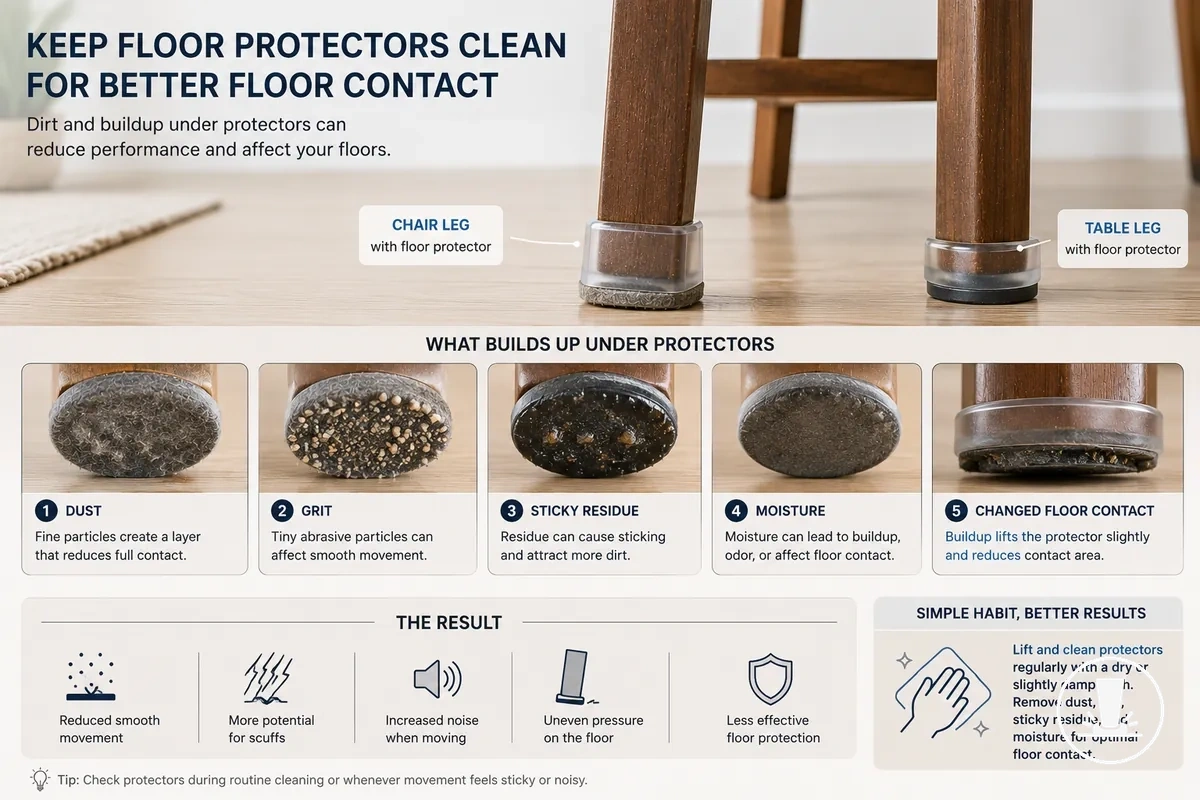
The image identifies common conditions that signal a cleaning need, including debris buildup on floor-contact surfaces, residue around attachment areas, and contamination that may become trapped between the protector and the floor. These conditions matter because floor-contact behavior is influenced by the cleanliness of the surface that touches the floor.
Clean now: Visible dust, grit, sticky residue, moisture, or trapped particles on the floor-contact surface are clear indicators that cleaning is appropriate. Dirt buildup can alter the contact surface and may contribute to marks, noise, or rough movement when furniture is repositioned.
Inspect further: If the protector appears clean but furniture movement changes, attachment points seem less secure, or contamination may be present beneath the contact surface, further inspection can help determine whether cleaning is still needed. The outcome depends on material type, furniture load, floor conditions, and overall wear.
- Dust or grit is visible on the floor-contact surface.
- Sticky residue collects debris around the protector.
- Moisture, dirt, or residue remains on the contact area.
- Furniture movement feels rougher, noisier, or less consistent.
- The protector shows contamination that may affect floor contact.
No single cleaning schedule applies to every furniture floor protector. Cleaning needs depend on visible condition, furniture movement, environmental debris, floor-contact exposure, and material sensitivity.
Dirt, dust, and grit on floor-contact surfaces
Floor-contact surface debris changes the condition of the protector by creating a layer between the protector and the floor. Visible dust, dirt, and grit are direct signs that the contact surface is no longer clean and may influence how the protector interacts with the floor.
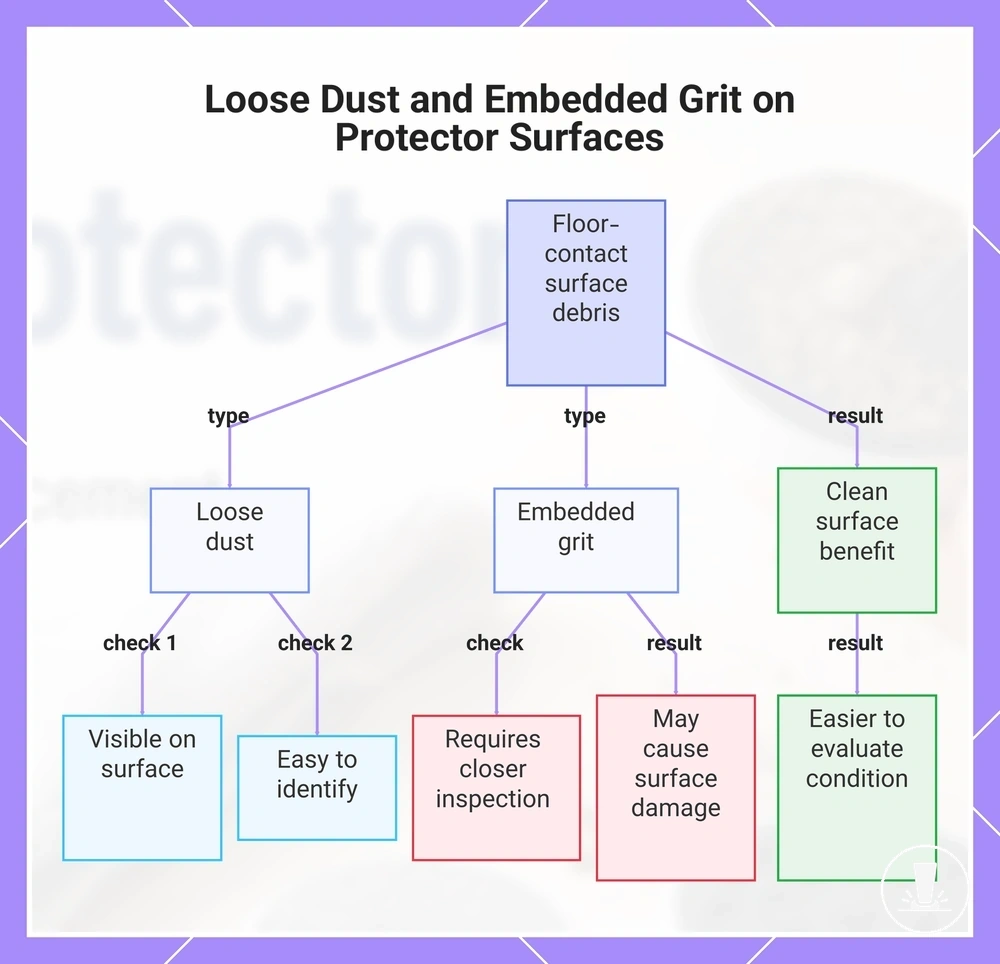
Loose dust typically remains on the surface and is usually easy to identify during inspection. Embedded grit differs because abrasive particles can become trapped within the contact area, where they may remain present during furniture movement.
Debris condition affects the floor-contact surface directly. When grit, sand-like particles, or compacted dirt become embedded, the contact surface may behave differently during movement. In certain situations, trapped abrasive particles may contribute to scuffs, scratches, or noise, although these outcomes depend on the floor material, particle type, and movement conditions.
Common examples include household dust resting on the surface and grit carried in from outdoor areas. Loose debris is often visible immediately, while embedded particles may require closer inspection because they can blend into the floor-contact surface.
A clean floor-contact surface makes it easier to distinguish normal wear from debris-related conditions and to evaluate the actual condition of the protector.
This chart shows the two main types of floor-contact surface debris (loose dust and embedded grit), their detectable characteristics, and the benefit of a clean surface for accurate evaluation.
Sticky buildup around adhesive pads
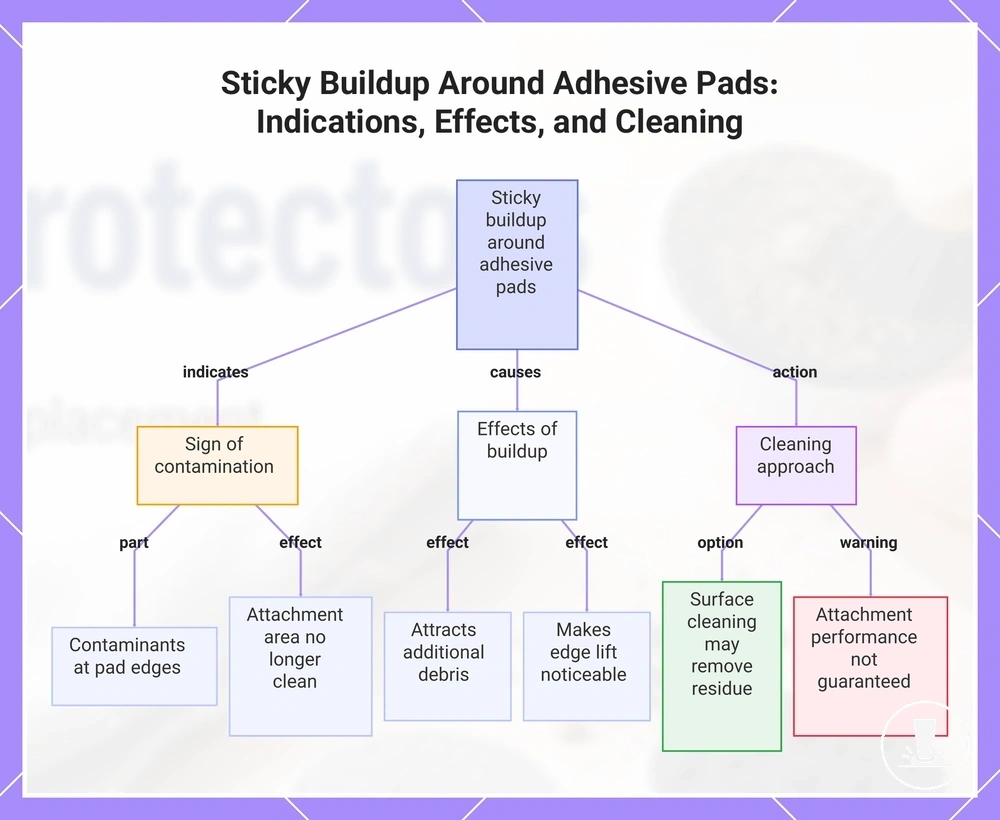
When sticky buildup forms around an adhesive pad, contamination is often collecting on or near the adhesive area. Residue, dust, and dirt can gather at the pad edges, and the buildup may indicate that the attachment area is no longer clean.
Sticky buildup can attract additional debris over time. As dust and dirt collect on the residue, the affected area may become more noticeable and can make it harder to distinguish between surface contamination and changes in the adhesive pad itself.
Adhesive pad contamination is sometimes accompanied by edge lift or localized dirt accumulation. When residue collects around exposed edges, the attachment area may appear uneven or less secure, although the condition and cause can vary by environment, use, and surface exposure.
Cleaning may help remove surface contamination when the buildup is limited to dirt and residue. Whether cleaning improves attachment depends on the condition of the adhesive area and the extent of contamination present.
- Sticky residue can collect dust and dirt.
- Dirt buildup can make edge lift easier to notice.
- Contamination may affect the cleanliness of the attachment area.
- Surface cleaning may remove residue, but results can vary.
Sticky buildup is a useful sign of contamination. It can help identify areas that may need inspection or cleaning without indicating that attachment performance will necessarily be restored.
This chart outlines what sticky buildup indicates about contamination, its effects on the adhesive area, and the potential cleaning response.
How to clean furniture floor protectors safely
Cleaning furniture floor protectors safely starts with removing loose debris before introducing moisture. The safest sequence is to clear dust and grit, clean the contact surface with controlled moisture when appropriate, inspect the protector, allow it to dry, and then evaluate whether it is suitable for continued use.
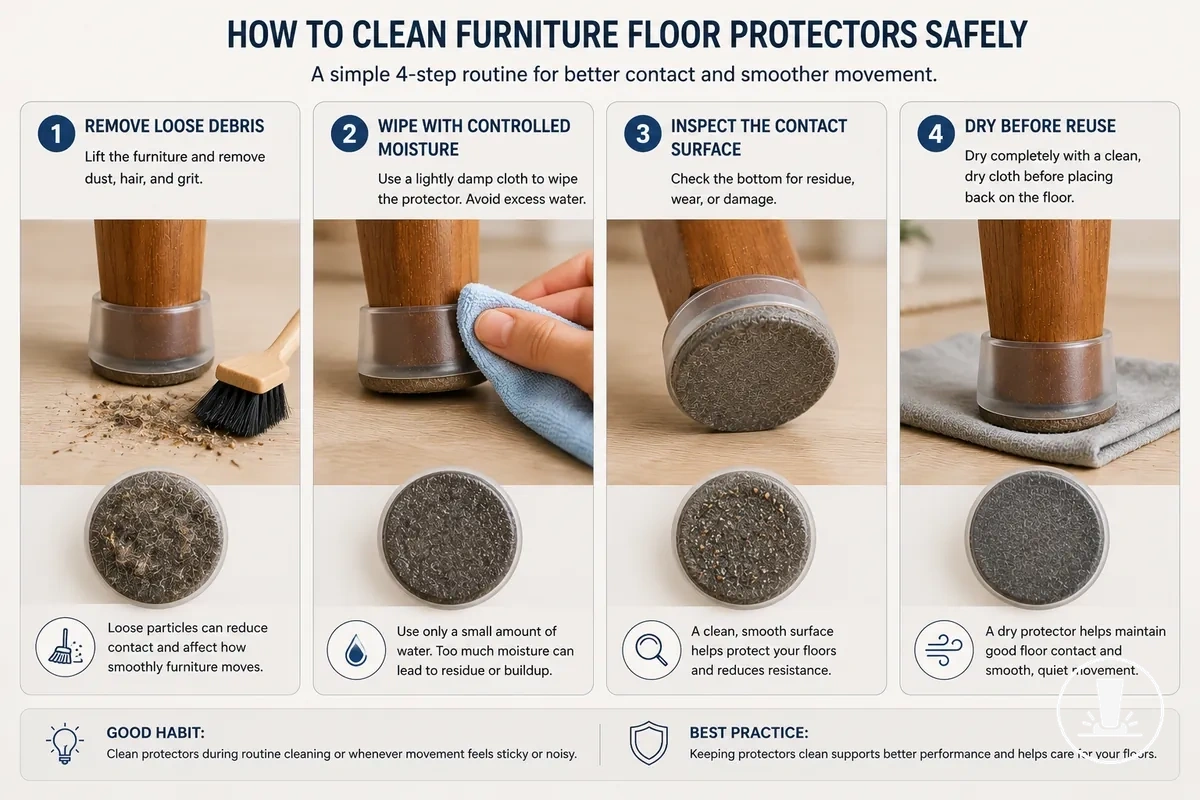
The image illustrates the cleaning sequence from debris removal through inspection and drying, helping show how each step fits into the overall process before the protector returns to normal use.
- Remove loose dust, dirt, and grit from the floor-contact surface and surrounding areas.
- Clean visible residue using a lightly dampened method that is appropriate for the protector material and attachment type.
- Inspect the contact surface, edges, and attachment area for remaining debris or contamination.
- Allow the protector to dry before returning it to normal floor contact.
- Check the condition of the protector and determine whether continued use appears appropriate.
The order matters because removing debris first reduces the chance of moving abrasive particles across the contact surface during cleaning. Inspection after cleaning can also reveal contamination that was less visible beneath dust or residue.
Controlled moisture is generally preferred over excessive wetting because material sensitivity and adhesive condition can vary. Drying before reuse helps separate temporary moisture effects from the actual condition of the furniture floor protector.
Following a structured cleaning sequence can help maintain a cleaner contact surface and may support smoother movement when contamination is the primary issue, although results depend on protector condition, material characteristics, and the extent of wear.
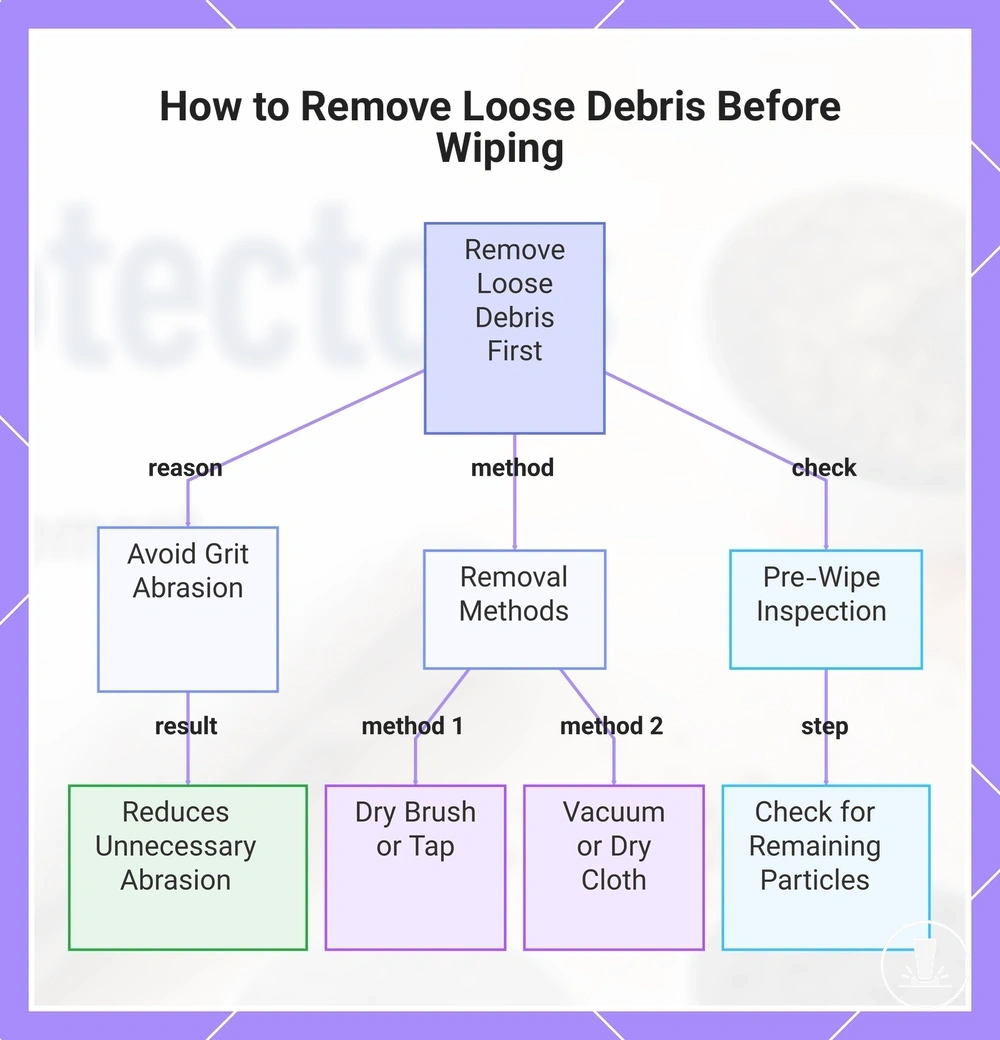
Remove loose debris before wiping
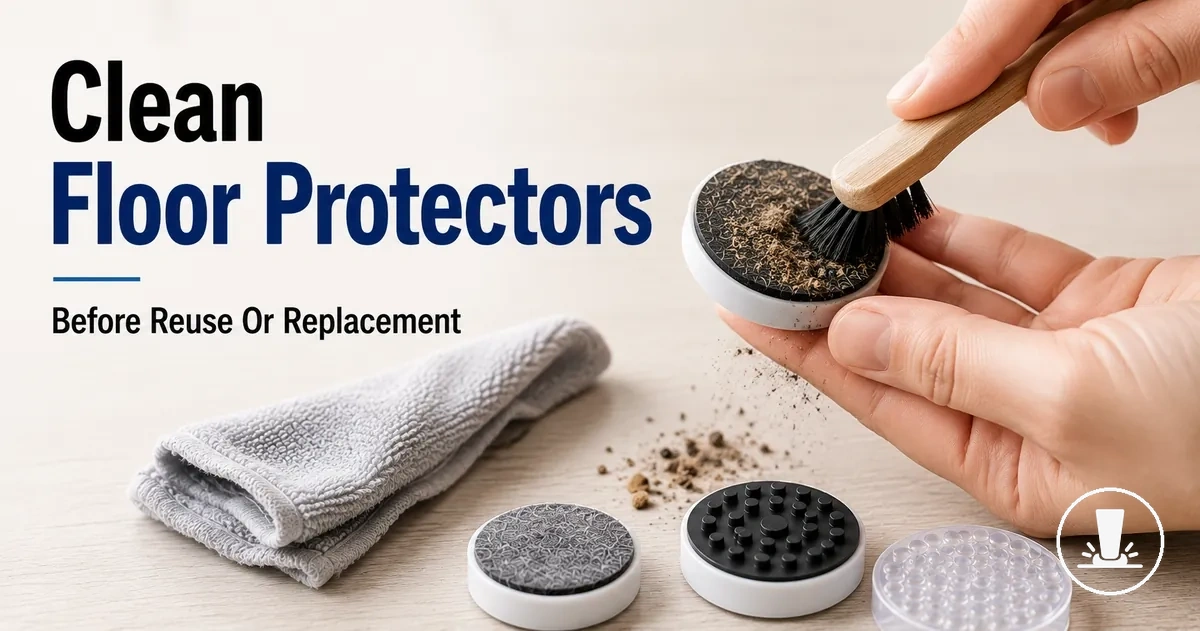
Removing loose debris is the first cleaning step because dust, dirt, and grit should be cleared from the floor-contact surface before wiping begins. Brushing, tapping, vacuuming, or using a dry cloth helps remove loose particles instead of moving them across the protector during cleaning.
Loose debris can remain mobile on the contact surface. When wiping starts before debris removal, abrasive particles may be dragged across the surface, although the risk depends on debris texture and the condition of the furniture floor protector.
- Brush away loose dust with a dry method first.
- Remove visible grit before introducing moisture.
- Check the contact surface for remaining particles before wiping.
This step focuses on controlling loose debris before surface cleaning. Clearing particles first creates a cleaner surface for wiping and may reduce unnecessary abrasion when grit is present.
This chart explains why and how to remove loose debris from furniture floor protectors before wiping to prevent abrasion.
Clean residue without soaking the protector
Cleaning residue without soaking the protector starts with using only a controlled amount of moisture on the affected area. Residue should be loosened gradually so the contact surface can be cleaned without unnecessarily saturating the protector.
Moisture level is the primary consideration during this step. Excess moisture may reach sensitive materials or attachment areas, while a lightly damp cleaning approach can help address surface residue when conditions allow.
Wipe the residue gently and check the surface as cleaning progresses. If residue remains, additional light cleaning may be appropriate, but cleaning success depends on the type of residue, the protector material, and the extent of buildup.
Adhesive pads and compressed felt can be more sensitive to saturation than hard surface components. The goal is to clean the residue while limiting moisture exposure rather than soaking the protector.
Dry protectors fully before reuse
Furniture floor protectors should be fully dry before reuse because moisture remaining in the protector can affect floor contact and post-cleaning condition. Drying readiness depends on the moisture state of the protector rather than a fixed drying time.
Moisture retained in the contact surface may increase the chance of residue transfer or floor marking when the protector returns to use. The effect can vary based on the protector material, the amount of remaining moisture, and the floor surface.
Protector material influences drying readiness. Felt and fabric-backed protectors may retain moisture within the material, while adhesive areas may need to appear dry before normal floor contact resumes.
- Check for visible moisture.
- Confirm the contact surface is dry.
- Inspect adhesive areas before reuse.
A fully dry protector provides a clearer indication of reuse readiness and helps distinguish moisture-related effects from the protector's actual condition.
Cleaning methods by protector material
Protector material determines how cleaning should be approached because different materials respond differently to moisture exposure, residue removal, and reuse conditions. Material sensitivity should guide the cleaning method, particularly when the protector includes absorbent, flexible, or adhesive-related components.
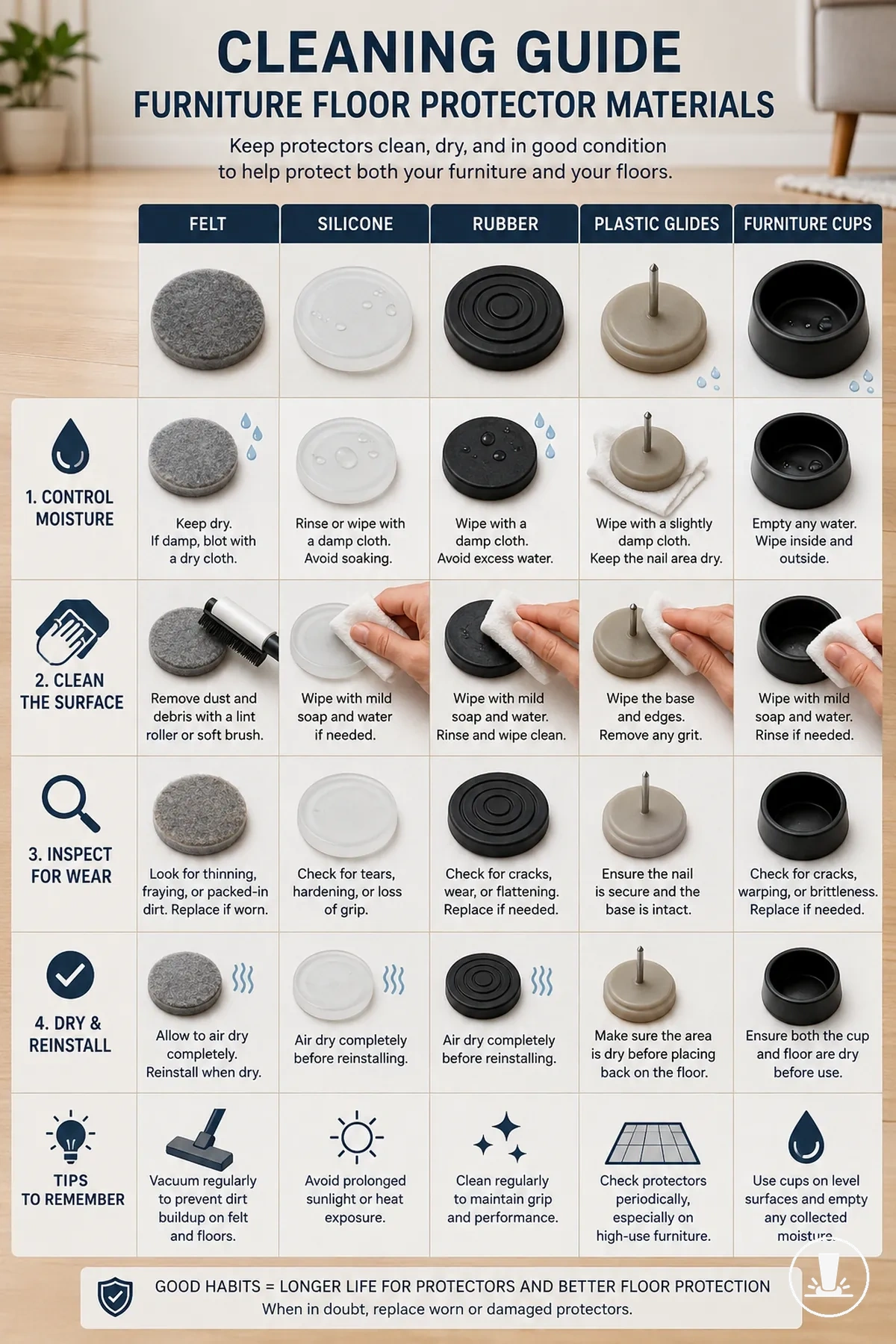
The image highlights how cleaning considerations can vary between protector materials and why the same cleaning method may not be appropriate for every protector type.
Material differences are most relevant when selecting a cleaning method, evaluating moisture tolerance, and determining whether additional inspection may be useful before reuse.
| Protector Material | Cleaning Approach | Material Consideration |
|---|---|---|
| Felt | Light surface cleaning with limited moisture | May retain moisture and debris within the material |
| Silicone | Surface wiping and residue removal | Cleaning tolerance may vary by design and condition |
| Rubber | Surface cleaning focused on dirt and residue | Condition may vary with wear and exposure |
| Plastic glides | Clean the contact surface and inspect for contamination | Surface debris may affect floor contact |
| Furniture cups | Remove accumulated dirt and clean contact areas | Debris can collect inside or beneath the cup |
These material categories provide a side-by-side comparison for cleaning-method selection. Individual protectors within the same material group may respond differently depending on construction, condition, contamination level, and previous use.
Felt furniture pads
Felt furniture pads collect dust, hair, grit, and other particles within felt fibers, so cleaning focuses on removing surface and embedded debris without unnecessarily affecting the material. Light cleaning can help when contamination is the primary issue, but the condition of the felt remains a separate consideration.
Felt fibers can often be brushed or cleared of loose debris during routine maintenance. Compressed felt may continue to hold particles after cleaning, and retained debris can vary with use and environmental conditions.
Adhesive backing is a local condition that may require inspection because moisture or contamination around the attachment area can affect how the pad remains secured. Cleaning felt fibers does not necessarily indicate that the adhesive area is in the same condition.
Reuse after cleaning depends on the condition of the felt furniture pad. If the felt remains intact and contamination can be removed, continued use may be appropriate. If the felt is heavily compressed, worn, torn, or no longer provides a consistent contact surface, cleaning may not change that condition.
The key distinction is between brushable debris and felt condition. Surface contamination can often be removed, while wear-related changes to felt fibers are separate from the cleaning process.
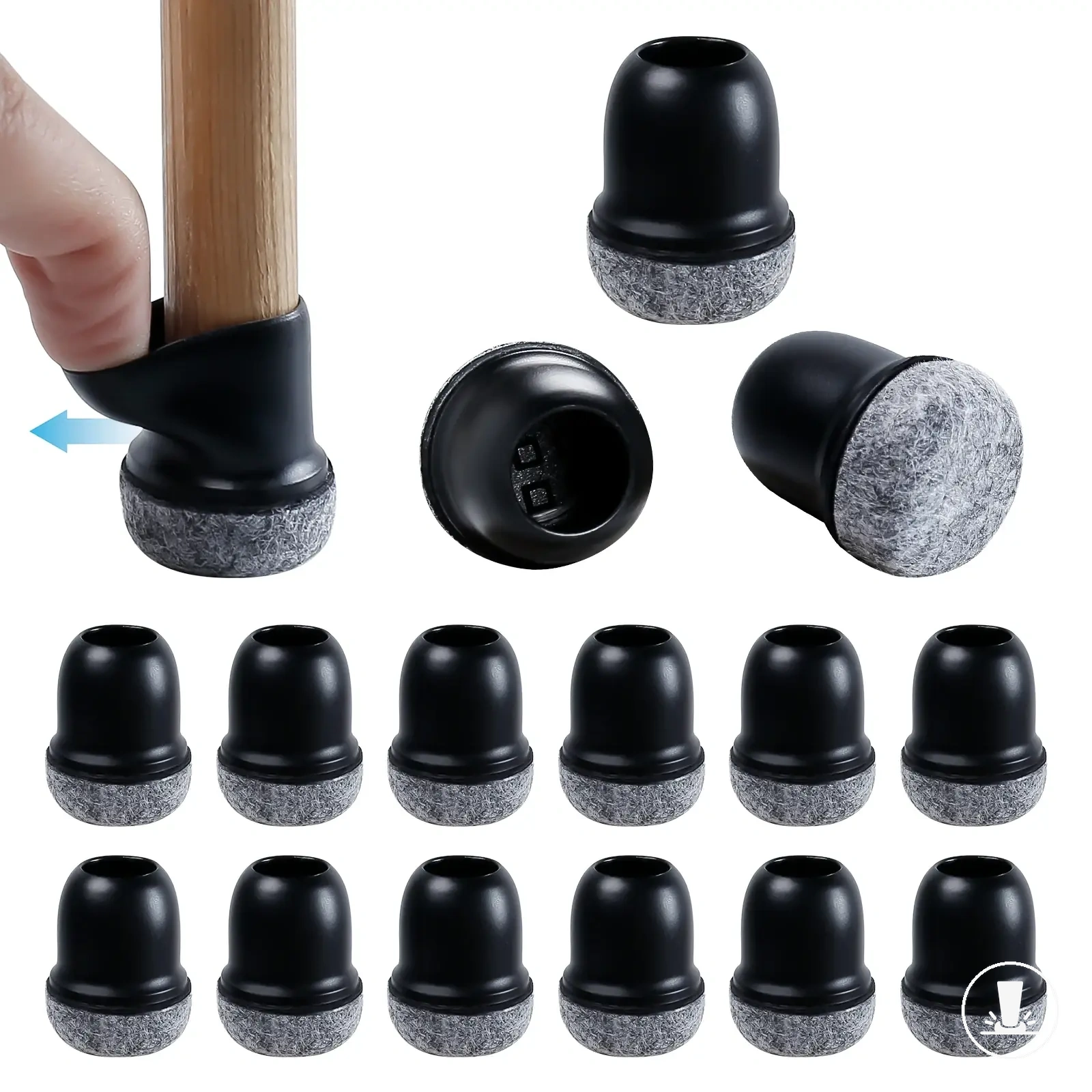
Washable silicone chair leg protectors
Washable silicone chair leg protectors can often be cleaned by removing dirt, dust, and residue from the silicone body, but the appropriate cleaning method depends on the protector's construction. Washability should be evaluated according to the materials attached to the silicone cap rather than assuming all designs respond the same way to cleaning.
Silicone caps typically allow surface cleaning because the silicone body does not collect debris in the same way as fiber-based materials. Dirt and residue can often be wiped away, while continued reuse depends on overall condition, cleanliness, and how the protector fits after cleaning.
Felt-bottom caps require additional attention because the felt layer may respond differently to moisture than the silicone portion. A cleaning method that is suitable for the silicone body may not be equally suitable for the felt layer, and drying needs can vary when both materials are present.
Machine washing, soaking, and reuse depend on the specific protector design. Some washable silicone chair leg protectors may tolerate more intensive cleaning methods, while others may be better suited to gentle surface cleaning followed by drying and inspection.
The key distinction is between cleaning the silicone body and maintaining any attached felt component. Silicone surfaces can often be cleaned directly, while felt-bottom sections may require a more cautious approach depending on their condition and construction.
Rubber pads, plastic glides, and furniture cups
Rubber pads, plastic glides, and furniture cups require different cleaning attention because each uses a different floor-contact surface. Cleaning focuses on removing residue, grit, and trapped debris that may influence how the protector contacts the floor.
Rubber pads can collect dirt and surface residue on the contact area. When residue builds up, the contact surface may behave differently during movement, and marks or transfer can depend on the floor surface, residue type, and overall condition of the rubber.
Plastic glides use a hard contact surface that can accumulate dust and embedded grit. Cleaning helps remove abrasive particles that may remain between the glide and the floor, and scratching risk can depend on the debris present rather than the plastic surface alone.
Furniture cups can trap dirt beneath or inside the cup where pressure is concentrated. Debris in these areas may affect floor contact, and the outcome depends on the amount of contamination, the cup condition, and the floor surface beneath it.
The key distinction is residue behavior and contact-surface hardness. Rubber pads are commonly associated with residue accumulation, plastic glides require attention to trapped grit, and furniture cups benefit from cleaning areas where dirt can collect under concentrated contact points.
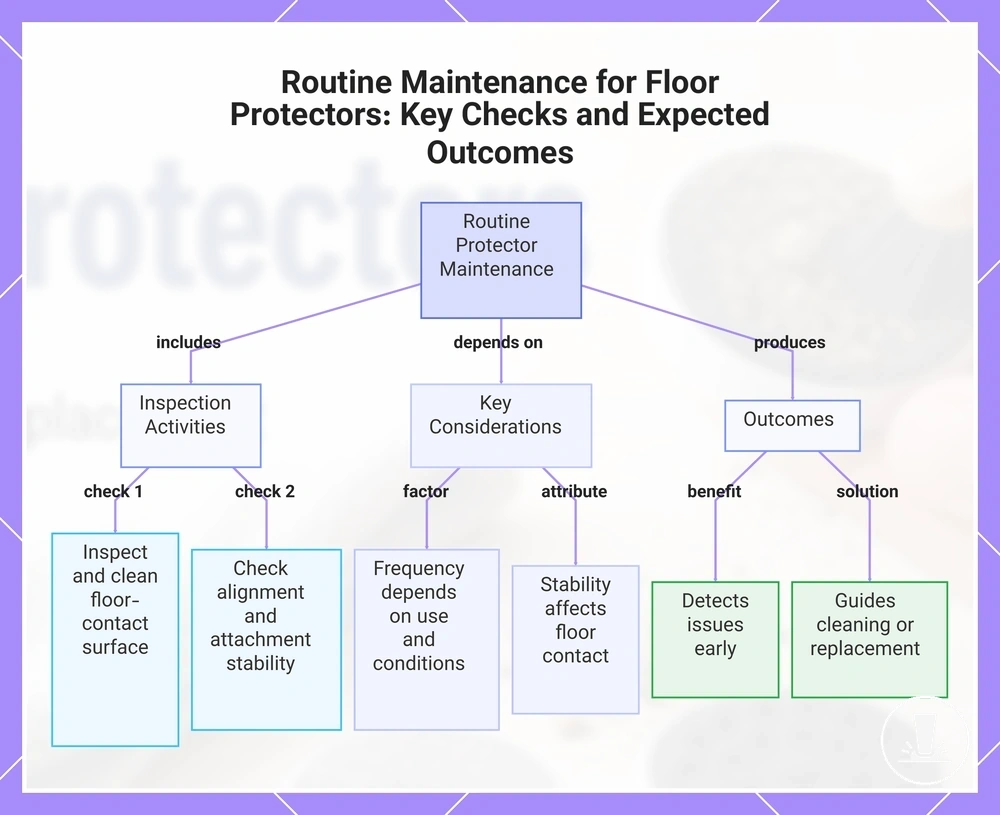
Routine maintenance that keeps protectors working
Routine maintenance that keeps protectors working focuses on recurring inspection and condition checks between cleaning and replacement. The goal is to identify debris buildup, attachment changes, alignment issues, or furniture-leg conditions that may affect normal floor contact over time.
Routine maintenance is most effective when it combines observation with simple corrective actions. Maintenance frequency depends on furniture use, floor conditions, traffic levels, and the type of protector being used. Regular checks may help identify developing issues before they become more noticeable.
- Inspect the floor-contact surface for debris, residue, wear, or contamination.
- Check whether the protector remains aligned with the furniture leg.
- Confirm the furniture leg is clean where the protector attaches or contacts.
- Look for movement, loosening, edge lift, or other signs of attachment instability.
- Remove dirt or buildup that may accumulate between inspections.
Alignment and attachment stability are important maintenance attributes because a protector that shifts position may contact the floor differently than intended. The effect depends on protector design, furniture movement, and the condition of the attachment area.
Routine maintenance does not guarantee a specific lifespan or performance outcome. However, consistent inspection and condition checks can help determine whether protectors remain suitable for continued use and whether additional cleaning or future replacement may eventually be needed.
This chart outlines the key inspection activities, influencing factors, and outcomes of routine maintenance for floor protectors.
Check the contact surface after cleaning
The contact surface should be inspected after cleaning to determine whether debris, residue, or visible wear remains before the protector returns to normal use. Post-cleaning verification helps determine whether the contact surface appears suitable for continued floor contact.
- Check whether the contact surface feels reasonably smooth and free from loose debris.
- Inspect for embedded grit that may remain trapped after cleaning.
- Look for flattening that changes the shape or consistency of the contact area.
- Check for cracks, splits, or other visible surface damage.
- Confirm that residue has been removed and is not collecting on the contact surface.
If the contact surface appears clean and free from significant defects, continued use may be appropriate. If embedded grit, heavy flattening, cracks, or persistent residue remain, suitability for continued use depends on the extent of the condition and its effect on floor contact.
Keep protectors centered under furniture legs
Protector position should stay centered under the furniture leg so load and floor contact remain aligned during use. After cleaning or inspection, a shifted protector should be repositioned before normal use continues.
A centered protector helps keep contact concentrated beneath the furniture leg rather than along one edge of the protector. If the protector sits off-center or repeatedly shifts, uneven wear, noise, or attachment-related issues may develop depending on the protector type, floor surface, and furniture movement.
Repeated shifting is a maintenance signal that can justify a closer inspection of the contact surface, attachment area, or furniture leg. The cause may vary, so recurring movement should be evaluated rather than ignored.
Simple examples include an adhesive pad that drifts toward one edge of a chair leg or a furniture cup that no longer sits directly beneath the leg. In these situations, centering helps restore contact alignment, while continued stability depends on protector condition and ongoing use.
Clean furniture legs before reattaching pads
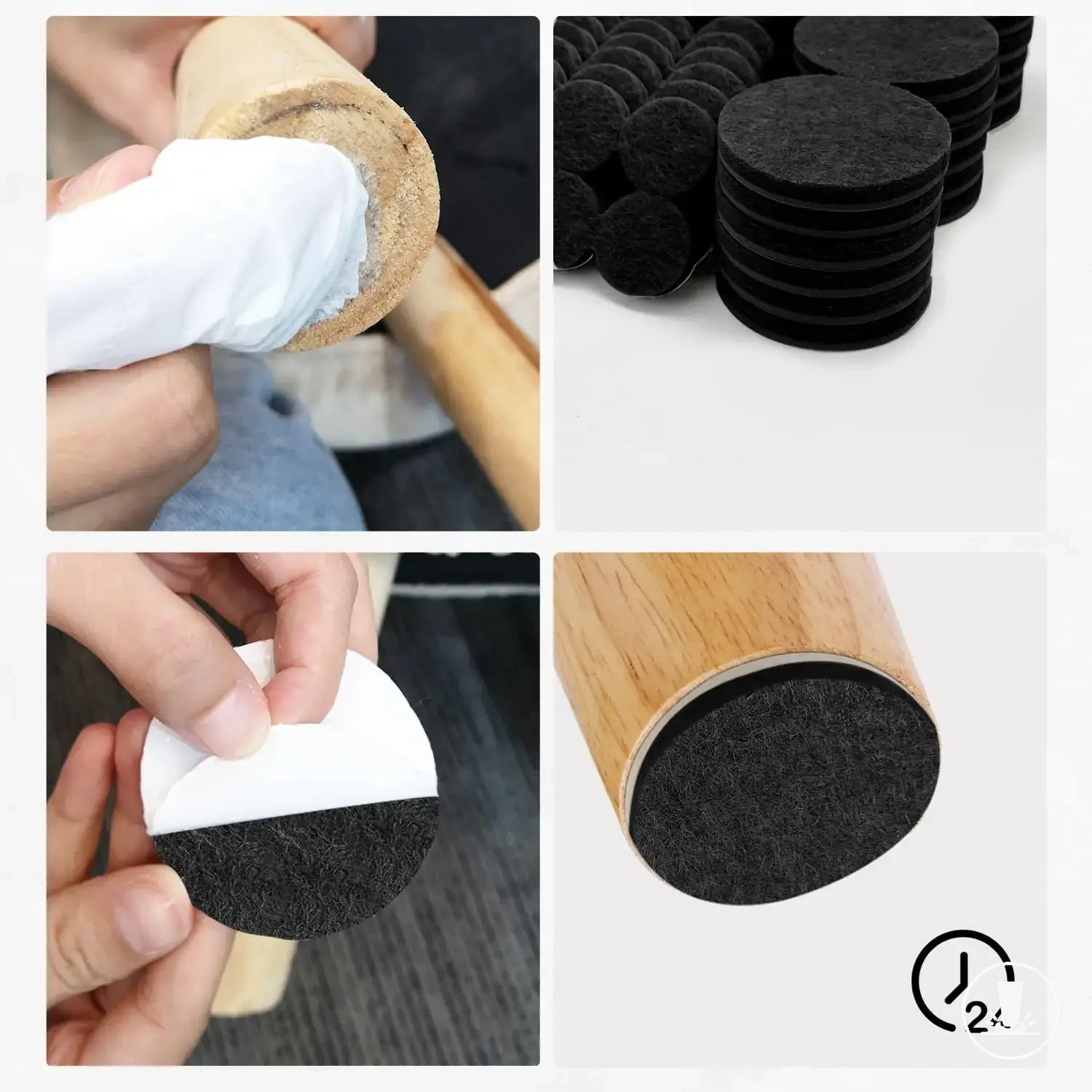
Furniture leg surfaces should be clean and dry before pads are reattached because dust, old adhesive, moisture, and uneven surfaces can affect pad contact. Surface preparation helps create a more suitable attachment area before reattachment begins.
- Remove dust, dirt, and loose particles from the furniture leg surface.
- Clear old adhesive residue from the previous attachment area.
- Allow moisture to dry before reattaching the pad.
- Inspect the furniture leg surface for uneven areas that may affect contact.
Old adhesive and surface contamination can interfere with direct contact between the pad and the furniture leg. If residue remains, adhesion behavior may differ from that of a cleaner attachment surface.
Furniture leg surface condition is only one attachment factor. Cleaning the surface may support reattachment, but whether a pad remains attached over time can depend on pad condition, furniture movement, and the characteristics of the attachment method.
Problems caused by dirty furniture floor protectors
When marks appear on the floor, movement becomes noisy, adhesion seems weaker, or floor contact feels uneven, dirty furniture floor protectors may be a contributing cause. These symptoms are visible signs, but dirt or residue should be confirmed through cleaning and inspection because other conditions can produce similar results.
| Visible Symptom | Possible Dirt-Related Condition | Recommended Next Action |
|---|---|---|
| Marks on the floor | Dirt, residue, or trapped particles on the contact surface | Clean the protector and inspect the contact area |
| Noise during movement | Debris between the protector and floor surface | Remove contamination and recheck contact |
| Weak adhesion | Dust, residue, or contamination near the attachment area | Inspect and clean the attachment surface |
| Uneven contact | Accumulated debris or residue affecting the contact surface | Clean and inspect for remaining contamination |
Dirty furniture floor protectors can contribute to these symptoms, but marks, noise, or attachment issues do not always originate from dirt. If symptoms remain after cleaning and inspection, wear, damage, or another condition may be involved. For issues focused specifically on floor marking behavior, see floor protectors leaving marks.
Cleaning is usually the first diagnostic step because it helps separate dirt-related conditions from wear-related conditions. After cleaning, inspection can help determine whether the protector appears suitable for continued use or whether replacement may need consideration.
Marks, noise, and rough movement after dirt buildup
When marks appear, movement becomes noisy, or furniture starts dragging across the floor, dirt buildup on the contact surface may be changing friction and contact texture. These symptoms can occur when debris, residue, or trapped particles collect between the floor protector and the floor surface.
Dirt buildup can change how the protector moves across the floor by creating uneven contact points or altering surface texture. As contamination accumulates, movement may feel less consistent, resistance may increase, and sound may change during sliding. The extent of these effects depends on the amount of buildup, the protector condition, and the floor surface involved.
- Visible marks may occur when residue or particles remain on the contact surface.
- Noise may develop when debris changes the contact texture during movement.
- Dragging or rough movement may indicate contamination affecting floor contact.
Inspection is useful because similar symptoms can have different causes. Dirt buildup is one possible explanation, while material mismatch or wear may also contribute to changes in movement, sound, or floor contact. Cleaning and rechecking the contact surface can help determine whether contamination is involved.
Loose pads after adhesive contamination
When pads become loose after cleaning or routine use, adhesive contamination may be reducing the bond between the pad and the furniture leg. Dust, oily residue, old adhesive buildup, or moisture can interfere with surface contact and may contribute to dirt-related loosening.
Adhesive contamination affects the attachment surface rather than the pad itself. When contamination remains between the adhesive and the furniture leg, the bond may become less consistent, which can contribute to edge lifting or gradual movement. The extent of loosening depends on the amount of contamination and the condition of the attachment area.
- Dust can reduce direct adhesive contact.
- Oily residue may interfere with surface bonding.
- Old adhesive buildup can create an uneven attachment surface.
- Moisture may affect adhesion until surfaces are fully dry.
Inspection helps determine whether contamination is contributing to the problem or whether another attachment issue may be involved. If loosening continues after the attachment area is cleaned, the condition may extend beyond contamination-specific bond failure. For broader attachment-related causes, see floor protectors falling off.
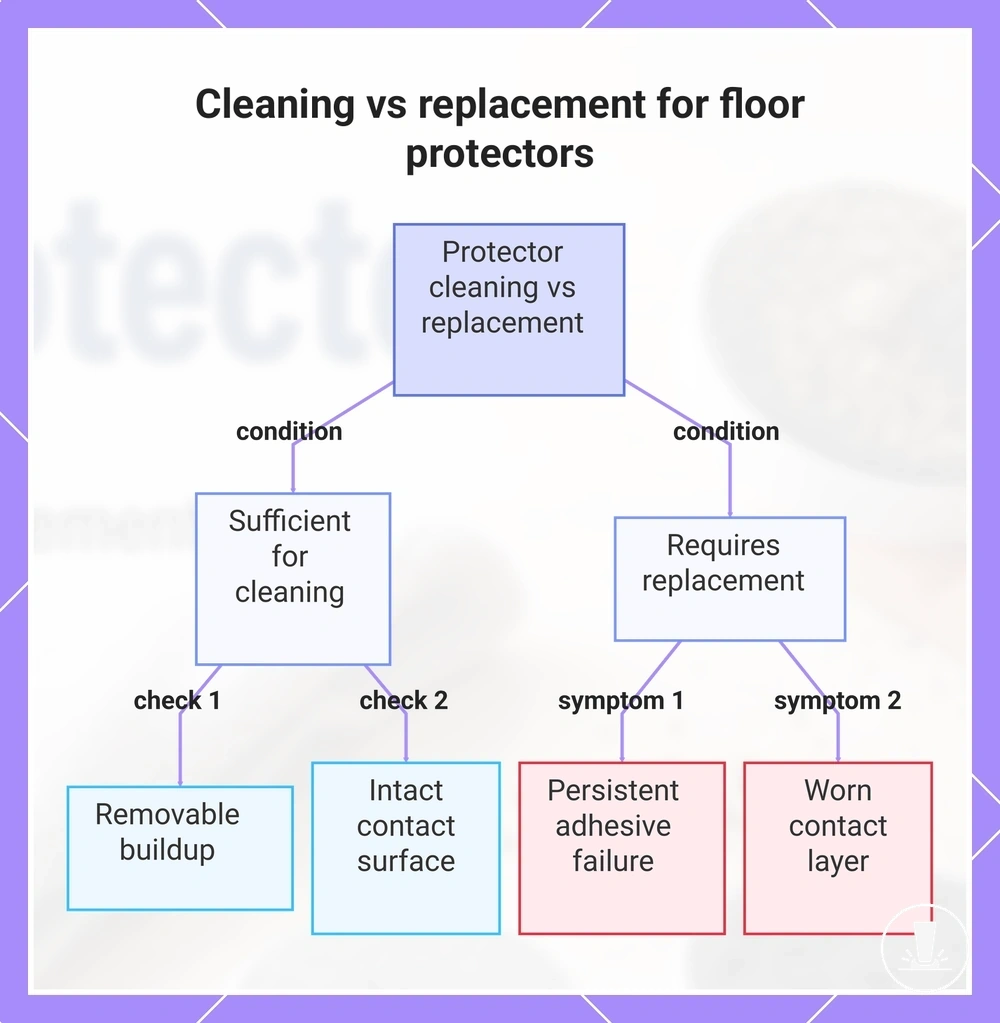
When cleaning is not enough
Cleaning reaches its limit when protector condition shows visible damage rather than removable buildup. Dirt, dust, and residue can often be cleaned away, but a worn contact layer, cracks, adhesive failure, or conditions that may affect safe floor contact indicate a different decision point.
Protector condition is the primary criterion. If cleaning removes contamination and the contact surface remains intact, continued use may be appropriate. When visible cracks, missing material, severe wear, or recurring attachment failure remain after cleaning, the issue extends beyond surface contamination.
Replacement-level conditions are identified by damage that cleaning cannot address. If adhesive failure continues after contamination is removed, if the contact layer remains worn, or if floor-contact quality raises concern, the decision may move closer to when to replace protectors.
- Cleaning may be sufficient when buildup is the main issue.
- Visible cracks indicate material damage.
- Persistent adhesive failure may continue after cleaning.
- A worn contact layer may affect floor contact even when clean.
Cleaning and replacement are separate decisions. A dirty protector does not automatically require replacement, and a cleaned protector may remain suitable for use when visible damage and attachment-related concerns are not present.
This chart shows the key condition that determines whether cleaning is sufficient or replacement is needed for floor protectors, based on visible damage and attachment issues.
Replace worn felt, cracked caps, or damaged glides
Visible damage is a maintenance signal for worn felt, cracked caps, or damaged glides because cleaning cannot restore material that has already deteriorated. When damage remains visible after contamination is removed, protector condition should be evaluated separately from cleaning needs.
Worn felt is identified by thinning, compression, fraying, or missing sections within the contact layer. These conditions indicate contact-layer deterioration, and whether continued use remains appropriate depends on the extent of the wear and the condition of the remaining felt surface.
Cracked caps show visible material separation within the protector body. Cracks are a form of physical damage rather than surface contamination, and their effect depends on whether the protector can still maintain stable contact with the furniture leg and floor.
Damaged glides may show chipped edges, surface breaks, deformation, or deterioration of the contact surface. These damage patterns can change floor contact characteristics even when dirt and debris have been removed.
- Worn felt indicates contact-layer deterioration.
- Cracked caps indicate material damage.
- Damaged glides indicate contact-surface deterioration.
- Visible damage should be assessed separately from removable buildup.
The key distinction is between contamination that can be cleaned away and damage that remains visible after cleaning. Damage patterns help identify maintenance states that may require a different decision than routine cleaning alone.
Use replacement pads when residue affects fit or floor safety
Replacement pads may be justified when residue affects fit, attachment quality, or floor-contact conditions that cleaning does not adequately restore. The replacement decision depends on whether contamination continues to interfere with normal pad contact after cleaning.
Replacement pads should be selected according to fit-related conditions. If residue has altered pad shape, affected attachment surfaces, or reduced contact consistency, a replacement pad may provide a more suitable contact condition than continued reuse.
Adhesive condition and floor-contact surface quality are additional selection criteria. When residue remains embedded in the contact layer or continues to affect attachment behavior, replacement may be considered if cleaning no longer restores stable floor contact.
Furniture-leg match remains part of the replacement decision because pad dimensions, attachment style, and contact area should remain appropriate for the furniture leg. For broader maintenance questions that relate to protector condition and replacement decisions, see furniture floor protectors FAQ.
Replacement pads are most relevant when residue affects fit, attachment quality, or floor-contact characteristics. Whether replacement is necessary depends on the remaining condition of the existing pad and whether cleaning leaves unresolved contact or floor-safety concerns.
The products below are useful examples for comparing available options. Before buying, check that the compatibility criteria, key features, and product details match your needs.