Furniture Floor Protectors Guide for Safer Furniture-to-Floor Contact
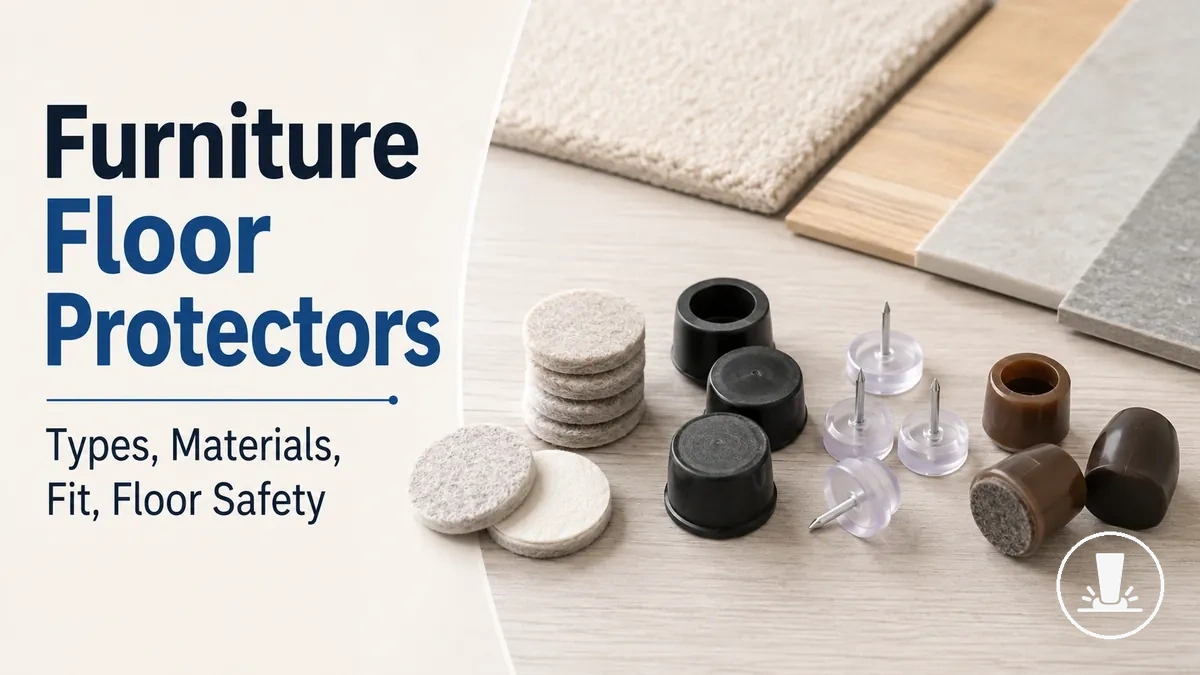
Furniture floor protectors are contact-layer accessories that sit between furniture and the floor to help manage furniture-to-floor contact risks. Furniture pads, glides, caps, and sliders are used to change how chair legs and other furniture bases interact with a floor surface. Their suitability often depends on floor finish, furniture weight, leg shape, attachment method, material, and fit at the contact point.
Furniture Floor Protectors Guide for Safer Furniture-to-Floor Contact uses the decision factors below to organize protector choices by floor, furniture leg, material, movement, and use case.
- Floor finish and surface sensitivity
- Chair legs or furniture leg shape, fit, attachment, and stability
- Protector material, grip, softness, and marking risk
- Furniture movement patterns, including sliding needs
- Furniture weight and contact pressure on the floor
Different floor and furniture combinations can lead to different outcomes. A protector that may help reduce scratches on one floor finish may perform differently when furniture weight, chair leg shape, attachment, or material changes. Risks such as dents, noise, marks, and sliding can also depend on maintenance condition, surface cleanliness, and how securely the protector fits.
Furniture floor protectors are most useful when selected according to the contact risk and movement needs of a specific situation. Furniture pads may focus more on cushioning pressure, while glides and sliders may focus more on controlled movement. Pads, caps, glides, cups, and sliders can overlap in purpose, but they differ in contact behavior and movement control. Choosing among them depends on the floor finish, furniture design, material characteristics, and fit requirements before moving into the basic definition of each protector type.
What Furniture Floor Protectors Do
Furniture floor protectors are contact layer accessories placed between furniture legs and flooring to reduce floor-contact risks. Furniture floor protectors create a contact barrier that can help reduce direct wear, friction, and pressure at the point where furniture meets the floor.
Furniture floor protectors help manage common floor-contact outcomes. To better understand what furniture floor protectors do, it is useful to view them as a contact layer that changes how furniture legs interact with flooring during use or movement. Scratches, dents, noise, sliding, and marks may be reduced when protector material, fit, cleanliness, and contact conditions are appropriate.
The main outcomes below clarify what furniture floor protectors may help reduce:
- Scratches caused by furniture movement
- Dents created by concentrated pressure
- Noise from furniture contact or movement
- Unwanted sliding across flooring surfaces
- Surface marks from direct furniture-to-floor contact
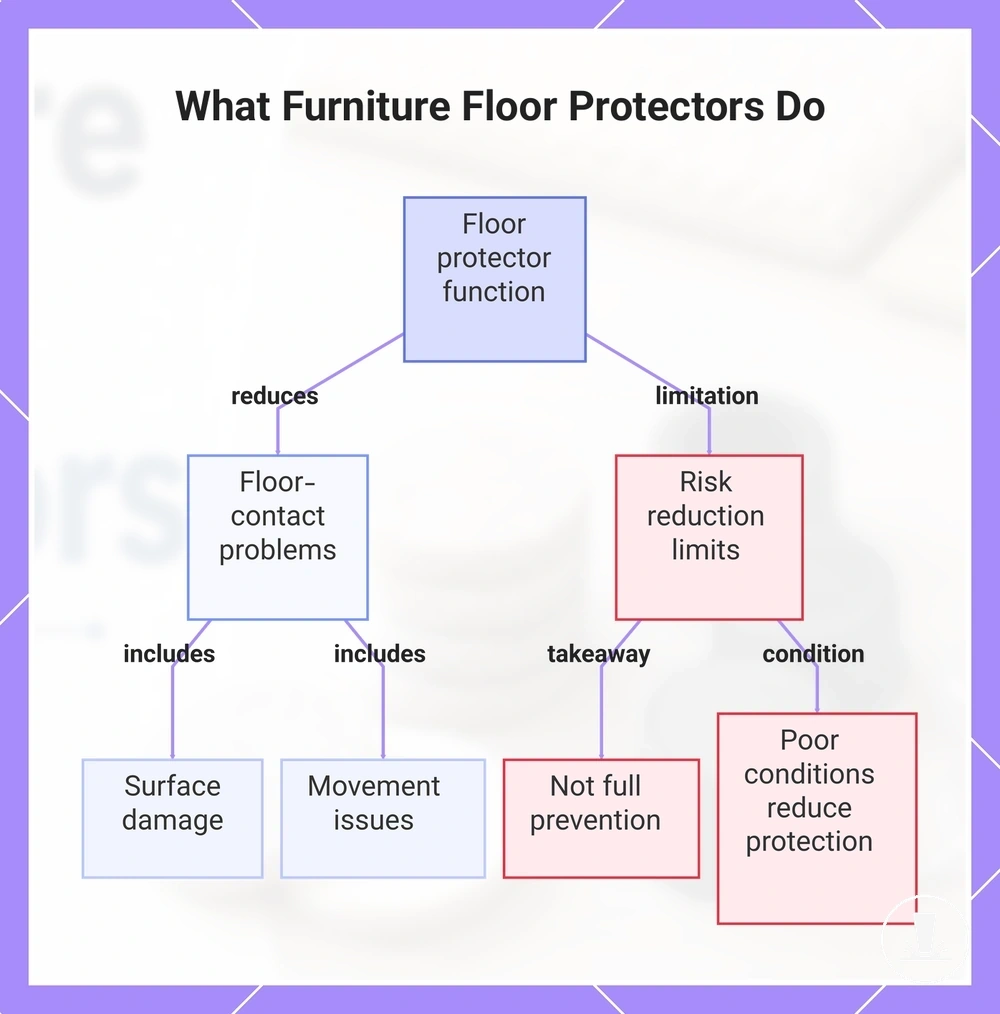
Furniture floor protectors reduce risk but do not fully prevent every floor-contact problem. A wrong fit, dirty surface, unsuitable material, or poor contact condition can leave remaining risk. Furniture pads, leg pads, and other floor protectors are intended to lower floor-contact risks rather than provide guaranteed safety.
This chart shows what furniture floor protectors do, the main floor-contact problems they reduce, and the limitations of their protection.
Furniture Pads, Glides, Caps, Cups, and Sliders
Pads, glides, caps, cups, and sliders are the main furniture floor protector families, and each is designed to manage a different contact or movement condition. Their differences are primarily related to attachment method, furniture movement, contact area, and how furniture interacts with the floor during use.
Furniture Pads, Glides, Caps, Cups, and Sliders can be compared by how they attach to furniture and how they manage contact or movement. The image below highlights the visible differences among these protector categories and the use conditions they are commonly associated with.
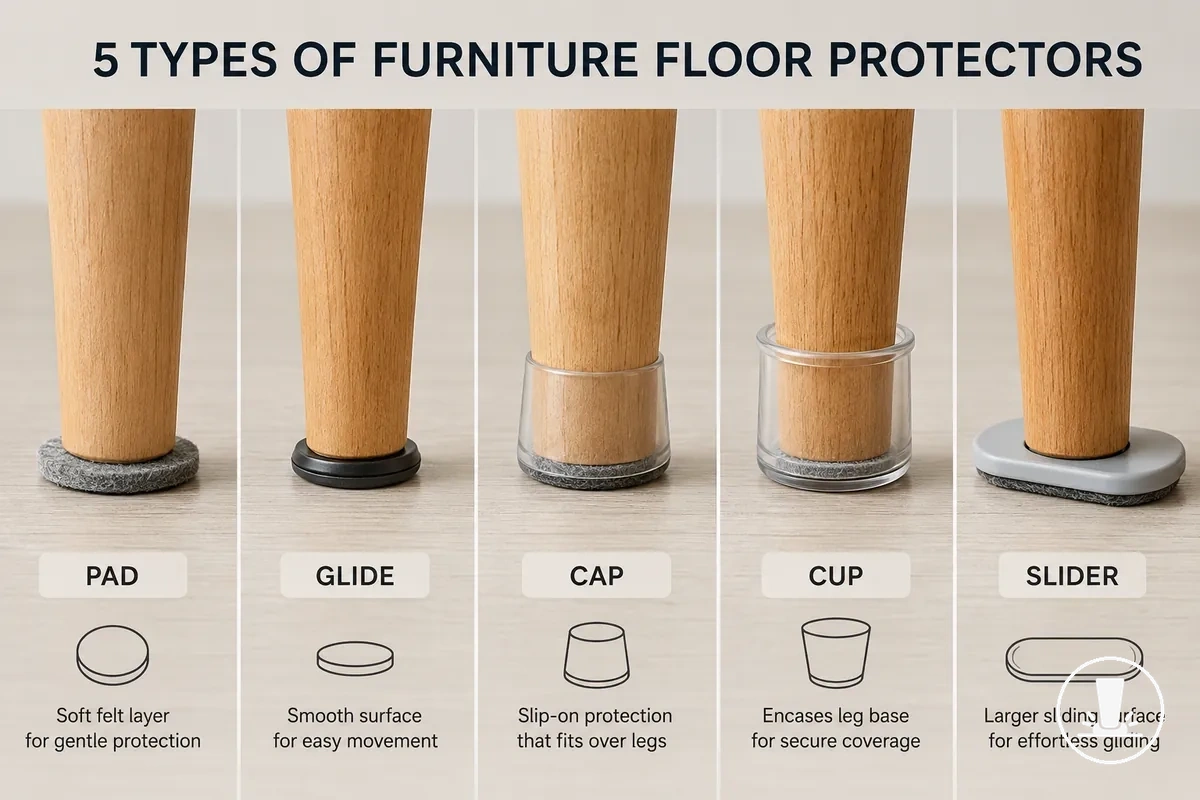
The comparison table summarizes type behavior, attachment characteristics, and common use conditions.
| Option | Contact behavior | Typical use | Main limitation |
|---|---|---|---|
| Pads | Fixed contact with cushioning | Stationary furniture using adhesive pads or similar attachment | May shift or wear depending on use conditions |
| Glides | Supports movement by reducing friction | Furniture movement on surfaces where repositioning is common | Suitability may vary by floor finish and use pattern |
| Caps | Covers chair legs and contact points | Chair leg caps requiring added coverage and attachment | Effectiveness depends on leg fit |
| Cups | Expands contact area and supports stability | Heavy furniture with fixed contact placement | Less suited to frequent movement |
| Sliders | Supports temporary movement across flooring | Moving sliders used during furniture repositioning | May provide limited stationary stability |
When furniture remains in fixed contact with the floor, pads and cups are commonly associated with cushioning or pressure distribution. When furniture movement is expected, glides and sliders are more closely associated with movement support, while caps focus on coverage around chair legs and attachment security.
Category choice depends on whether the primary need involves fixed contact, movement support, chair leg coverage, or contact-area management. For a deeper breakdown of types of furniture floor protectors, the following sections examine each category in more detail.
Pads and caps for fixed furniture contact
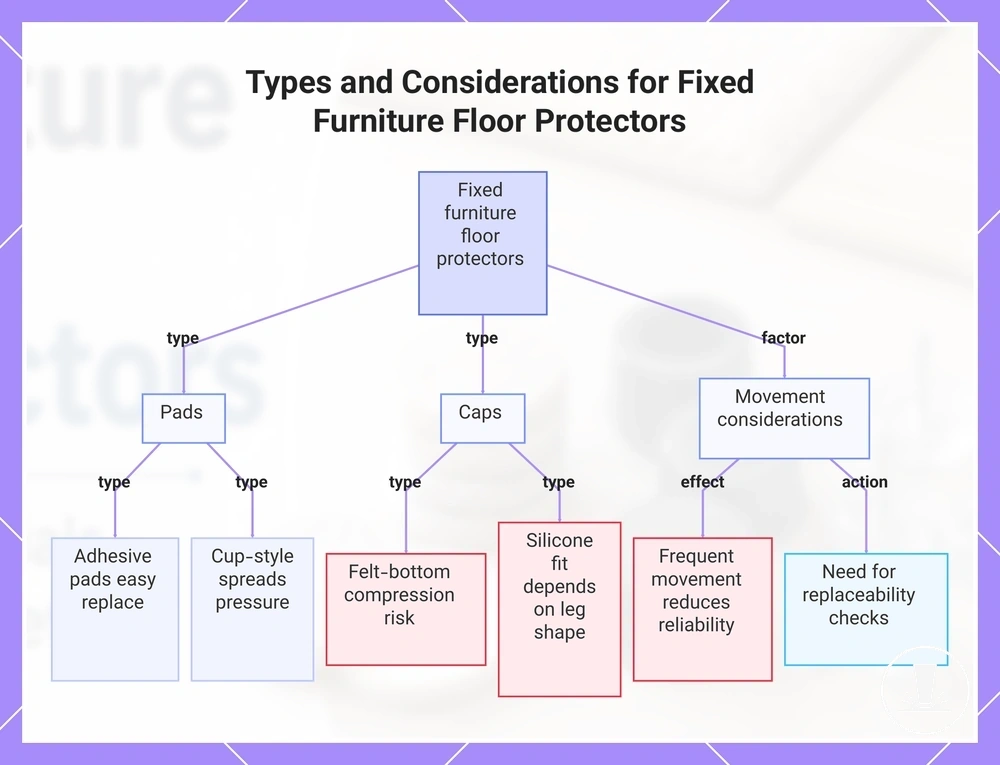
Pads and caps are commonly used for fixed furniture that stays in place or moves only lightly. Pads focus on the contact area between furniture and the floor, while caps add leg coverage around the furniture leg. Compression, grip, and replaceability can influence stability and floor risk when furniture weight or surface conditions vary.
- Adhesive pads: increase contact area and are often easy to replace, but adhesive performance may vary over time and use.
- Felt-bottom caps: combine leg coverage with a softer contact surface, though compression may increase under furniture weight.
- Silicone caps: provide leg coverage and grip around chair legs, but fit may depend on leg shape and coverage quality.
- Cup-style supports: spread pressure across a larger contact area for fixed furniture, though movement may reduce their stability advantage.
When chairs or tables are moved more often, the fixed-contact assumption becomes less reliable. Adhesive pads may need more frequent replaceability checks, and caps may perform differently if leg coverage shifts during movement. Frequent movement can change grip and compression patterns, which may affect floor risk and overall stability.
This chart shows the main types of pads and caps for fixed furniture and key factors affecting their performance.
Glides and sliders for controlled furniture movement
Glides and sliders support controlled movement by reducing friction during furniture movement and repositioning rather than focusing on cushioning. Lower friction can reduce moving effort, but scratch risk and scuffs may still depend on floor finish, furniture weight, base material, and the contact surface.
| Glides | Sliders |
|---|---|
| Designed for repeated or ongoing furniture movement through a fixed contact point. | Often used for temporary repositioning and moving tasks. |
| Friction levels may vary by glide base material and floor finish. | Moving effort may be reduced, though scuff risk can vary with furniture weight and surface conditions. |
| May remain attached as longer-term contact hardware depending on design. | Usually function as temporary moving aids rather than long-term contact hardware. |
A common assumption is that glides and sliders serve the same purpose, but their movement conditions often differ. Glides are typically associated with repeated furniture movement, while sliders are more often used for occasional repositioning. Neither option is suitable for every floor condition, and outcomes may vary when floor finish, furniture weight, or movement frequency changes.
Floor Protector Materials and Surface Contact Behavior
Floor Protector Materials and Surface Contact Behavior depends on how protector material and floor finish interact at the contact point. Material choice changes friction, softness, residue risk, compression, grip, and noise behavior, which can influence furniture movement and floor-contact outcomes under different conditions.
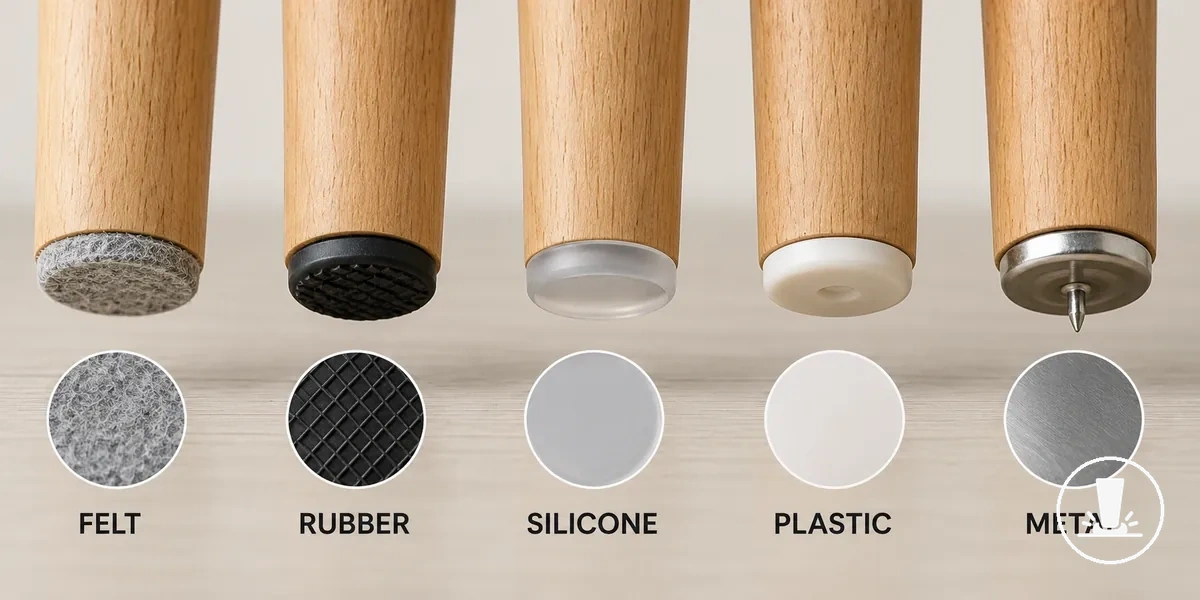
Floor Protector Materials and Surface Contact Behavior can be easier to evaluate when visible contact-surface differences are compared directly. Felt, rubber, silicone, plastic, and metal glides each create different combinations of softness, grip, friction, residue risk, and contact behavior. The image highlights these material differences before comparing their typical tradeoffs.
| Material | Contact attribute | Best condition | Risk or limitation |
|---|---|---|---|
| Felt | Softness and lower friction | Furniture that benefits from smoother movement | Wear and compression may increase with repeated use |
| Rubber | Higher grip | Furniture where sliding control is important | Residue risk may vary by floor finish and contact conditions |
| Silicone | Flexibility and grip | Chair leg caps requiring adaptable fit | Compression and fit may vary by furniture leg shape |
| Plastic | Lower-friction contact surface | Furniture that is repositioned regularly | Movement behavior may vary on harder surfaces |
| Metal glides | Hard glide surface | Applications requiring controlled movement | Friction and contact effects depend on floor finish and surface condition |
When grip, noise, or movement becomes a concern, material tradeoffs become more important. Felt may support scratch reduction through softness, but wear can change contact behavior over time. Rubber and silicone can provide more grip, though residue risk, compression, or fit may depend on floor finish and furniture conditions. Plastic and metal glides typically rely on a harder contact surface, so friction and movement outcomes can vary with floor finish and repeated use.
Material choice affects contact behavior more than any universal material ranking. For a deeper explanation of material-specific attributes and selection criteria, see furniture floor protector materials.
Felt, rubber, silicone, plastic, and metal contact differences
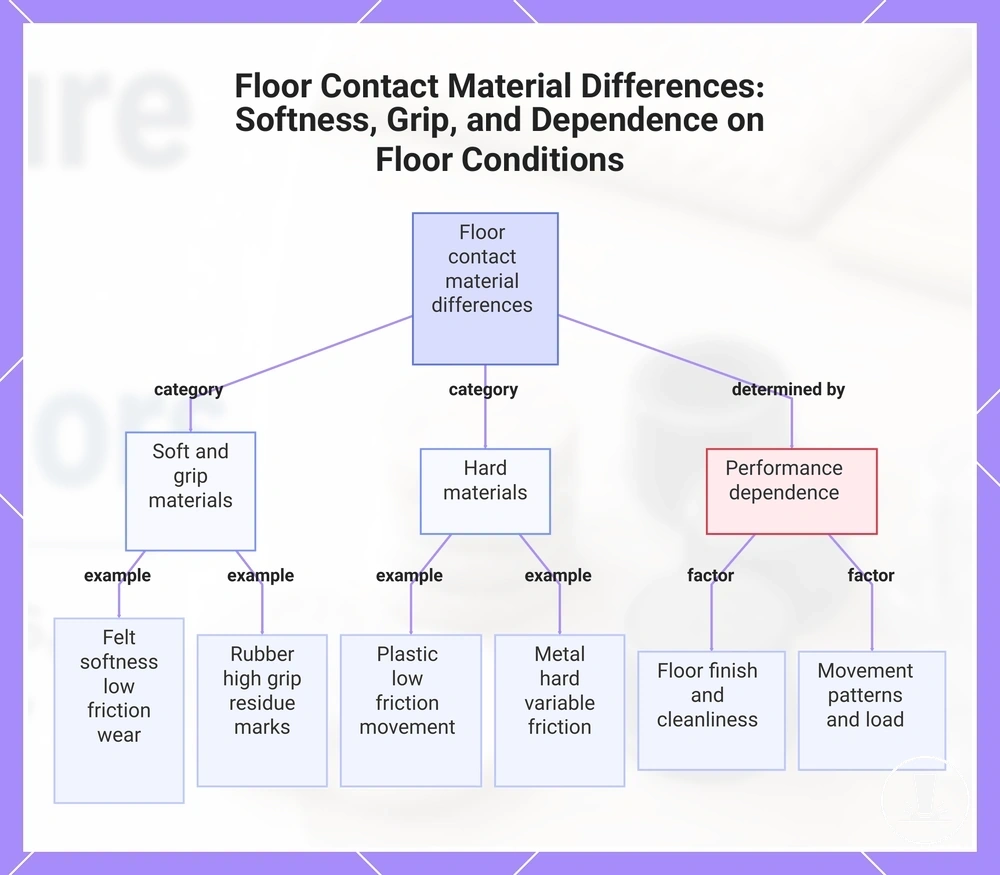
Felt, rubber, silicone, plastic, and metal differ in softness, grip, sliding resistance, noise reduction, and marking potential at the floor-contact side. Felt is generally softer, while rubber and silicone focus more on grip. Plastic and metal create a harder contact surface that can change movement behavior across different floor finishes.
- Felt: Higher softness and noise reduction with lower sliding resistance; wear may change contact behavior when furniture is moved repeatedly.
- Rubber: Higher grip and sliding resistance; residue or marks may occur depending on floor finish, movement, and contact conditions.
- Silicone: Flexible contact surface often used in chair leg caps; grip and fit may vary with chair leg shape and floor-contact pressure.
- Plastic: Lower-friction contact surface that can support movement; noise and marking potential may vary with floor finish, dirt, and load.
- Metal: Hard contact surface with lower softness; friction, noise reduction, and marking potential depend on floor finish, movement frequency, and furniture load.
When floor finish or movement conditions change, material behavior can change as well. On the same floor surface, felt may feel softer while rubber may provide more grip, and plastic or metal may allow easier movement. Noise reduction, sliding resistance, and marking potential often depend on floor finish, surface cleanliness, movement patterns, and furniture load rather than the protector material alone.
This chart compares key floor contact materials by softness, grip, and hard surface attributes, and highlights the stronger influence of floor finish and movement conditions.
Fit, Attachment, and Furniture Leg Compatibility
Fit, attachment, and furniture leg compatibility determine whether a protector remains useful over time. When the protector opening does not match leg shape or leg size, stability may decrease and floor-contact problems can become more likely. Furniture leg fit and attachment method work together to influence movement control, positioning, and protector retention.
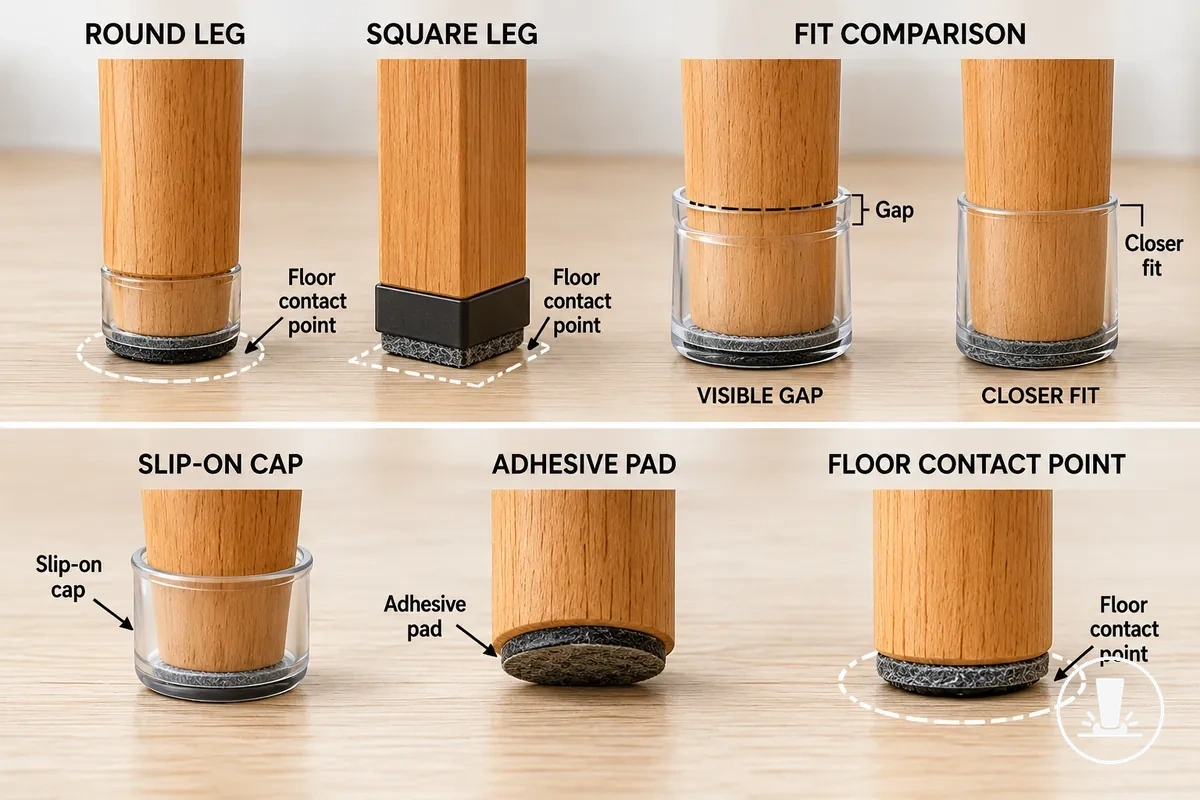
Fit, Attachment, and Furniture Leg Compatibility can often be evaluated through visible fit conditions. The image demonstrates how round legs, square legs, adhesive pads, and slip-on caps interact with furniture legs, showing how a closer fit or a visible fit gap may affect stability.
- Check whether the protector opening matches leg shape, including round legs and square legs, to support stability.
- Verify that leg size aligns with the protector size, as a loose fit may increase shifting risk.
- Consider furniture material, since wooden legs and metal legs may interact differently with an attachment method.
- Review movement frequency, because chair legs that move often may place more stress on fit and attachment conditions.
- Keep leg surfaces reasonably clean when using adhesive attachment methods, as dirt may increase fall-off risk.
- Compare attachment limits between adhesive, slip-on, nail-on, and tap-on designs, since each attachment method depends on different fit conditions.
When chair legs, table legs, wooden legs, or metal legs use the same protector design, fit behavior can still differ because leg shape, leg size, and surface attributes are not identical. Adhesive protectors may become less stable when the leg surface is uneven or dirty, while slip-on protectors may loosen when chair leg size and grip do not align. Nail-on and tap-on options may provide a more fixed attachment in certain conditions, but installation conditions can influence stability and may increase the risk of furniture damage when the attachment method is not suitable.
Fit remains the primary compatibility factor because attachment performance depends on matching the furniture leg to the protector design. For more specific compatibility criteria after evaluating general fit and attachment conditions, see furniture floor protectors for chair legs.
Round, square, wooden, and metal furniture legs
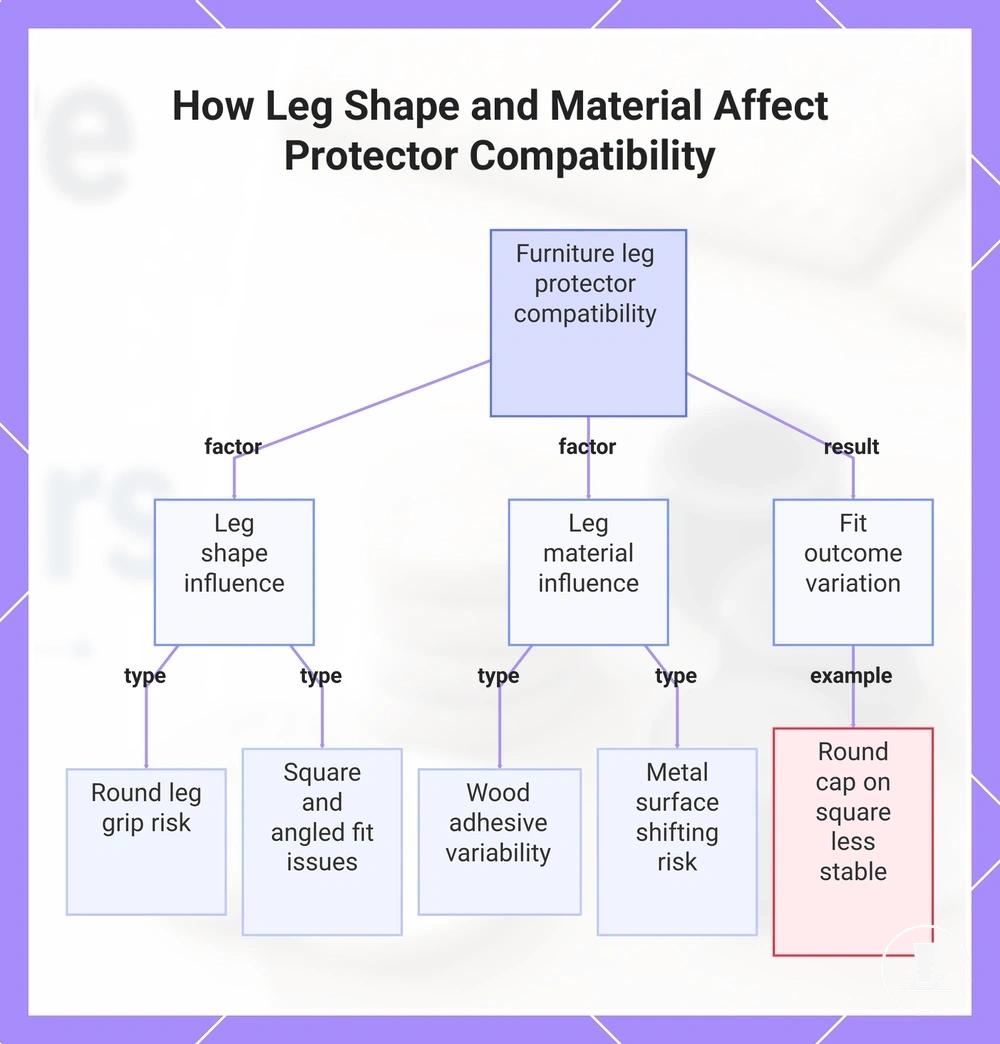
Round, square, wooden, and metal furniture legs affect protector compatibility because leg shape and leg material influence grip, coverage, and stability. Round legs, square legs, angled legs, wooden legs, and metal legs can interact differently with a protector opening or adhesive contact, which may change fit conditions and shifting risk.
- Round legs: A cap opening that follows the leg shape may provide more consistent grip, while a loose protector opening can increase shifting risk.
- Square legs: Corner coverage affects fit, and gaps around corners may reduce stability.
- Angled legs: The protector opening may contact the leg unevenly, which can affect grip and staying-on performance.
- Wooden legs: Adhesive contact may vary with surface condition and cleanliness, which can influence attachment stability.
- Metal legs: A smoother fit surface may change adhesive contact or grip characteristics, which can increase shifting risk in certain conditions.
When the same cap or pad is used on different chair leg shapes, fit outcomes can vary. For example, a slip-on cap that remains secure on a round leg may become less stable on a square leg if the protector opening does not provide adequate corner coverage. Leg shape and leg material often determine whether grip remains consistent or whether shifting becomes more likely during use.
This chart shows how leg shape and leg material influence protector grip, coverage, stability, and fit outcomes.
Adhesive, slip-on, nail-on, and tap-on attachment limits
Attachment strength depends on the attachment method, leg surface, movement, and load rather than the attachment method alone. Adhesive, slip-on, nail-on, and tap-on protectors use different holding mechanisms, so their suitable conditions, failure risk, and maintenance needs can vary when surface conditions or furniture movement change.
| Method | Holding mechanism | Suitable condition | Main limit |
|---|---|---|---|
| Adhesive | Bond to the leg surface | Clean leg surface with limited wear at the contact point | Adhesive contact may weaken over time, increasing maintenance needs or fall-off risk |
| Slip-on | Grip through size and fit | Protector opening aligned with leg shape and size | Movement may reduce grip if fit conditions change |
| Nail-on | Fixed hardware attachment | Furniture legs that can accommodate hardware attachment | Installation quality and load conditions may affect stability and increase furniture risk |
| Tap-on | Hardware secured through impact fitting | Applications requiring a more fixed attachment method | Improper installation may increase furniture or floor-contact risk |
A common assumption is that stronger attachment always creates better compatibility. In practice, attachment strength depends on fit, leg surface condition, movement, and load. Nail-on and tap-on methods may provide a more fixed attachment in certain situations, but poorly installed hardware can increase furniture risk, while adhesive and slip-on methods may require maintenance when wear, grip, or surface conditions change.
Floor Surface Risks and Protection Outcomes
Floor Surface Risks and Protection Outcomes depend on the floor surface, furniture contact condition, and protector attributes at the contact point. Furniture protectors can help reduce scratches, dents, scuffs, noise, sliding, and marks, but the protection outcome often varies by floor finish, movement, pressure, and surface condition.
Floor Surface Risks and Protection Outcomes are easier to assess when common risks are linked to their likely causes and conditions. The table below organizes common floor surface risks and the protector attributes that may help reduce them while identifying conditions that still require attention.
| Floor risk | Likely cause | Helpful protector attribute | Remaining condition to check |
|---|---|---|---|
| Scratches | Furniture movement across a floor finish | Softer contact surface with controlled movement | Dirt buildup may increase abrasion risk |
| Dents | Heavy furniture pressure on a small contact area | Wider pressure distribution | Load concentration may still affect delicate finishes |
| Scuffs | Repeated movement and surface contact | Reduced friction at the contact point | Surface wear may vary by floor type |
| Noise | Hard contact between furniture and floor surface | Softening or cushioning contact layer | Tile surfaces may still amplify sound |
| Sliding | Low grip between furniture and floor surface | Higher-grip contact material | Wet or sticky contact surfaces can change performance |
| Marks | Pressure, residue, or repeated contact | Material selected for the floor finish | Vinyl surfaces and delicate finishes may require closer monitoring |
When a floor surface such as hardwood, laminate, tile, vinyl, or carpet shows a specific vulnerability, matching protector attributes to the contact condition becomes more important. Hardwood floors may be more sensitive to scratches and marks when the floor finish is delicate, while tile surfaces often place greater emphasis on noise, grip, and sliding control. Vinyl may be more sensitive to residue, pressure, and marks, while carpet can benefit from stability-focused support when movement is a concern. Delicate finishes, dirt buildup, heavy furniture pressure, and wet or sticky contact surfaces can change the protection outcome even when a protector is used.
A common assumption is that a furniture protector eliminates every floor surface risk. In practice, protection outcomes depend on floor finish, movement, pressure, and maintenance conditions, and additional hardwood-specific considerations are covered in furniture floor protectors for hardwood floors.
Scratches, scuffs, dents, noise, and sliding
Scratches, scuffs, dents, noise, and sliding are separate protection outcomes because each is influenced by a different furniture contact condition. Surface damage is usually associated with contact and movement, dents relate more closely to weight and pressure, while noise and sliding depend on movement behavior and the contact surface. A protector attribute that helps one outcome may provide limited improvement for another.
- Scratches: Often occur when grit becomes trapped at the contact surface during movement. A soft contact surface may help reduce scratch risk, although dirt buildup can still affect outcomes.
- Scuffs: Commonly result from repeated movement and contact. Lower-friction contact surfaces may help reduce scuff-related surface damage, but results can vary by floor condition.
- Dents: Usually relate to furniture weight and concentrated pressure. Cushioning or a larger contact area may help distribute pressure, though heavy loads can still influence dent risk.
- Noise: Often develops when movement transfers sound through furniture materials and the floor. Softer materials or cushioning may support sound reduction, but floor characteristics can still affect noise levels.
- Sliding: Typically occurs when grip between furniture and the contact surface is limited. Higher-grip materials may improve movement control, but increased grip does not necessarily address dents caused by pressure.
When scratches, dents, noise, and sliding are evaluated separately, expectations become easier to align with the protector attribute being used. Grip may help with sliding but may have limited influence on pressure-related dents, while cushioning may help distribute pressure without providing the same level of movement control. No single protector attribute addresses every outcome equally because movement, pressure, floor characteristics, and contact surface conditions can affect results differently.
Hardwood, laminate, tile, vinyl, and carpet conditions
Hardwood, laminate, tile, vinyl, and carpet conditions affect protector suitability because floor finish, hardness, texture, and pile can change how a protector condition performs. Compatibility depends on the floor surface and contact conditions rather than the floor type alone.
Different floor surfaces respond differently to movement, pressure, grip, and marking concerns. The table below compares common floor conditions and the protector considerations that may influence suitability.
| Floor surface | Condition to check | Protector concern | Decision cue |
|---|---|---|---|
| Hardwood | Finish sensitivity | Marks or scratches may vary with floor finish condition | Prioritize a protector condition that maintains a clean contact surface |
| Laminate | Surface hardness and finish | Movement may contribute to scuffs or noise | Match the protector condition to movement frequency and contact needs |
| Tile | Hardness and texture | Grip and noise behavior may vary by surface condition | Balance movement control with grip requirements |
| Vinyl | Residue and pressure sensitivity | Marking may depend on residue buildup or concentrated pressure | Monitor contact conditions when the surface is sensitive |
| Carpet | Pile height and texture | Stability may change when protectors interact with carpet pile | Consider whether support or movement control is the primary goal |
When a hardwood finish is sensitive to marks, the same protector condition may perform differently than it would on a harder or less sensitive surface. Vinyl surfaces can present a similar consideration when residue or pressure sensitivity affects marking potential. Floor finish, texture, hardness, and pile often provide a more useful compatibility reference than floor type alone.
Heavy Furniture and High-Pressure Floor Contact
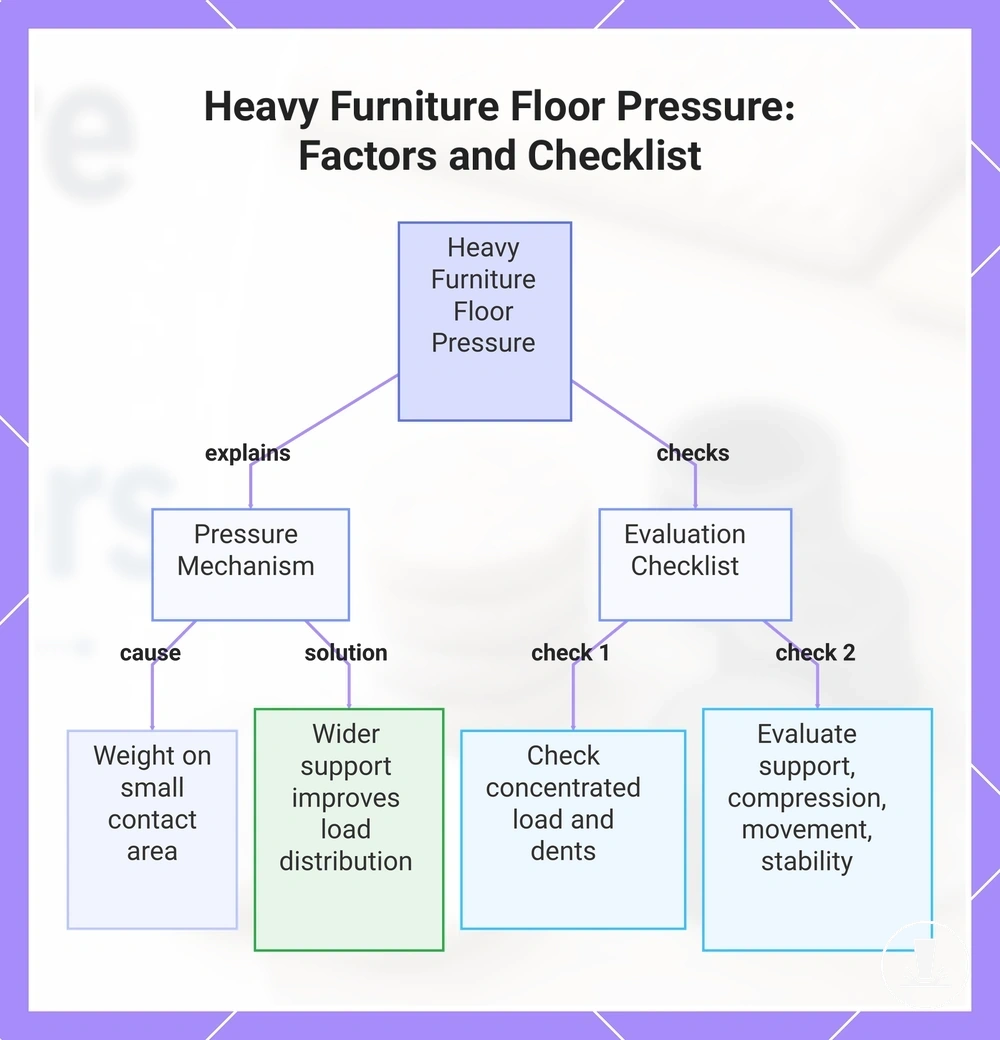
Heavy furniture and high-pressure contact depend on the relationship between weight and contact area. When heavy furniture places substantial weight on a small contact area, pressure increases at the floor-contact point, which may affect dents, stability, compression, and protector performance. Wider, more stable, and less compressible contact support is often considered because load distribution influences pressure conditions.
When sofas, beds, cabinets, or large tables remain in one position for extended periods, weight may concentrate at a limited number of contact points. A cabinet with narrow feet can create a different pressure condition than a large table with wider supports. The likelihood of dents, compression, or protector failure often depends on weight, contact area, floor type, and movement frequency rather than furniture size alone.
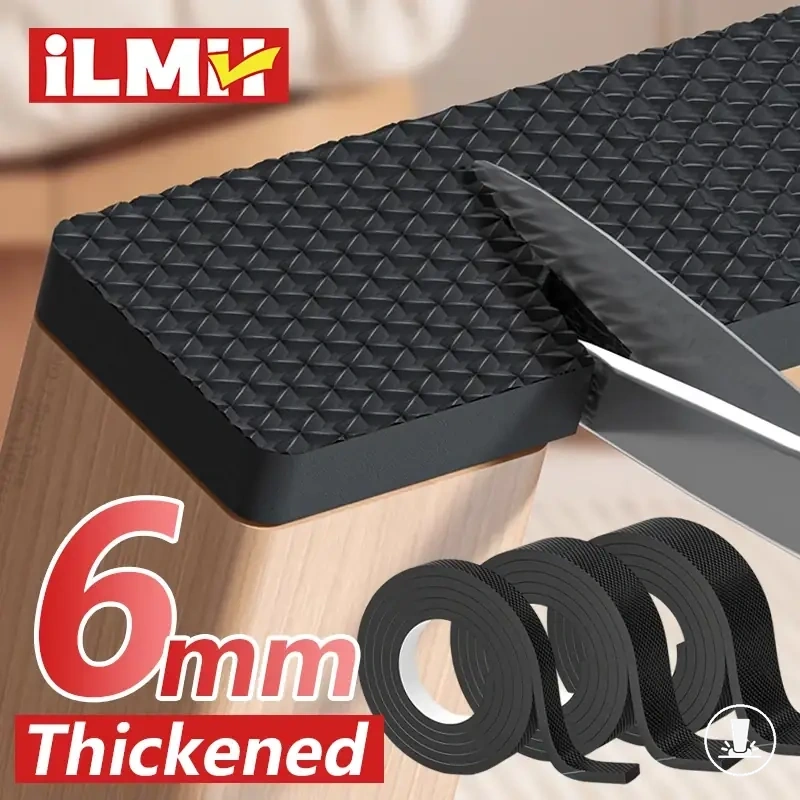
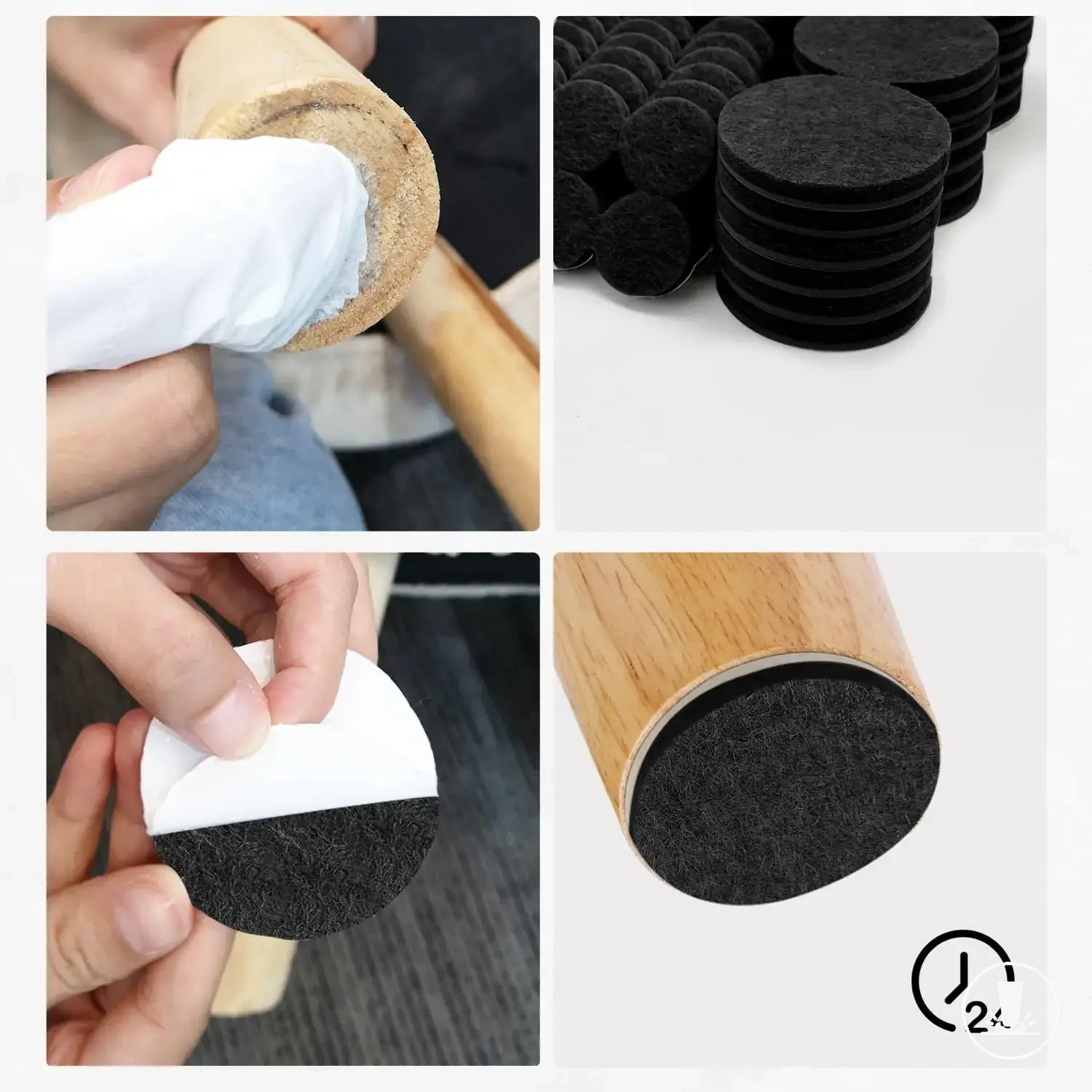
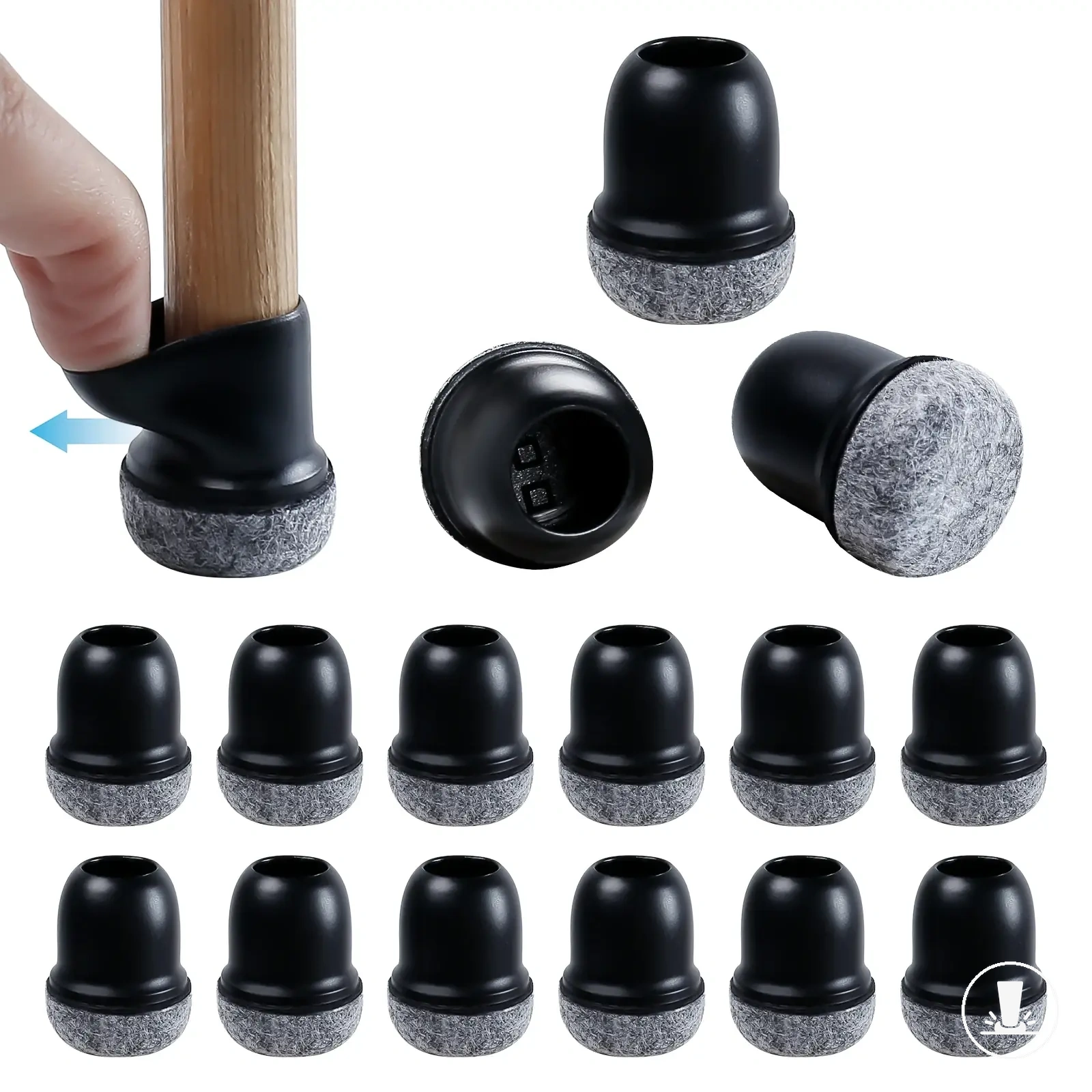
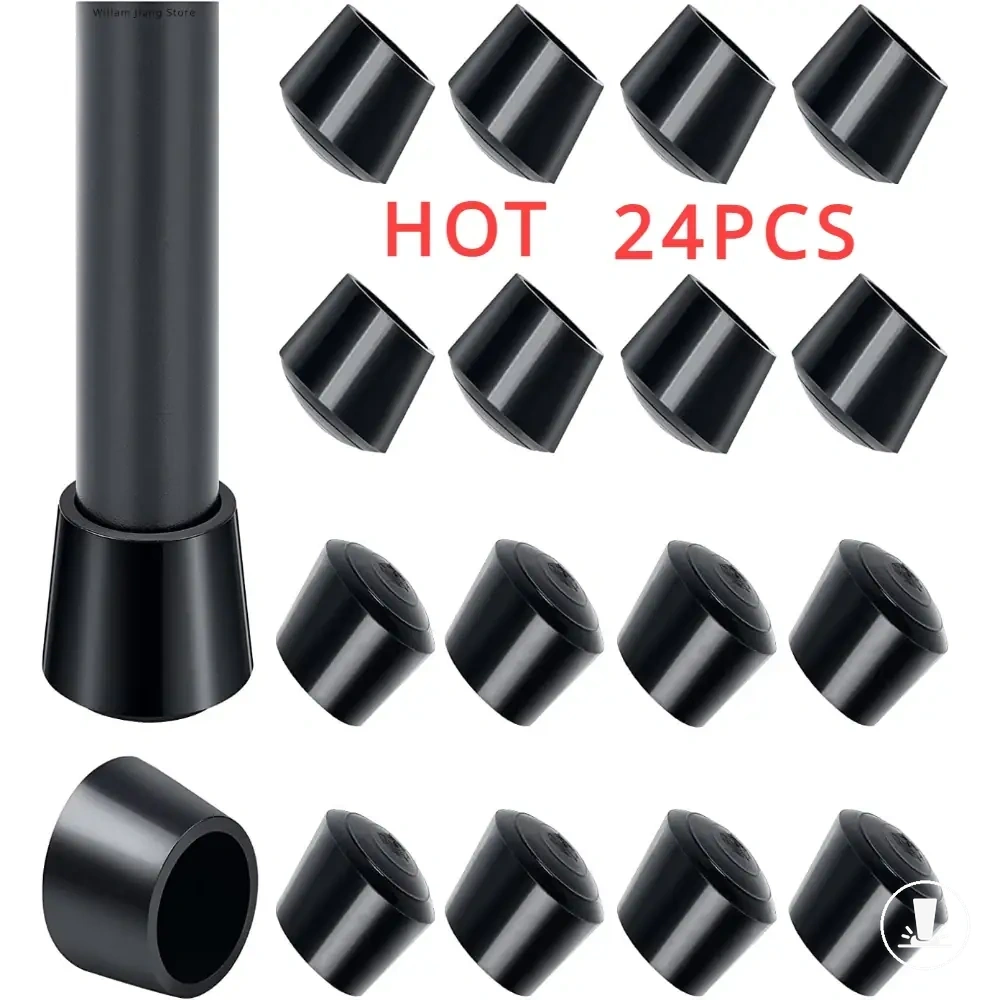
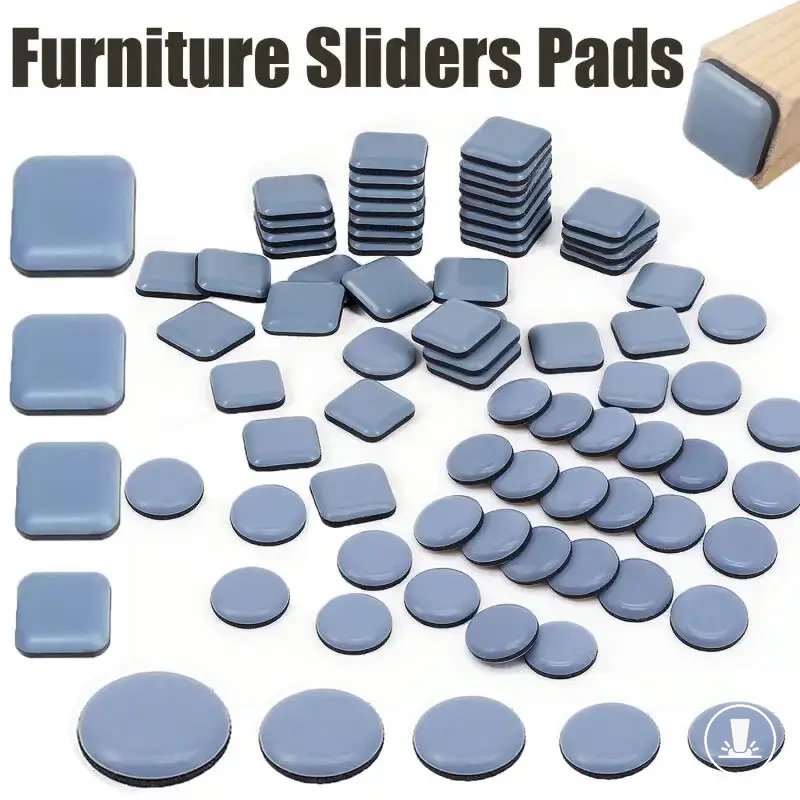
High-pressure contact can become a concern when a small contact area concentrates weight onto a limited floor surface. Wider support may improve load distribution because pressure is spread across a larger contact area. Wide pads and furniture cups are often used as pressure-support options, although suitability still depends on floor conditions and whether the furniture remains stationary or moves periodically. Soft materials may compress under long-term weight, which can increase replacement needs or change contact behavior over time.
Heavy furniture and high-pressure contact should be evaluated through pressure, stability, compression, and load-distribution criteria rather than assumptions about heavy-duty suitability. The checklist below helps identify whether contact conditions may require wider support, reduced compression, or greater stability.
The products below are useful examples for comparing available options. Before buying, check that the compatibility criteria, key features, and product details match your needs.
- Check whether heavy furniture places substantial weight on a small contact area.
- Assess whether dents may become a concern because load distribution is concentrated.
- Consider whether wide pads or furniture cups may provide broader pressure support.
- Review whether protector compression may increase under long-term weight.
- Distinguish between stationary heavy furniture and furniture that may be moved regularly.
- Evaluate stability based on floor type, contact area, and movement frequency.
This chart illustrates how heavy furniture creates pressure on floors and provides key evaluation checks for dents, support, and stability.
Choosing Furniture Floor Protectors by Use Case
Choosing Furniture Floor Protectors by Use Case depends on matching the use case to the required protector attribute rather than selecting a single protector category for every situation. The same protector can be suitable in one condition and unsuitable in another because floor risk, furniture movement, leg fit, material behavior, and weight influence the decision.
Choosing Furniture Floor Protectors by Use Case becomes easier when common situations are organized into decision criteria. The table below connects each use case to a required attribute, a suitable protector category, and an exclusion cue that may indicate a different choice.
| Use case | Required attribute | Good-fit protector category | Avoid when |
|---|---|---|---|
| Chair legs with frequent movement | Leg fit and movement control | Caps or fitted protectors | Fit is loose or movement increases shifting |
| Heavy furniture | Pressure support and load distribution | Wide pads or furniture cups | Contact area remains too small for the weight condition |
| Hardwood floors | Material behavior suited to the floor finish | Softer contact surfaces | Marks, residue, or abrasion become a concern |
| Sliding furniture | Controlled movement | Glides or movement-focused protectors | Additional grip is the primary requirement |
| Noise reduction | Cushioning and contact softening | Softer contact materials | Movement control is prioritized over sound reduction |
When floor risk or furniture movement creates uncertainty, material behavior, leg fit, and weight often become the deciding criteria. Chair legs may benefit from closer-fitting caps because movement can increase shifting risk. Heavy furniture may require broader pressure support because weight and contact area influence stability and floor-contact conditions.
Selection criteria become easier to apply when each use case is linked to a specific condition rather than a protector category alone. For a more detailed criteria-based process, see how to choose furniture floor protectors.
A common myth is that one protector category suits every use case. The reality is that each choice involves a tradeoff between floor risk, furniture movement, leg fit, material behavior, weight conditions, and the acceptable limitations of the protector category.
The products below are useful examples for comparing available options. Before buying, check that the compatibility criteria, key features, and product details match your needs.
Common Furniture Floor Protector Problems
When furniture floor protectors are falling off, leaving marks, sliding, or showing compression, the likely cause is often a fit issue, material mismatch, dirt buildup, wear, adhesive failure, or floor sensitivity. These problems are common failure patterns because protector performance depends on the contact condition between the furniture leg, protector, and floor surface.
Problem-to-solution diagnosis starts with identifying the failure pattern before assuming a fix. The table below connects common problems to likely causes, diagnostic checks, and a safe next action. Each issue may have more than one contributing condition, so the goal is to narrow the blocker rather than assume a single cause.
| Problem | Likely cause | What to check | Safe next action |
|---|---|---|---|
| Falling off | Poor fit, adhesive failure, or repeated movement | Leg size, attachment condition, and movement frequency | Review fit and attachment compatibility |
| Leaving marks | Material mismatch, dirt buildup, or floor sensitivity | Floor finish condition and contact-surface cleanliness | Inspect the contact area and monitor for recurring marks |
| Sliding | Limited grip, floor texture, or weight distribution | Grip condition and floor surface characteristics | Evaluate whether movement control matches the use case |
| Compression | Heavy furniture pressure or material wear | Protector shape changes and contact-area support | Assess whether replacement or broader support may be needed |
| Wear | Repeated movement and long-term contact | Surface condition and material degradation | Check whether the protector still supports the intended contact condition |
When protectors are leaving marks, sliding unexpectedly, compressing under weight, or falling off after movement, the cause may depend on multiple conditions rather than a single defect. Marks can be associated with material mismatch, dirt buildup, or floor sensitivity because floor finishes may respond differently to contact conditions. For deeper diagnostics that focus on specific failure patterns, see furniture floor protector problems.
A common myth is that every protector issue has a permanent repair. The reality is that many problems require a diagnostic check because wear, floor sensitivity, movement conditions, and attachment changes can create similar failure patterns.