Furniture floor protectors explained: how they reduce floor damage
Furniture floor protectors are floor-contact accessories placed between furniture legs or feet and a floor surface. They create a protective layer at the contact point where pressure, friction, and movement occur. Their primary role is floor-contact protection.
Furniture floor protectors can help reduce common floor damage risks by changing how furniture contacts the floor surface. The level of protection often depends on furniture weight, movement, protector condition, and fit. When the protective layer fits properly and remains in good condition, it may reduce direct wear on the floor surface.
- Scratches and scuffs may be reduced when the protective layer limits direct contact between furniture legs and the floor surface.
- Dents may be less likely when pressure is distributed more evenly, although results can vary with furniture weight and contact area.
- Noise from chair movement can often be reduced when a contact layer softens friction at the floor-contact point.
- Sliding may be influenced by protector fit, condition, and the characteristics of the floor surface.
Furniture floor protectors are commonly used to help reduce scratches, dents, scuffs, marks, noise, and unwanted movement, but they do not provide complete protection in every situation. Trapped debris, worn protectors, poor fit, or frequent dragging can still affect a floor finish even when a protector is present.
Everyday furniture floor protectors are designed to remain at furniture contact points during normal use. They differ from temporary moving pads or whole-floor protection solutions, which are intended for broader short-term floor coverage rather than ongoing floor-contact protection.
What furniture floor protectors are
Furniture floor protectors are small protective pieces placed between furniture contact points and the floor. They help create a protective layer where furniture touches floor surfaces during everyday use. Their position is between furniture and floor contact.
What furniture floor protectors are becomes easier to understand when their placement is visible. The image below labels the object and shows how a protector sits between a furniture contact point and the floor surface.
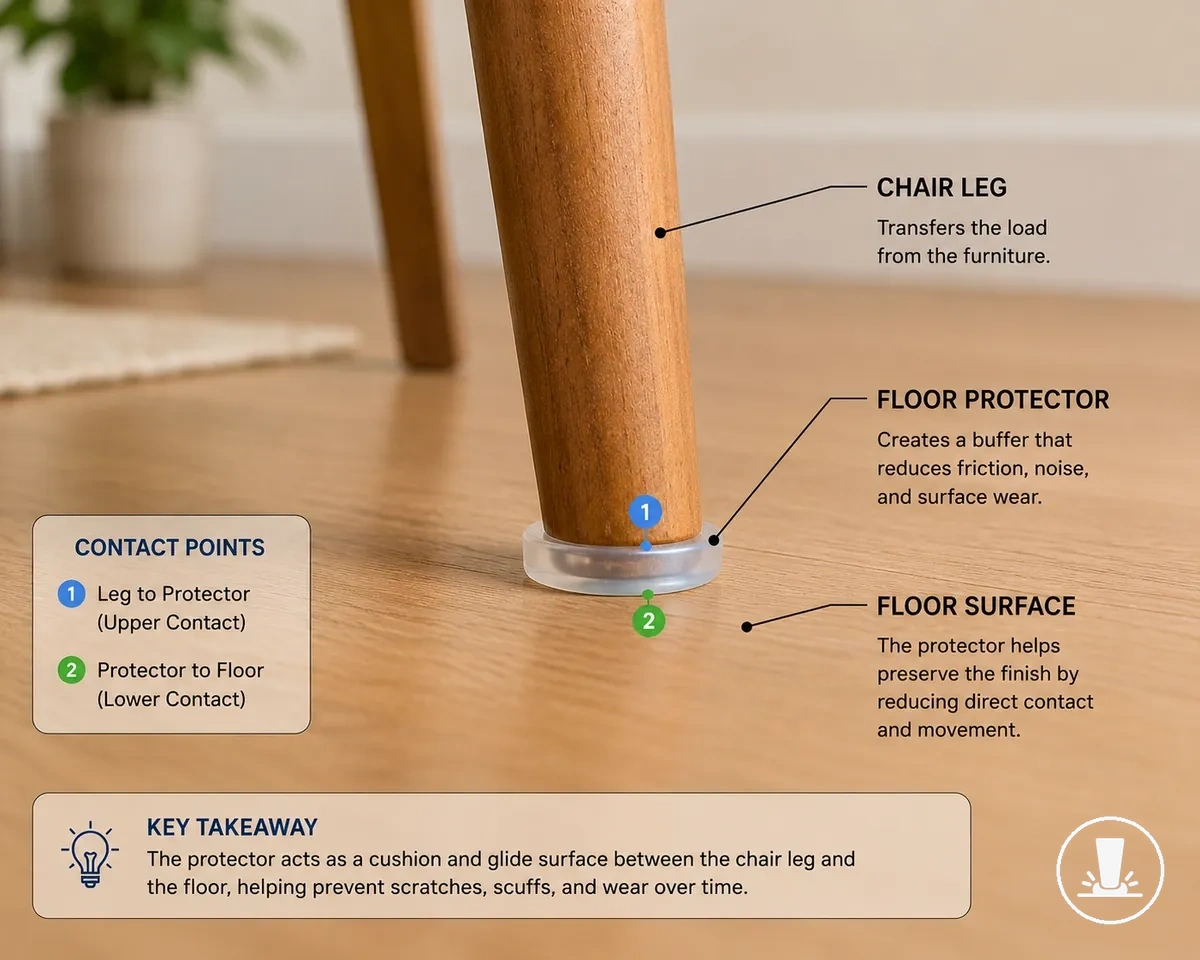
Common furniture contact points include furniture legs, feet, pads, caps, glides, and cups. These contact protectors sit where contact pressure and movement occur against floor surfaces. In broad terms, furniture floor protectors are floor protection accessories used at these contact points to separate furniture from the floor. They may help limit direct contact during normal furniture use.
- Furniture legs: create a contact point where a protective piece can separate the leg from the floor surface.
- Feet: use floor protectors to add a contact layer between the furniture and the floor.
- Pads: provide a protective surface at furniture contact points.
- Glides: help maintain a protective interface where furniture moves across the floor.
- Cups: support furniture feet while creating separation from the immediate floor-contact area.
An everyday example is a chair with chair leg pads placed under its legs to create a barrier between the chair and the floor surface. Furniture floor protectors focus on ongoing floor contact during normal use, while moving pads are generally associated with temporary furniture-moving situations rather than everyday floor protection.
Furniture floor protectors versus moving furniture pads
Everyday furniture floor protectors and moving furniture pads serve different purposes. Everyday furniture floor protectors focus on ongoing protection at furniture floor-contact points, while moving furniture pads are intended for moving-day protection during temporary furniture movement. The difference is mainly based on purpose, placement duration, and contact behavior.
This distinction helps prevent confusion when discussing everyday floor protection. Everyday furniture floor protectors typically remain at furniture legs or feet during normal use, while temporary moving pads are generally used for short-term coverage when furniture is being moved. The comparison below clarifies the scope boundary between ongoing floor-contact protection and moving-day protection.
| Option | Main purpose | Typical placement | Duration |
|---|---|---|---|
| Everyday furniture floor protectors | Ongoing protection | At furniture legs or feet | Usually remains in place during normal use |
| Moving furniture pads | Moving-day protection | Under or around furniture during movement | Typically used temporarily during moving conditions |
How furniture floor protectors create a contact layer
Furniture floor protectors create a contact layer by placing a buffer between a furniture contact point and the floor surface. This contact layer separates direct furniture-to-floor contact and changes how pressure, friction, and movement interact at that location. The buffer becomes the immediate contact area between the furniture and the floor.
How furniture floor protectors create a contact layer is easier to understand when the buffer is viewed as a separate contact zone. The diagram below clarifies the relationship between the furniture contact point, the contact layer, and the floor surface, including how pressure, friction, and movement pass through the buffer.
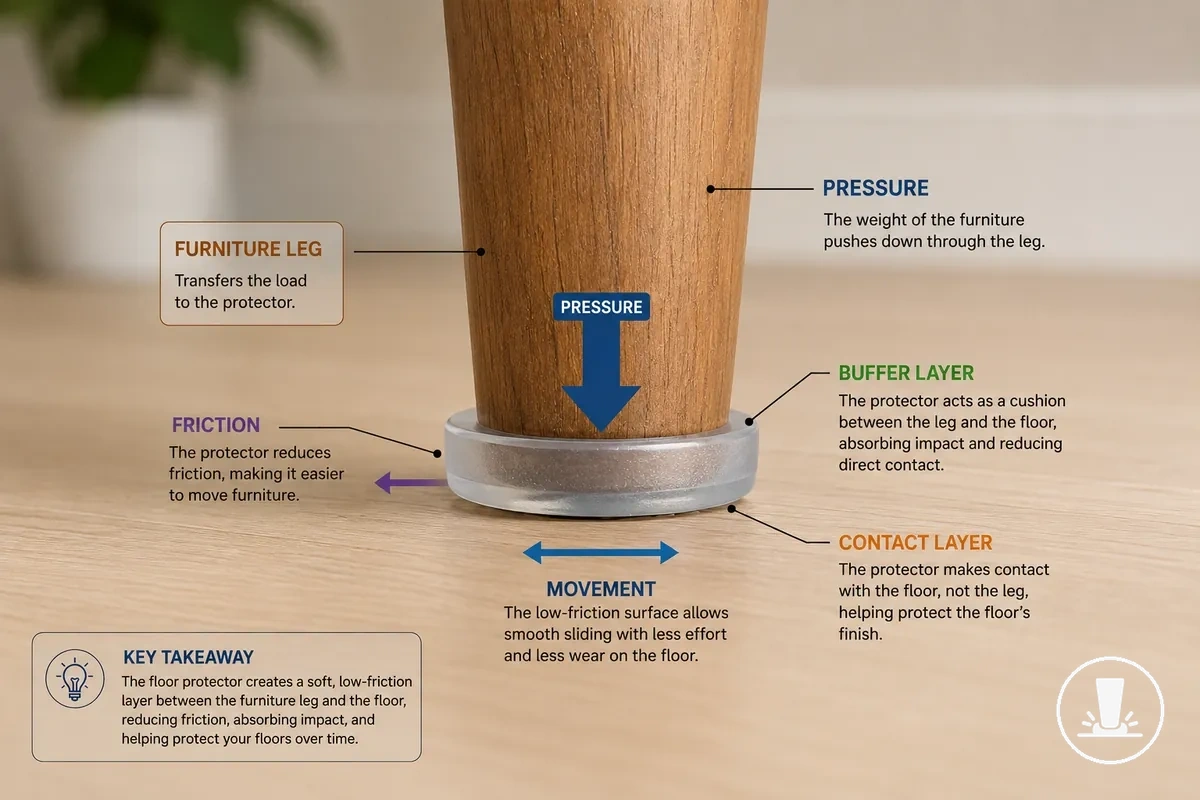
When weight is applied through a furniture contact point, pressure is transferred through the contact layer before reaching the floor surface. If the contact area changes, pressure distribution may also change. The effect can vary based on furniture weight, floor sensitivity, surface condition, and the relationship between the protector and the furniture contact point.
Friction, cushioning, and movement are also influenced by the contact layer. Depending on the protector form and floor-facing surface, the buffer may change how furniture moves across a floor surface. Cushioning can affect how contact forces are transferred, although the result depends on floor sensitivity, surface condition, and use conditions.
A chair leg or table leg provides a simple example of this mechanism. When a protector creates a contact layer beneath the leg, floor interaction occurs through the buffer rather than through direct furniture-to-floor contact. This change in contact behavior may help reduce certain forms of surface wear or unwanted movement when conditions are suitable.
What furniture floor protectors help prevent
Furniture floor protectors can help prevent common floor-contact problems when fit, floor condition, protector condition, and use conditions are suitable. They may reduce risk from scratches, scuffs, dents, marks, noise, and sliding, but outcomes depend on factors such as furniture weight, movement frequency, and floor finish. Protection levels can vary across different furniture and floor combinations.
What furniture floor protectors help prevent is easier to understand when common floor-contact risks are grouped by condition. The image below highlights the main risks that furniture floor protectors may help reduce during everyday use.
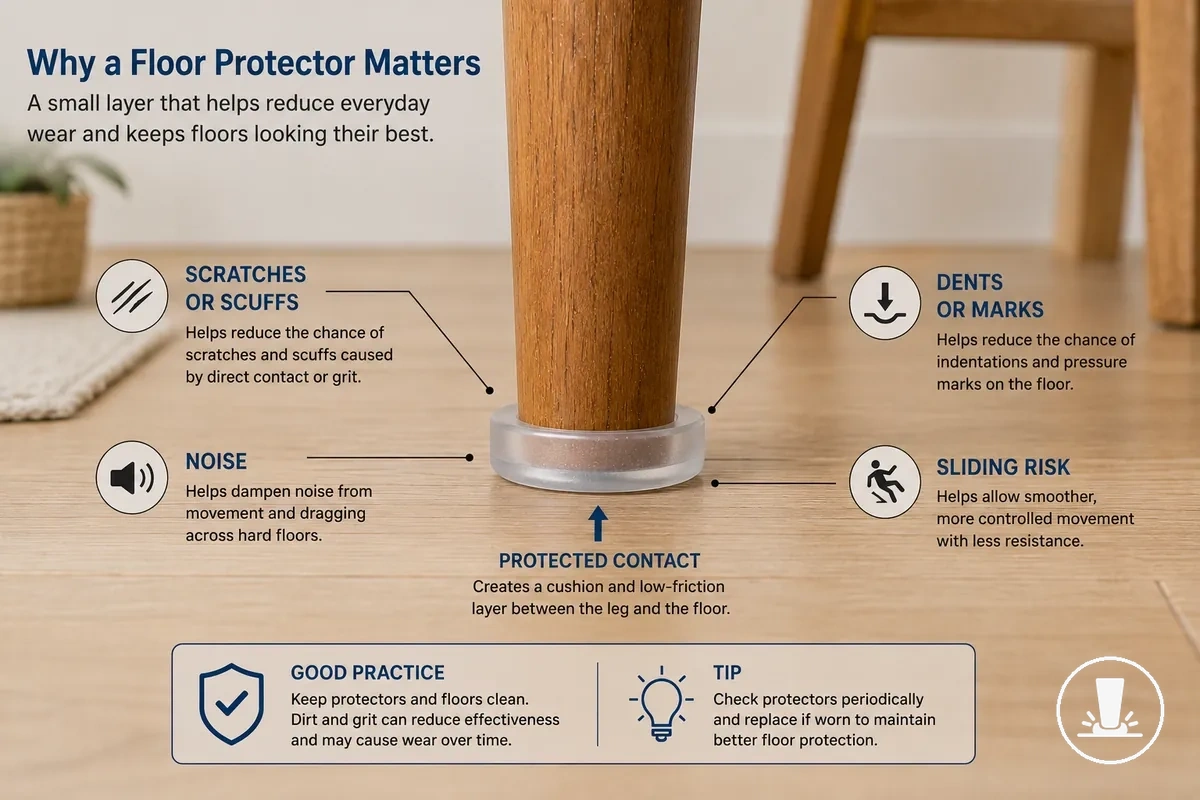
The table below organizes common outcomes by damage type and the conditions that can affect results.
| Problem | How protectors can help | Conditions that affect results |
|---|---|---|
| Scratches or scuffs | May help prevent direct floor contact and reduce risk to the floor finish | Fit, grit, movement frequency, and floor condition |
| Dents or marks | May help distribute contact pressure and lower the chance of visible marks | Furniture weight, contact area, and surface condition |
| Noise | May reduce sound created during furniture movement | Protector condition, floor finish, and movement pattern |
| Sliding | May help limit unwanted movement in certain conditions | Friction, floor condition, and protector fit |
Furniture floor protectors can reduce risk from surface damage when the floor finish is exposed to repeated contact and movement. They may also help prevent minor wear associated with everyday furniture use. Outcomes related to dents often depend on furniture weight and how pressure is distributed across the contact area.
Furniture floor protectors can also help prevent noise and reduce risk from unwanted sliding, although results depend on movement frequency and floor condition. Poor fit, trapped grit, protector wear, heavy furniture weight, or repeated dragging may reduce effectiveness because these conditions can change how the protector interacts with the floor surface. For a deeper look at how furniture floor protectors can prevent scratches dents and noise, see the dedicated prevention guide.
Scratches, scuffs, dents, gouges, and marks
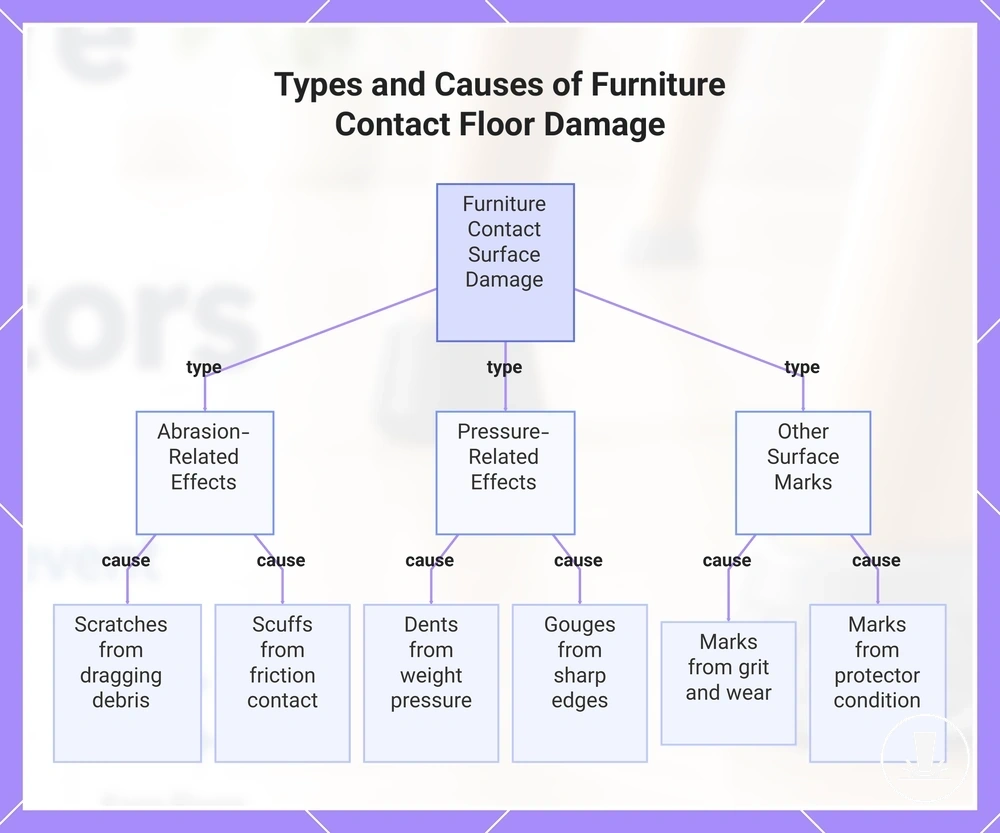
Scratches, scuffs, dents, gouges, and marks are physical surface effects that can occur when furniture contact affects a floor finish. These damage types have different causes and should not be treated as the same outcome. Contact point conditions, debris, pressure, dragging, sharp edges, and protector condition can all influence the type of surface damage that develops.
- Scratches: Often linked to dragging furniture or abrasive debris moving across a floor surface.
- Scuffs: Commonly associated with friction and repeated contact at the contact point.
- Dents: May occur when furniture weight creates pressure in a limited contact area.
- Gouges: Can result from sharp edges or damaged furniture feet contacting the floor finish.
- Marks: May develop from grit, wear, debris, or changes in protector condition over time.
Scratches and scuffs are usually abrasion-related effects, while dents are more closely associated with pressure and contact area. Gouges often involve sharper contact conditions that affect the floor finish differently from ordinary abrasion. Trapped grit between a protector and the floor surface may increase wear, especially when furniture is moved or dragged.
Protection may be limited in certain conditions. Heavy static furniture can place sustained pressure on a contact point, and worn protectors may provide less separation between furniture and the floor finish. Outcomes depend on floor condition, protector condition, furniture weight, and how the surface is used over time.
This chart categorizes the physical surface effects from furniture floor contact and lists the specific causes for each damage type.
Noise, sliding, and furniture movement
Noise, sliding, and furniture movement can be influenced by furniture floor protectors when friction, contact material, floor smoothness, and protector condition are suitable for the situation. Scraping noise and vibration may be reduced in some cases, while sliding control and stability can vary depending on how furniture interacts with the floor surface. Outcomes depend on furniture weight, protector fit, and movement conditions.
Friction plays a central role in movement behavior. A contact material with more grip may help limit sliding on a smooth floor, while a contact material designed for easier gliding may reduce resistance during chair movement. Changes in friction can affect floor noise, drag sound, movement control, and perceived stability, but results vary with floor surface characteristics and protector condition.
| Outcome | Protector behavior |
|---|---|
| Noise reduction | Often associated with smoother gliding and reduced scraping during furniture movement |
| Sliding control | Often associated with increased grip and greater resistance to slipping on a smooth floor |
Noise reduction and sliding control are related but not identical outcomes. A protector that supports easier gliding may help reduce scraping and vibration during chair movement, while a protector that increases grip may place more emphasis on movement control and stability. The effect depends on contact material, floor smoothness, furniture weight, protector fit, and overall condition.
Where furniture floor protectors are placed
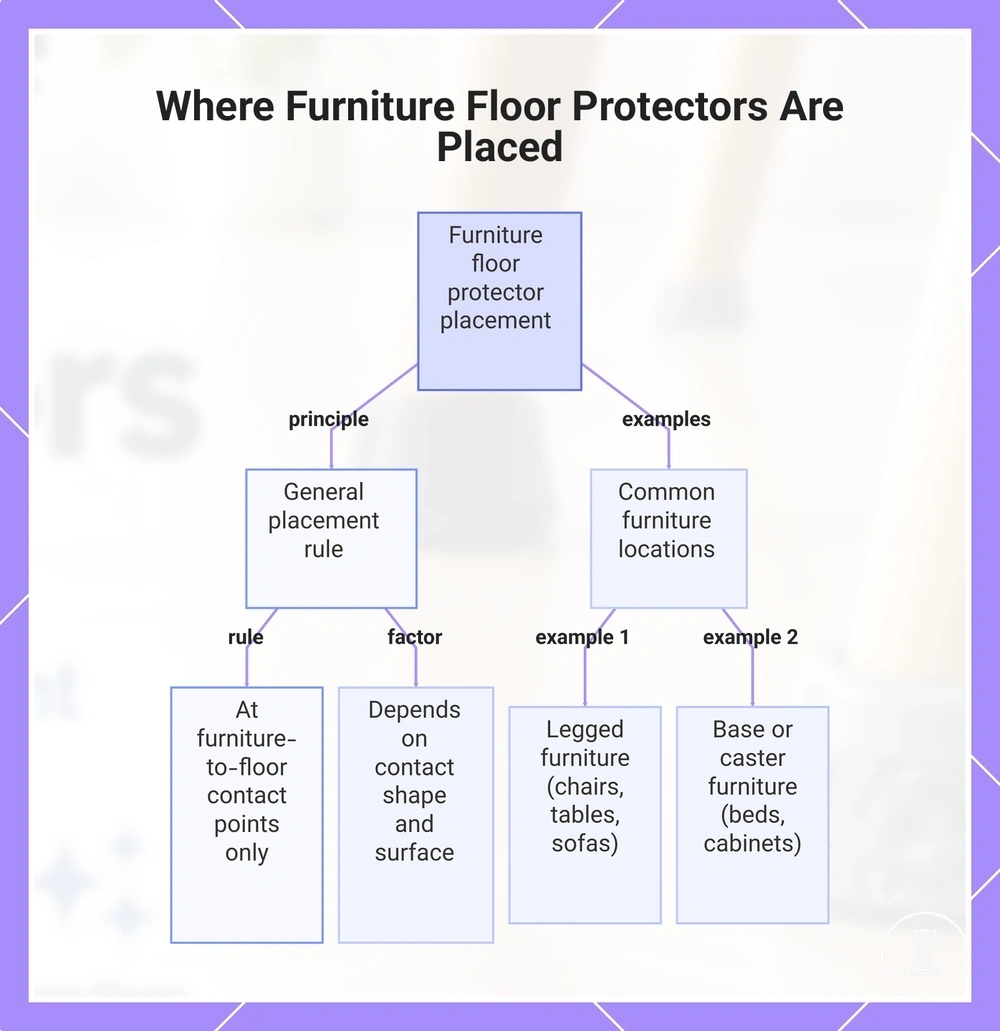
Furniture floor protectors are placed at furniture-to-floor contact points rather than across the whole floor surface. They are positioned where furniture legs, feet, a base, or a caster meets the floor. Placement focuses on the specific contact area that supports weight or movement.
Where furniture floor protectors are placed depends on the shape of the contact point and the floor-contact surface. The checklist below helps verify common locations where contact occurs.
- Chair legs: check the leg bottoms that rest on the floor surface.
- Table legs: verify each support point that contacts the floor.
- Sofa feet: place protection at the furniture feet that support the furniture.
- Bed frames: check feet, support points, or direct floor-contact surfaces.
- Cabinet bases: identify the base area that contacts the floor surface.
- Casters: placement may vary when caster shape or contact geometry differs.
If the question is what to put under furniture legs, the protector is usually placed under furniture legs at the actual contact points. The same placement logic applies to table legs, sofa feet, bed frames, heavy furniture feet, and other floor-contact surfaces, although the exact location may vary when the base, caster, shape, contact area, or condition differs.
This chart shows the placement principle and common furniture contact points for floor protectors.
Basic forms used under furniture legs
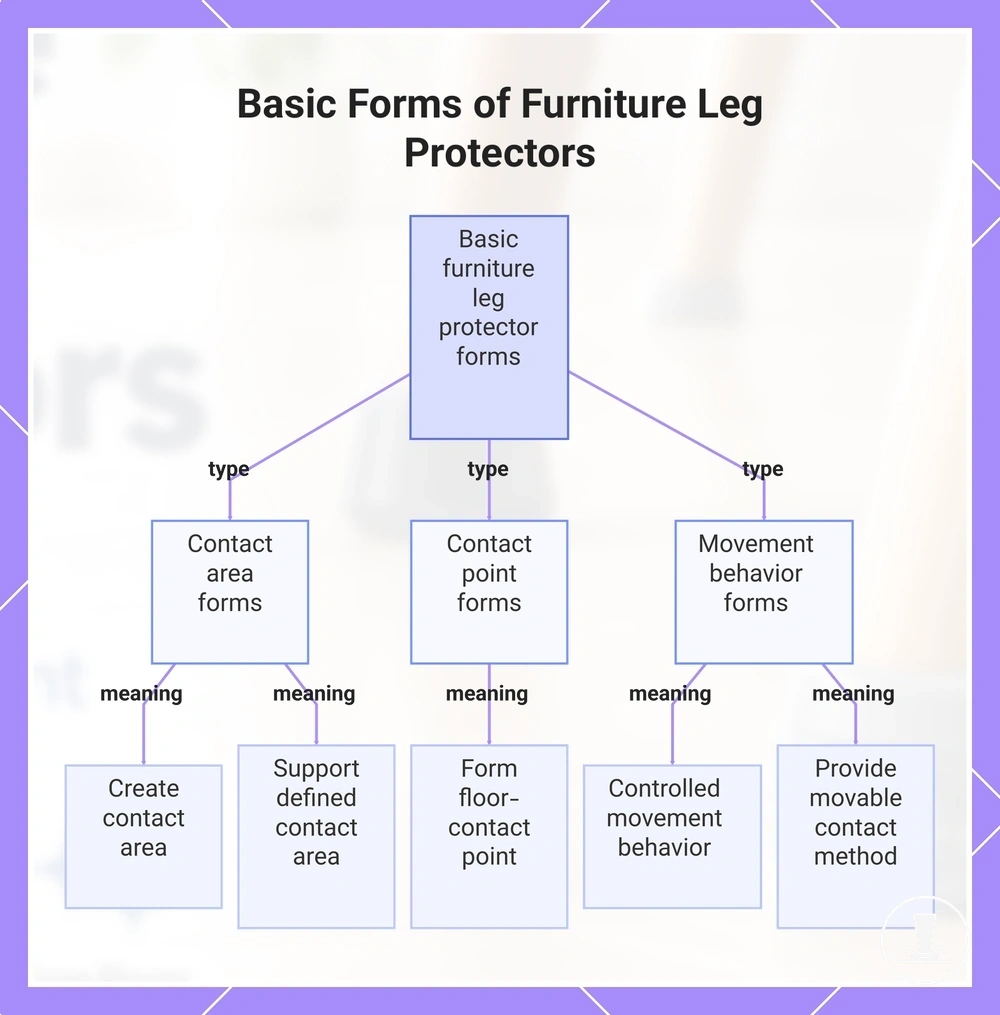
Basic forms used under furniture legs include pads, caps, glides, cups, and sliders. These broad protector forms help identify common ways furniture floor protectors interact with furniture legs and floor-contact surfaces without determining which option is most suitable for a specific use case.
Basic forms used under furniture legs differ by contact method, contact area, and movement behavior. The list below groups broad protector forms by how they generally make contact with furniture and the floor.
- Pads: Placed at furniture legs or feet to create a contact area between the furniture and the floor surface.
- Caps: Positioned over chair legs or other furniture legs to form a floor-contact point.
- Glides: Located at contact points where controlled movement behavior may be preferred.
- Cups: Placed beneath furniture feet to support a defined contact area on the floor.
- Sliders: Used under furniture legs, feet, or support points to provide a movable contact method.
These broad protector forms provide form-level orientation rather than detailed type selection guidance. For deeper type coverage and a closer look at how protector forms differ, see main types of furniture floor protectors.
This chart shows the five basic forms of furniture leg protectors grouped by their primary attributes: contact area, contact point, and movement behavior.
Pads, caps, glides, cups, and sliders as broad protector forms
Pads, caps, glides, cups, and sliders are broad protector forms that differ by attachment, contact area, and movement behavior. Each form represents a different way furniture floor protectors interact with furniture legs and floor-contact surfaces.
- Pads: Pads are placed under furniture feet or flat contact points and can provide a cushioning contact area.
- Caps: Caps are positioned over chair legs or furniture legs and create a covered floor-contact point.
- Glides: Glides are located at furniture contact points and are commonly associated with movement across a contact surface.
- Cups: Cups are placed beneath furniture feet and create a defined contact area that can support furniture stability.
- Sliders: Sliders are positioned under furniture contact points and are commonly associated with temporary movement across a floor surface.
Suitability depends on floor type, furniture shape, contact area, and expected movement behavior, so no single broad protector form is suitable for every situation.
When furniture floor protectors work best
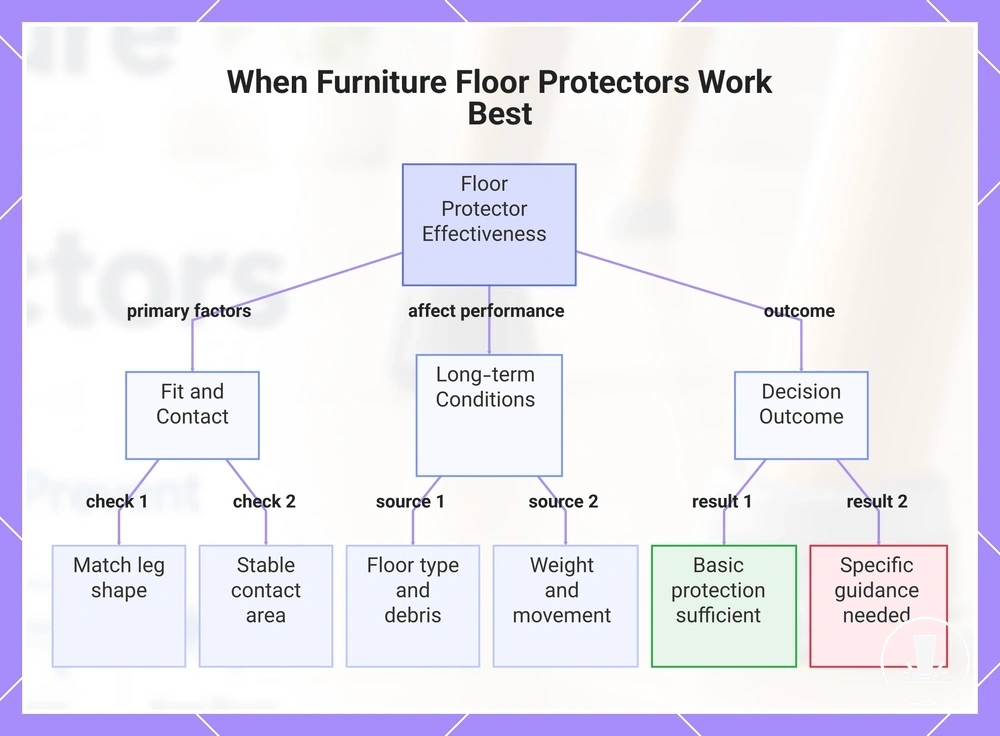
Furniture floor protectors work best when fit, surface condition, contact pressure, and movement pattern match the furniture and floor. Their effectiveness depends on how well the protector fits the furniture leg shape, maintains a stable contact area, and performs under normal use conditions.
Fit and contact area strongly influence effectiveness. A protector with a suitable fit may remain positioned more consistently at the contact point, while a contact area that aligns with the furniture leg shape can help create more stable floor contact. When fit or contact area is not well matched, effectiveness may decrease.
- If protector fit matches the furniture leg shape, it may remain positioned more consistently during use.
- If the contact area is appropriate for the contact point, contact pressure may be distributed more evenly.
- If floor type and surface condition are suitable, floor interaction may remain more consistent.
- If debris control is maintained, floor risk associated with trapped particles may be reduced.
- If furniture weight is appropriate for the contact area, pressure-related floor concerns may be easier to manage.
- If the movement pattern matches the use condition, sliding, noise, or friction behavior may remain more predictable.
- If replacement condition is monitored, worn protectors may be identified before protector condition noticeably declines.
Floor type, debris control, furniture weight, and movement pattern can affect long-term performance. Different surface conditions create different contact environments, while debris may increase floor risk at the contact point. Furniture weight influences contact pressure, and repeated movement can change how a protector interacts with the floor surface.
Basic protection is often sufficient when fit, contact area, floor type, and protector condition remain appropriate for everyday use. When furniture leg shape, movement behavior, surface condition, or floor risk requires closer evaluation, more specific selection guidance may be helpful. For additional decision support, see choose the right furniture floor protectors.
This chart shows the primary factors that determine floor protector effectiveness and the conditions under which basic protection is sufficient or specific guidance is needed.
What furniture floor protectors cannot fully prevent
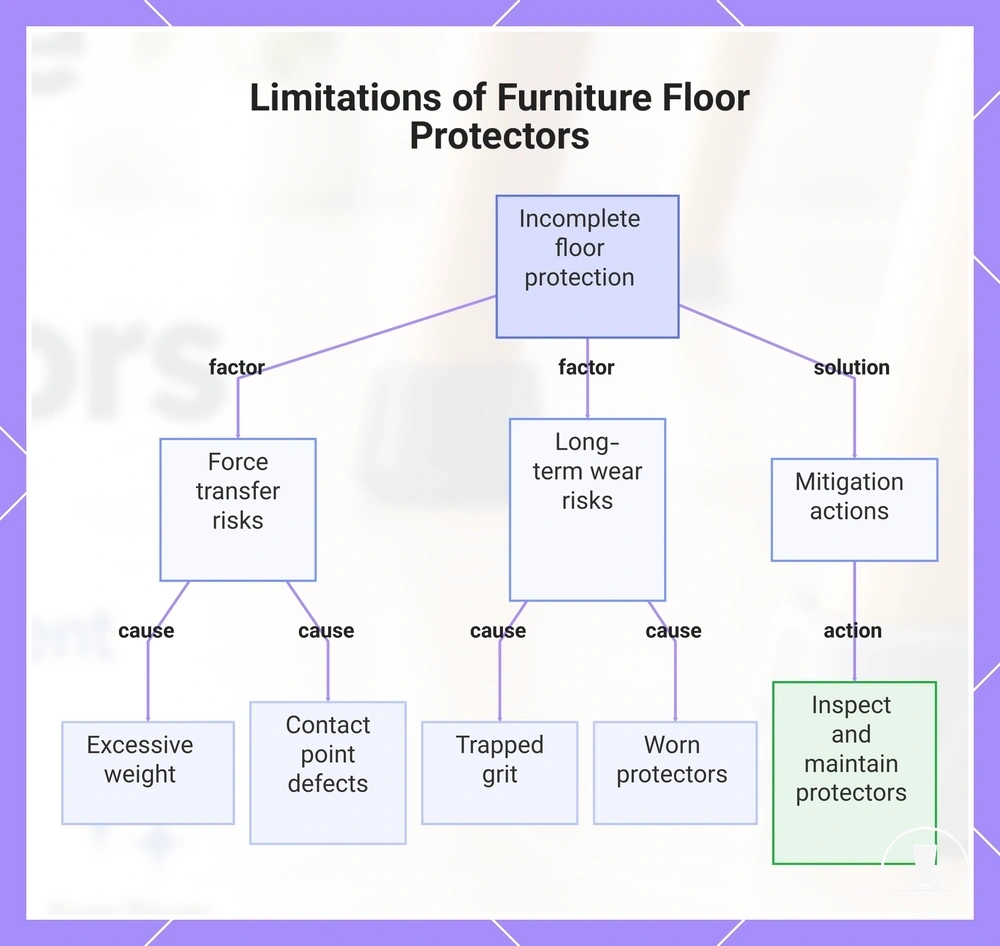
Furniture floor protectors cannot fully prevent every floor-related issue because they reduce risk but do not guarantee complete floor protection in every condition. Protection limits depend on factors such as excessive weight, debris, wear, floor finish condition, moisture, dragging, and how well the protector matches the furniture contact point.
What furniture floor protectors cannot fully prevent becomes easier to understand when the conditions that leave residual risk are identified. The checklist below highlights situations where risk may still remain even when a protector is used.
- Excessive weight may increase contact pressure beyond what the contact area can comfortably manage.
- Sharp furniture feet or damaged contact points may still affect a floor surface when separation is reduced.
- Trapped grit or debris may increase floor risk during movement or dragging.
- Worn protectors may provide less effective separation as protector condition changes over time.
- Moisture may affect the contact environment depending on floor finish and use conditions.
- Poor fit may reduce stability at the contact point and affect how consistently the protector remains positioned.
- Unsuitable floor conditions combined with repeated dragging may increase the likelihood of surface wear.
Excessive weight, sharp furniture feet, and poor fit can change how force is transferred through a protector. When contact pressure becomes concentrated or the protector no longer maintains stable positioning, risk may still remain. The outcome depends on furniture weight, contact area, and floor condition.
Trapped grit, worn protectors, moisture, and dragging can also affect long-term protection. Periodic inspection of protector condition and contact surfaces may help identify situations where cleaning, replacement, or a more suitable protector type could be considered. These limitations do not mean protection is ineffective, but they show why furniture floor protectors cannot fully prevent every outcome in every use condition.
This chart shows the main risk factors that furniture floor protectors cannot eliminate and a suggested mitigation.