Heavy furniture floor protectors for load, dent control, and stable floor contact
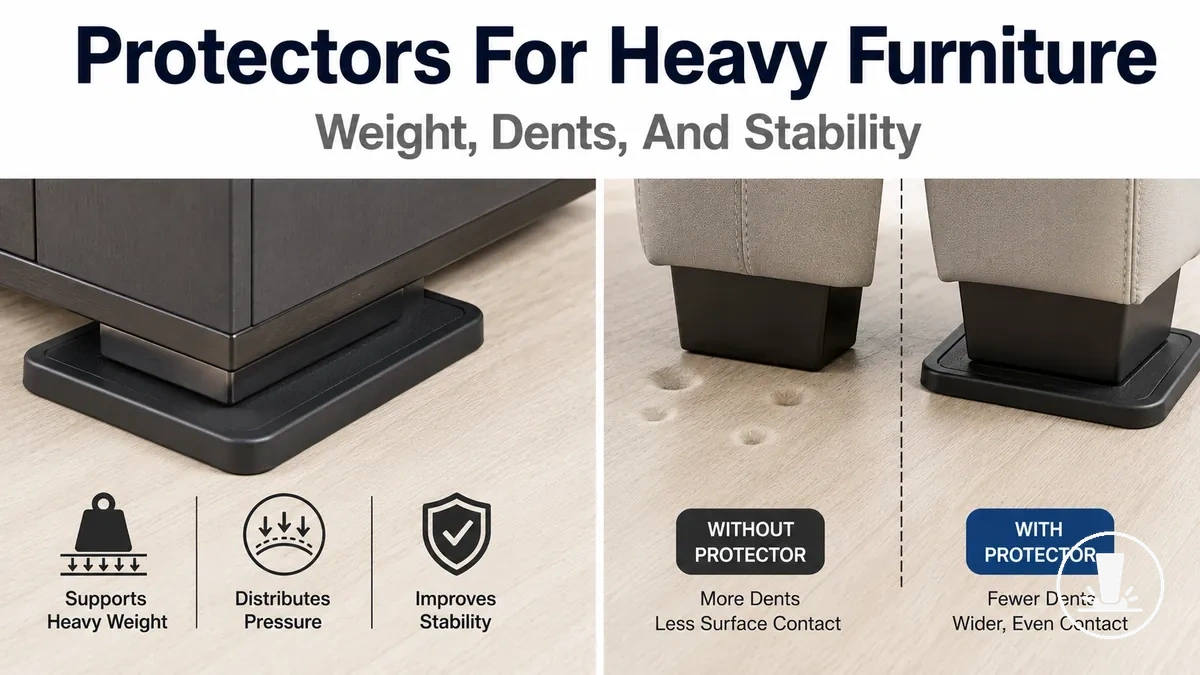
Heavy furniture floor protectors depend on how load is distributed across the floor and how much contact area exists between the furniture base and the surface below. Heavier furniture creates more concentrated pressure when weight rests on smaller contact points. The primary role of heavy furniture floor protectors is to support load spread, dent control, and stable floor contact.
Heavy furniture floor protectors for load, dent control, and stable floor contact are shown below to illustrate how a protector supports floor contact beneath a loaded furniture base while maintaining stable placement.

Heavy furniture often remains in one position for extended periods, making load distribution and floor sensitivity important compatibility factors. A narrow furniture base can concentrate pressure differently than a wide base, even when both appear stable. Floor condition and protector material may influence how marks, grip, and contact pressure develop over time. Outcomes related to dent control and stability depend on floor type, furniture base, and protector material.
Heavy furniture floor protectors should be selected according to load, contact area, and floor sensitivity rather than as a universal solution. They can help spread pressure, support floor-safe contact, and reduce movement risk when protector fit matches the furniture base and floor condition. Permanent support needs may differ from temporary movement aids, which leads into the specific heavy-furniture requirements discussed throughout the page.
What heavy furniture needs from floor protectors
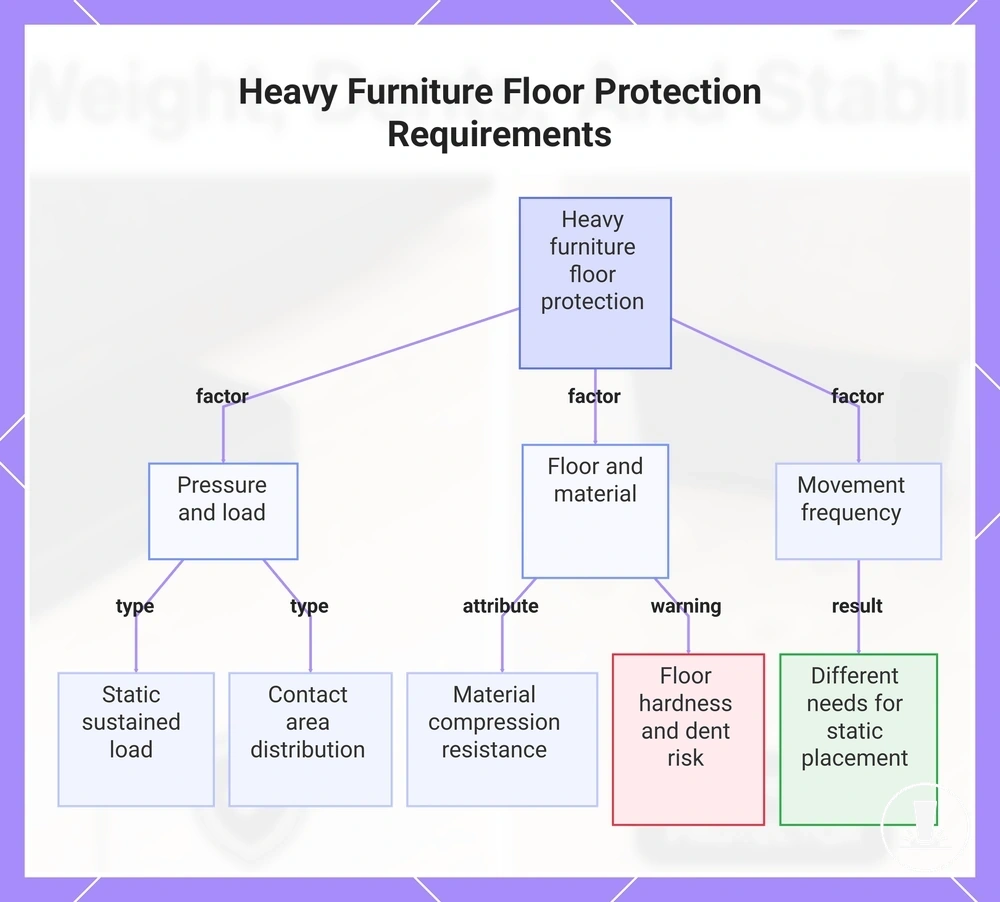
Heavy furniture floor protection depends on pressure, contact area, material compression, and floor sensitivity. Heavy furniture places a sustained static load on the floor, which can create different protection requirements than lighter movable items. The core requirements are pressure management, contact area support, material compression resistance, and floor sensitivity awareness.
furniture floor protectors used under heavy furniture often need to account for concentrated pressure across a specific furniture footprint. When weight remains in a static placement for extended periods, contact area can influence how force is distributed across the floor surface. Material compression may affect how a protector performs under a static load, especially when floor hardness and dent risk are considerations. Movement frequency also influences protector need because furniture that rarely moves can create different floor protection demands than furniture that is repositioned more often.
This discussion focuses on heavy furniture compatibility rather than all furniture floor protector types. General floor protectors may be suitable for lighter use cases, but heavy furniture often requires closer attention to pressure, floor sensitivity, furniture footprint, and static load conditions. Heavy furniture floor protectors should be evaluated within that specific compatibility context.
This chart shows the key requirements and factors for floor protectors under heavy furniture, including pressure, floor sensitivity, and movement influences.
Weight, contact area, and furniture-base shape
Weight, contact area, and furniture-base shape determine how pressure is transferred to the floor. A smaller contact area creates more concentrated pressure, while a larger contact area spreads force across a wider surface. In this context, pressure is weight acting through contact area.
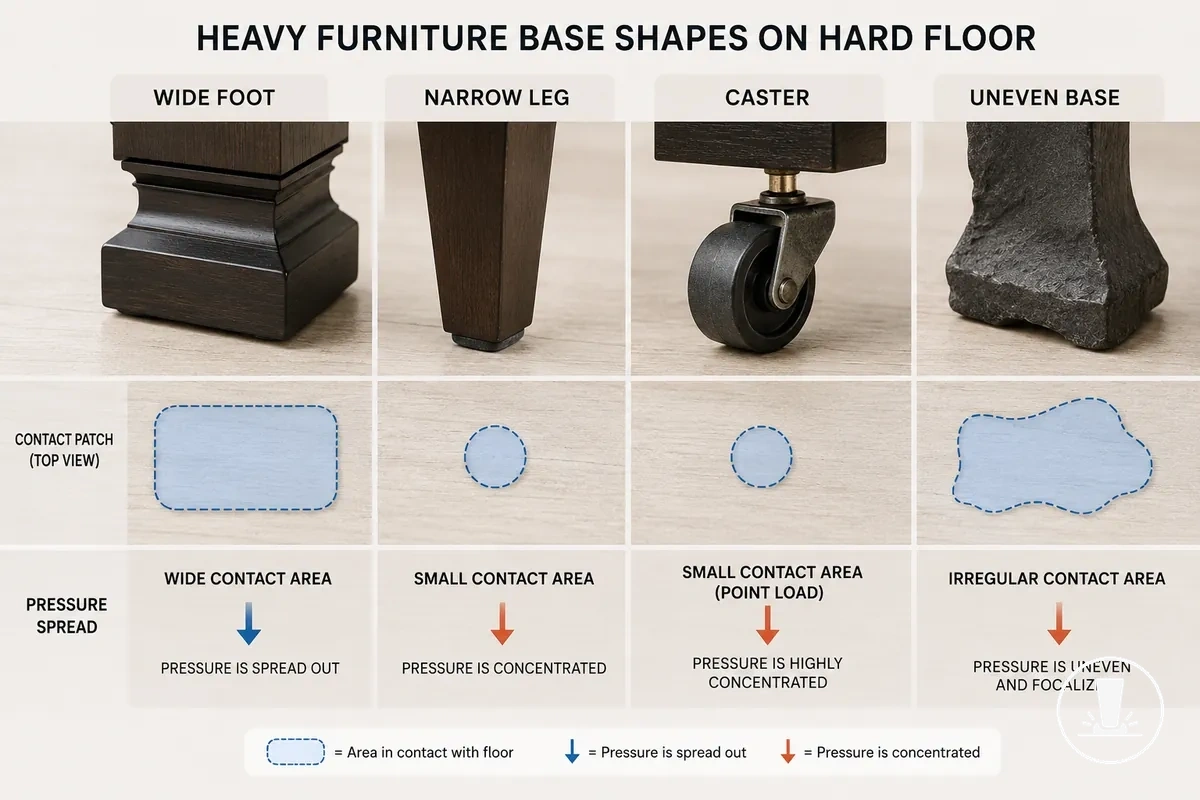
Furniture-base shape influences how weight reaches the floor and how a protector may need to support floor contact. Narrow legs create pressure concentration because the load passes through a small base contact point. Wide feet generally provide greater load spread across the furniture footprint. Casters and uneven bases can create localized pressure points or movement-related considerations, depending on floor type, base shape, and protector material.
Weight, contact area, and furniture-base shape work together to influence pressure distribution. The comparison below shows how different base types affect contact area, pressure behavior, and protector implications.
| Base type | Contact area | Pressure effect | Protector implication |
|---|---|---|---|
| Wide feet | Larger contact area | Greater load spread across floor contact | Protector fit should support stable floor contact and load distribution |
| Narrow legs | Small contact area | Higher pressure concentration and potentially greater dent risk on sensitive floors | A wider protector may help distribute pressure across a larger area |
| Casters | Small rolling contact points | Point-load pressure with possible movement risk | Protector selection may depend on cup fit and movement-control needs |
| Uneven bases | Inconsistent base contact | Pressure may concentrate at specific pressure points | Protector fit should support more balanced floor contact where conditions allow |
A cabinet with narrow legs and a bed with wide feet can create different pressure patterns even when both are heavy. Pressure outcomes may vary with floor type, protector material, and how evenly the furniture base transfers weight through its contact area.
Wide feet, narrow legs, casters, and uneven bases
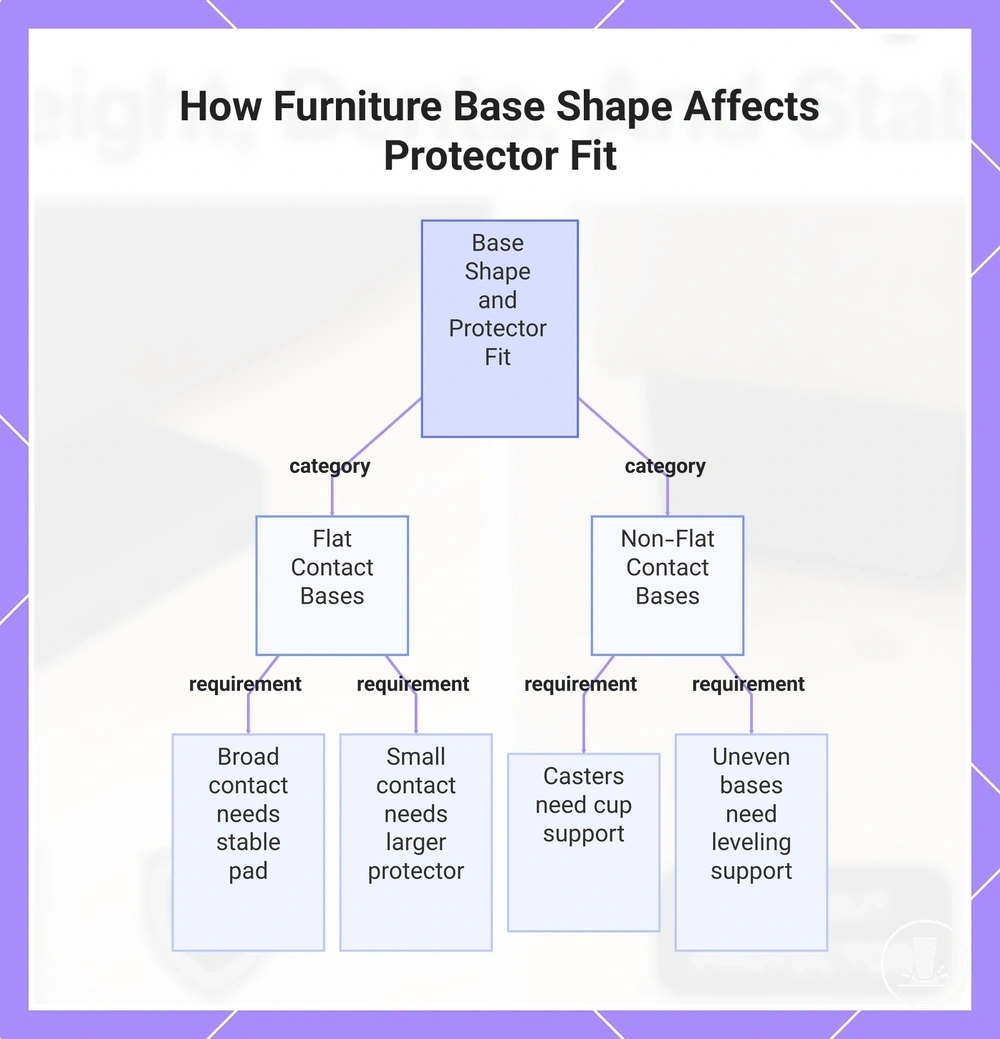
Protector fit depends on how the furniture base contacts the floor. Wide feet, narrow legs, casters, and uneven bases create different support requirements within the same contact-area discussion. In this subsection, base shape is the local sizing variable.
Wide feet, narrow legs, casters, and uneven bases differ in how protector fit influences load spread, movement control, or leveling.
- Wide feet: Wide feet create broad contact and support load spread across a larger contact patch. Protector fit should maintain stable pad coverage beneath the base.
- Narrow legs: Narrow legs create small contact areas and concentrated pressure. A larger protector may help spread force across a wider surface.
- Casters: Casters use wheel contact rather than a fixed foot shape. Protector fit may depend on a caster cup or other contained support that helps manage movement.
- Uneven bases: Uneven bases create inconsistent floor contact. Protector fit may require leveling support when instability results from unequal base contact.
For example, a heavy furniture base with narrow legs may need wider support than a base with wide feet because the contact patch is smaller. The result can vary with floor type, protector material, and how evenly the base transfers weight to the floor.
This chart groups furniture base shapes into flat contact and non-flat contact categories, showing the specific protector fit requirement for each type.
Static load versus furniture that needs occasional movement
Fixed heavy furniture and occasionally moved heavy furniture require different support considerations. Static load focuses on long-term weight distribution and protector compression, while occasional movement introduces shifting and dragging considerations. The key distinction is permanent support versus movement.
Static load and occasional movement change how a floor protector is expected to function. The comparison below separates long-term support needs from movement-related conditions.
| Static heavy furniture | Occasionally moved heavy furniture |
|---|---|
| Weight remains in one position for extended periods. | Furniture may be shifted during cleaning movement or repositioning. |
| Protector compression may become a consideration under long-term support conditions. | Dragging may increase scratch risk depending on floor type and contact conditions. |
| Permanent support is the primary objective. | Temporary movement assistance may become relevant. |
| Dent risk may depend on static load, contact area, and protector compression. | Movement effects may depend on floor surface, protector material, and shifting frequency. |
Sliders and glides are temporary movement aids rather than permanent support solutions. They may assist with occasional movement in certain situations, but temporary movement tools should not automatically be treated as permanent floor protection.
Protector types that support heavy furniture loads
Protector types that support heavy furniture loads should be selected according to their support job rather than their product category. Different protector types can spread pressure, add grip, contain furniture feet or wheels, or assist with movement. Type-level fit is the most useful decision frame.
Protector types that support heavy furniture loads differ in how they manage load support, floor contact, stability, and dent control. The comparison below organizes each type by its primary role, tradeoff, and best-fit condition.
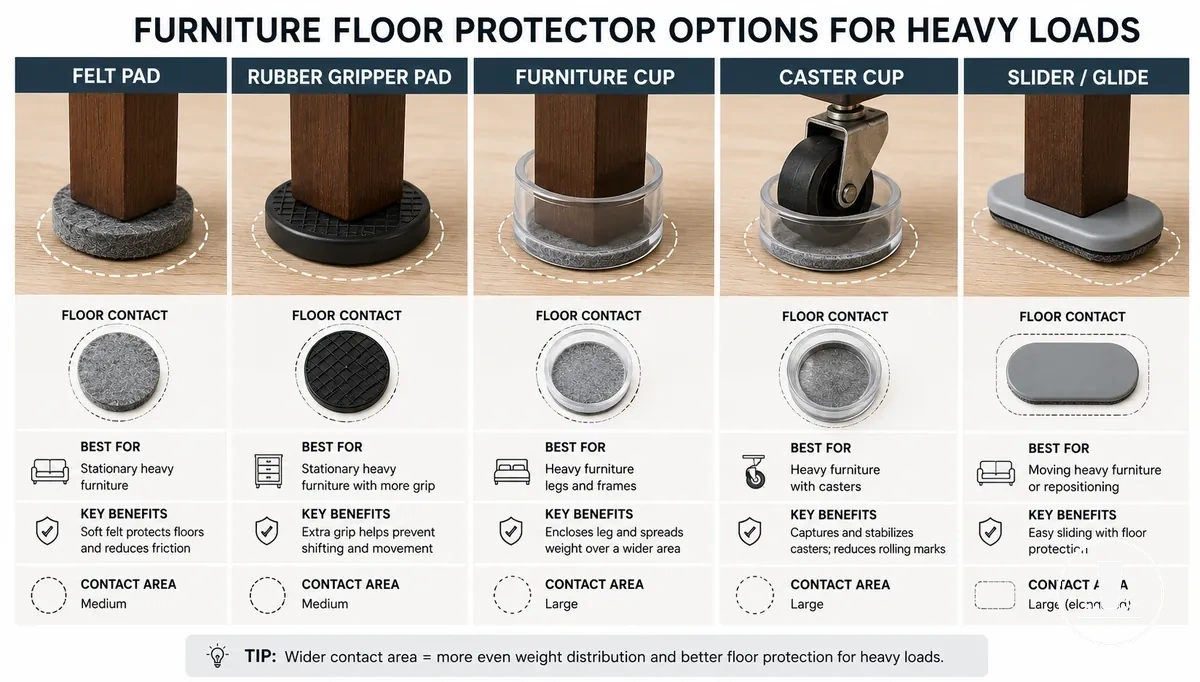
| Protector type | Load-support role | Main tradeoff | Best-fit condition |
|---|---|---|---|
| Felt pads | Help spread pressure across floor contact points | Compression may vary with load and floor conditions | Hard floors where pressure spreading is a consideration |
| Rubber gripper pads | Add friction and stability | Marking risk may vary by floor surface and material | Furniture that benefits from reduced shifting |
| Furniture cups | Contain furniture feet and support dent control | Fit depends on foot shape and contact area | Fixed furniture with concentrated contact points |
| Caster cups | Contain wheel contact and support load distribution | Fit may vary by caster design | Furniture that rests on casters |
| Sliders | Support temporary movement | Not intended primarily for permanent support | Occasional repositioning or cleaning movement |
| Glides | Allow controlled floor contact during movement | Suitability may depend on floor type and use pattern | Furniture that is moved periodically |
Felt pads, rubber gripper pads, furniture cups, and caster cups focus on load support, stability, or floor-contact management. Their tradeoffs depend on contact area, furniture-base shape, floor type, and compression behavior. Sliders and glides serve a different role because they prioritize temporary movement rather than stationary support.
Sliders and glides are movement aids rather than default permanent support solutions. They may assist with temporary movement when furniture is shifted, but their role should be evaluated separately from protectors intended for continuous load support.
Thick felt pads for pressure spreading on hard floors
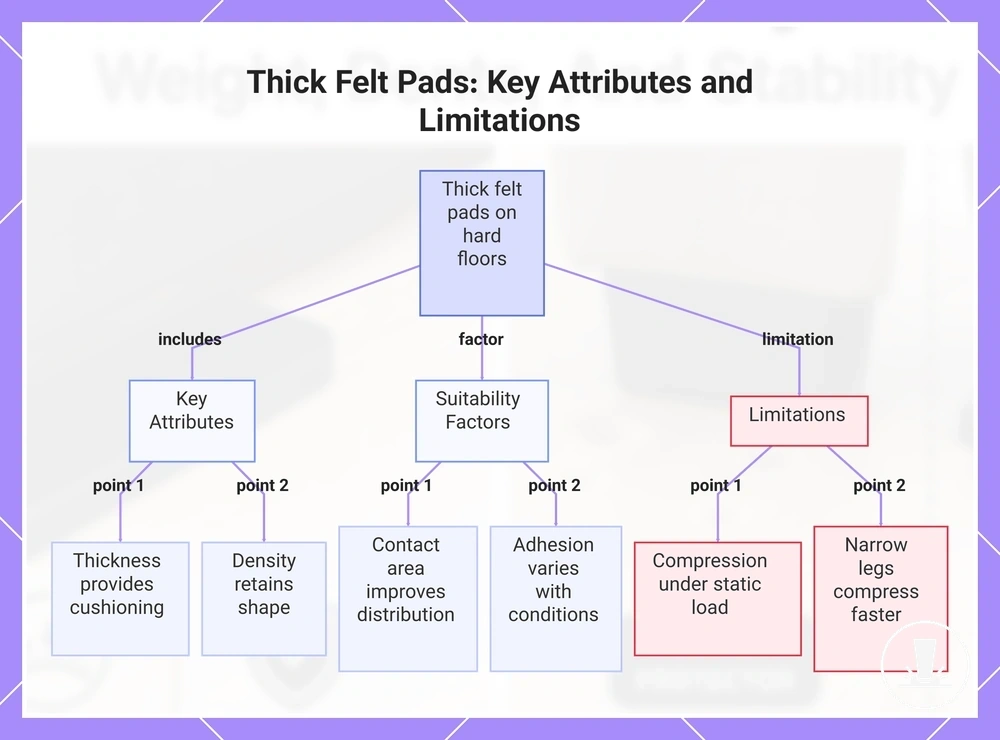
Thick felt pads can help spread pressure under heavy furniture on hard floors by increasing the contact area between the furniture base and the floor surface. Thick felt pads are soft and compressible, which can support scratch reduction and more even floor contact in many situations. Their suitability depends on thickness, density, and contact area.
The most relevant felt pad attributes are the factors that influence load distribution and long-term contact under static weight.
- Thickness: Greater thickness may provide more cushioning, but thicker felt can also compress under sustained load.
- Density: Higher density felt may retain its shape longer under pressure than lower density felt.
- Adhesion: Adhesion may vary with floor conditions, furniture weight, and surface preparation.
- Contact area: A larger contact area can support more even load distribution beneath furniture feet.
Thick felt pads can reduce direct contact between furniture and hard floors, but compression remains an important consideration under static load. Very narrow furniture legs or highly concentrated contact points may compress felt more quickly, which can reduce its pressure-spreading benefit over time and may require inspection or replacement.
This chart shows the main attributes, suitability factors, and limitations of thick felt pads for spreading pressure on hard floors.
Rubber gripper pads for non-slip stability
Rubber gripper pads can improve non-slip stability under heavy furniture by increasing friction between the furniture base and the floor surface. Rubber gripper pads often help reduce unwanted sliding, but the outcome depends on the floor finish and the type of material contact. Their effectiveness should be evaluated alongside non-marking contact requirements.
Rubber gripper pads create a balance between grip and floor-contact considerations.
| Grip benefit | Floor-contact limitation |
|---|---|
| Higher friction can improve stability and reduce unwanted movement. | Non-marking contact may depend on the floor finish, pad material, and duration of contact. |
| Rubber pads can help resist sliding under static furniture loads. | Residue or marking risk may vary across finished floor surfaces. |
Rubber gripper pads support stability through friction, but stronger grip is not automatically the safest outcome for every floor finish. Floor-safe contact depends on the interaction between the rubber material, the surface finish, and how long the pad remains in place.
Furniture cups and caster cups for fixed heavy pieces
Furniture cups and caster cups depend on inner fit, base width, and the type of floor contact beneath fixed furniture. When correctly sized, these cup-style protectors increase contact area and contain furniture legs or wheels within a defined support surface. Their support function relies on containment and wider base contact.
Furniture cups and caster cups serve different support roles for fixed furniture. The distinction below helps clarify leg containment versus wheel containment.
| Cup type | Fits | Support role | Main caution |
|---|---|---|---|
| Furniture cups | Furniture legs or feet | Support leg containment, base width, load spread, and stability | Inner fit should match the furniture foot shape |
| Caster cups | Furniture wheels | Contain wheel contact and provide a wider support area | Wheel size and cup fit may affect stability outcomes |
Furniture cups can help distribute force across a broader floor-contact area when the inner fit and base width are appropriate, while caster cups are designed to contain wheel movement within a defined cup shape. For example, a narrow furniture leg may benefit from a cup that closely matches its footprint, although dent control and stability can still vary with floor conditions and load concentration.
Sliders and glides for temporary movement, not permanent support
Sliders and glides are primarily intended for temporary movement rather than permanent support under heavy furniture. Sliders help reduce resistance when furniture is moved for cleaning or repositioning, while glides are designed to ease controlled movement across a floor surface. Their main role is temporary movement, not long-term static-load support.
The comparison below separates movement aids from support-oriented use cases and highlights the boundary between temporary movement and permanent support.
| Temporary movement | Permanent support |
|---|---|
| Sliders are used to help move furniture during cleaning or repositioning. | Permanent support focuses on long-term floor contact under a static load. |
| Glides allow smoother movement and depend on glide hardness and floor sensitivity. | Long-term support may require protectors designed for continuous weight-bearing contact. |
| Movement aids are intended for short-duration use. | Static-load conditions can involve ongoing compression and floor-contact considerations. |
Sliders and glides can create different floor risk outcomes depending on slider material, glide hardness, movement frequency, and floor sensitivity. Scratch risk or dent outcomes may vary by floor surface and contact conditions, which is why movement aids should be evaluated separately from solutions intended for permanent support.
Floor compatibility for heavy furniture protection
Floor compatibility for heavy furniture protection depends on the floor surface, the main floor risk, and the protector attribute used beneath the furniture base. Floor surfaces differ in hardness, finish sensitivity, and compression behavior under heavy loads. Compatibility depends on floor surface and protector contact.
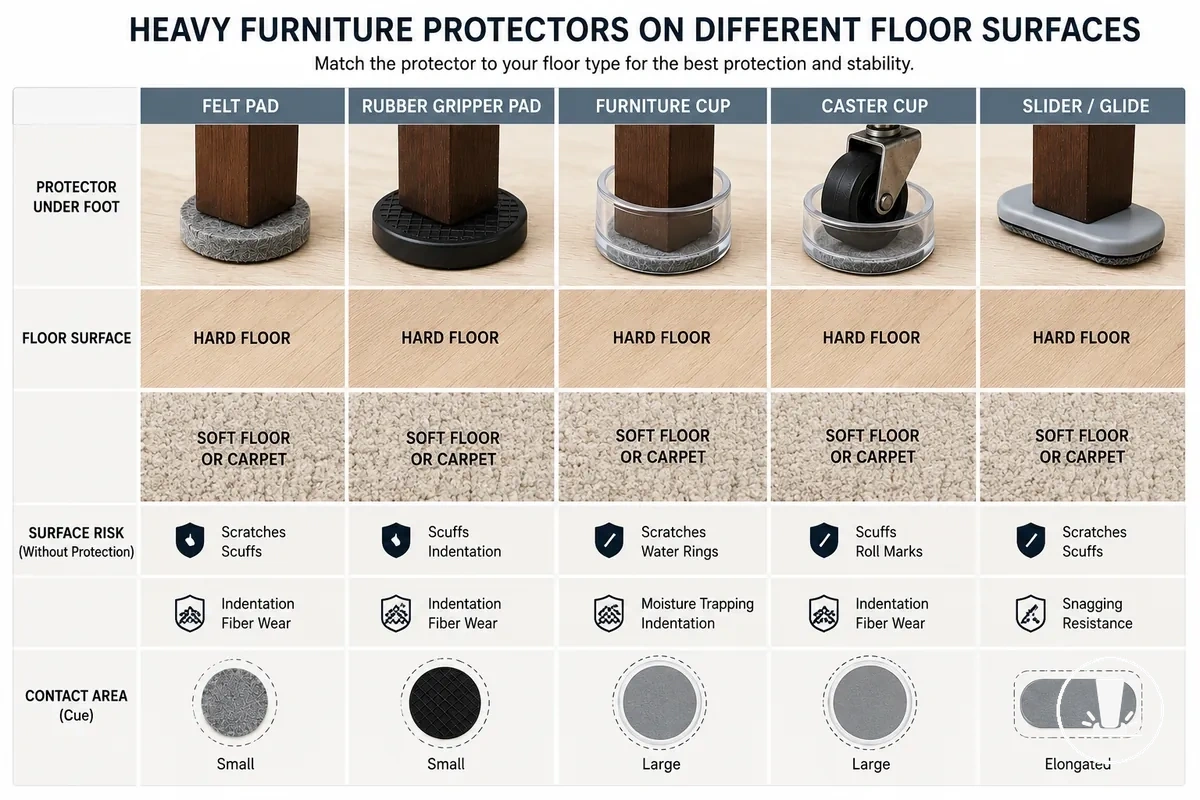
Floor compatibility for heavy furniture protection is easier to evaluate when floor surface, main risk, protector attribute, and caution are considered together. The table below organizes those compatibility criteria.
| Floor surface | Main heavy-furniture risk | Protector attribute | Caution |
|---|---|---|---|
| Hardwood | Finish sensitivity and marking | Non-marking contact and stable support | Material choice may affect floor-contact outcomes |
| Laminate | Marks or pressure concentration | Load-spreading contact area | Protector fit may influence pressure distribution |
| Vinyl | Dent or mark risk | Wider contact surface | Compression effects may vary by floor condition |
| Tile | Sliding or localized pressure | Grip and stability | Friction characteristics may vary by surface finish |
| Carpet | Indentation | Furniture cups or wider support | Compression depth may depend on carpet construction |
| Soft floors | Compression and support loss | Broader support area | Long-term contact may change floor response |
Hardwood, laminate, and vinyl often require closer attention to finish sensitivity, marking potential, and pressure concentration. Tile surfaces may place greater emphasis on grip and stability, while carpet and soft floors are more closely associated with compression and indentation considerations. The most suitable protector attribute depends on how the floor surface responds to heavy furniture contact.
When finish sensitivity, indentation behavior, or other floor-specific risks become the primary concern, those topics are usually better addressed within dedicated floor-type guidance rather than within a general heavy-furniture compatibility comparison.
Hardwood, laminate, vinyl, and tile contact risks
Hardwood, laminate, vinyl, and tile contact risks depend on floor surface characteristics, finish sensitivity, protector material, and the contact condition beneath heavy furniture. The same heavy furniture can create different outcomes across hard floors because floor finishes and surface hardness respond differently to sustained pressure and movement. Compatibility depends on matching protector material to the floor surface and its hard-surface contact risk.
Hard surfaces differ in how they respond to heavy furniture contact. Hardwood often involves greater finish sensitivity, so non-marking contact may be an important consideration. Laminate and vinyl can present marking risk or pressure-related surface risk depending on protector material and load concentration. Tile is generally less affected by indentation, but slipping risk may become more relevant when protector material relies on grip characteristics that vary by floor finish.
For example, a protector material that may be suitable for one hard floor is not automatically appropriate for another because finish sensitivity, friction, and contact behavior can differ. Readers focused specifically on heavy furniture on hardwood floors may benefit from more detailed hardwood-specific compatibility guidance.
This section focuses on hard-surface compatibility rather than complete floor-type recommendations. For broader comparisons involving laminate, vinyl, and softer floor coverings, see protectors for laminate vinyl and carpet for floor-specific considerations beyond this hard-surface contact discussion.
Carpet and soft-floor indentation risks
Carpet and soft-floor indentation risks depend on surface compressibility, support width, and furniture contact shape under heavy loads. Soft floors are more compressible than hard surfaces, so weight can sink deeper into the surface over time. Compatibility depends on support width and contact conditions, with indentation as the main soft-floor risk.
The checklist below verifies whether furniture cups, caster cups, or broad supports provide conditions that may help manage carpet and soft-floor indentation risks.
- Check whether carpet pile shows noticeable pile compression under the furniture footprint.
- Check whether furniture foot shape concentrates weight into a small contact area.
- Check whether furniture cups or floor cups provide wider support beneath furniture feet.
- Check whether caster cups distribute wheel contact across a broader surface.
- Check whether broad supports improve stability by spreading load across more soft flooring area.
Carpet and soft floors respond differently depending on carpet pile, pile compression, and furniture foot shape. Wider support can help reduce indentation depth in many cases, while narrow feet or concentrated wheel contact may increase indentation and affect stability. Even when furniture cups, caster cups, or broad supports are used, long-term static load can still compress soft surfaces over time, and indentation outcomes may vary with load duration and surface characteristics.
Dent, scratch, and sliding risks under heavy furniture
Dent, scratch, and sliding risks under heavy furniture depend on different causes and should be evaluated separately when selecting a protector. Dent risk is usually linked to concentrated weight and contact area, while scratch risk is more closely associated with movement, contact material, and floor sensitivity. Sliding risk relates to grip and stability, making it important to separate pressure dents, movement scratches, scuffs, and marks into distinct risk types.
Dent, scratch, and sliding risks under heavy furniture can be organized by risk type, likely cause, protector attribute, and safe limitation. The table below separates these factors to show why different floor damage outcomes may require different selection criteria.
| Risk type | Likely cause | Protector attribute | Safe limitation |
|---|---|---|---|
| Dent risk | Pressure dent from concentrated weight and limited contact area | Wider support surface | Pressure dents may still occur depending on load and floor sensitivity |
| Scratch risk | Small movement, grit, or abrasive contact material | Smooth non-abrasive contact layer | Movement scratches may still occur under certain conditions |
| Sliding risk | Reduced grip or unstable contact | Grip and stability features | Non-slip risk varies by floor finish and contact conditions |
| Scuffs and marks | Material transfer or repeated contact | Non-marking contact | Marks may depend on material compatibility and floor sensitivity |
Readers looking for broader ways to prevent dents and floor damage may benefit from a more general prevention-focused discussion. Understanding whether dent risk, scratch risk, sliding risk, scuffs, or marks are the primary concern helps guide criteria-based selection because each protector attribute addresses a different cause and limitation.
Pressure dents from concentrated furniture weight
Pressure dents result from concentrated weight being applied to a small contact area over time. When heavy furniture transfers force through a narrow furniture leg or a limited footprint, pressure increases at the floor surface and dent risk becomes higher. Concentrated weight creates more pressure when the small contact area limits load distribution.
A simple entity-attribute-value example shows how pressure dents develop under different conditions.
| Entity or part | Attribute | Condition | Effect |
|---|---|---|---|
| Furniture leg | Small contact area | Concentrated weight | Higher pressure dent risk |
| Floor surface | Floor softness | Longer placement duration | Greater indentation potential |
| Protector pad | Protector width | Pad compression under load | Load spread may change over time |
Floor softness, protector width, pad compression, and placement duration influence how pressure dents develop. A wider pad may help spread load across a larger surface, but pad compression can reduce that benefit under certain conditions. For example, a narrow furniture leg under a long-term static load may create deeper indentation on a softer floor, even when a protector is used, because dent severity can vary with load concentration and placement duration.
Scratches and scuffs from small movements
When scratches or scuffs appear under heavy furniture, the likely cause is often small movements combined with abrasive floor contact. Heavy furniture can shift, vibrate, or drag slightly during normal use, and trapped grit or unsuitable contact material can increase visible surface marks. Small movements are the trigger that turns floor contact into scratch risk under a heavy load.
The diagnosis below helps identify whether contact material, trapped grit, debris, or protector wear is contributing to scratches and scuffs.
- Check for trapped grit or debris between the floor and the furniture contact point.
- Check whether the contact material may create abrasive contact with the floor surface.
- Check for minor shifting, vibration, or dragging that occurs under a heavy load.
- Check whether protector wear has exposed a harder contact surface.
- Check whether a worn pad is creating uneven floor contact and localized surface marks.
For example, a heavy cabinet may develop visible scratches when trapped grit remains beneath a contact point and repeated small movements occur over time. Replacing a worn pad or reducing debris at the contact surface may help reduce scratch and scuff risk, but outcomes can vary with floor sensitivity, contact material, and the amount of movement involved.
Sliding risk when grip is stronger than floor-safe contact
Sliding risk when grip is stronger than floor-safe contact depends on balancing stability against surface interaction. Stronger grip increases friction and can improve furniture stability, but floor-safe contact may vary when gripper material creates residue, marks, or other contact effects on a sensitive finish. The key decision is the grip-versus-floor-contact tradeoff.
The comparison below separates stability benefits from floor-contact cautions.
| Grip benefit | Floor-contact caution |
|---|---|
| Higher friction increases grip and can reduce sliding risk. | Residue or marking risk may vary with floor finish sensitivity. |
| Non-slip grip can improve stability under heavy furniture. | Gripper contact may not provide the same floor-safe contact on every surface. |
| Stronger friction can help limit unwanted movement. | Rubber contact and finish condition may influence mark risk. |
Grip decisions depend on floor material, finish condition, and whether the furniture is intended to remain fixed or move occasionally. Stronger friction improves grip, but whether that grip remains floor-safe depends on the contact material, potential residue, and the sensitivity of the floor finish.
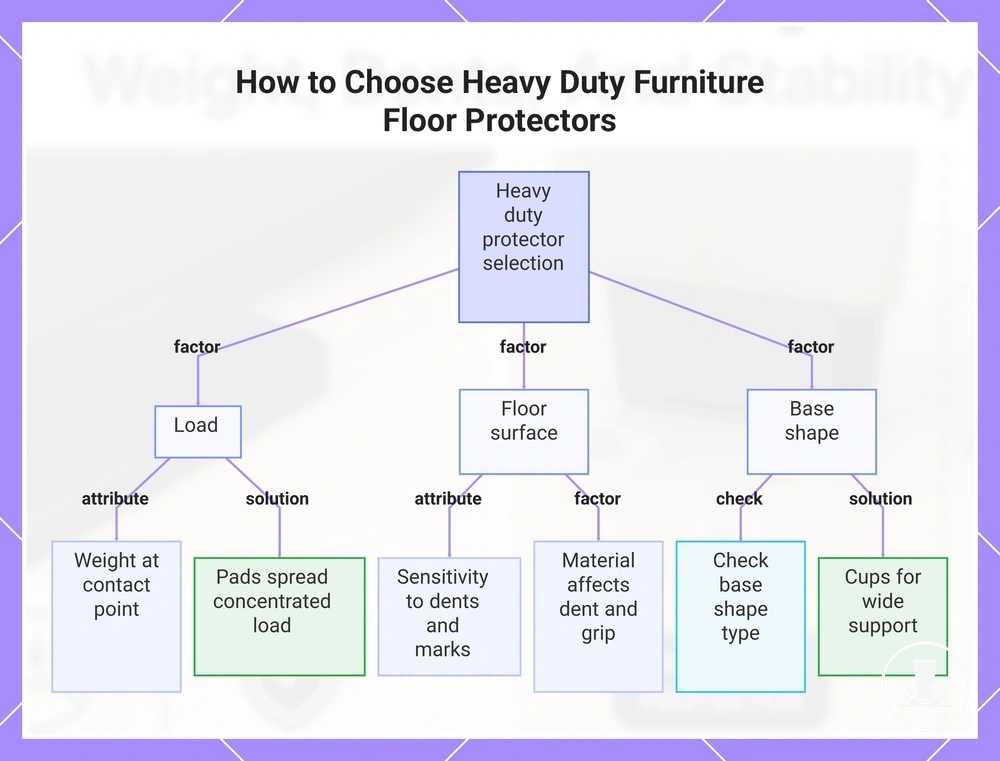
Choosing heavy duty furniture floor protectors by load, floor, and base
Choosing heavy duty furniture floor protectors depends on matching the load, floor surface, and base shape to the conditions that create dent, grip, or stability concerns. A criteria-based approach helps narrow options without assuming one protector type fits every situation. Load, floor, and base form the main choice frame.
The checklist below organizes heavy duty furniture floor protector selection by the factors that most often influence performance and floor interaction.
- Load: Consider how much weight is concentrated at each furniture contact point.
- Floor surface: Identify whether the surface is more sensitive to dents, marks, or movement.
- Base shape: Check whether the furniture uses narrow legs, broad feet, or wheels.
- Movement frequency: Determine whether the furniture remains fixed or moves periodically.
- Damage risk: Prioritize dent risk, sliding risk, scratches, scuffs, or stability concerns.
Protector type and material should be selected according to those criteria rather than by category name alone. Heavy duty pads may help spread load when pressure concentration is the primary concern, while furniture cups may be more suitable when wider support or containment is needed. Material choice can influence dent risk, grip, and stability decisions, but outcomes depend on floor surface conditions and furniture contact patterns.
Criteria often overlap, which is why selection works best when load, base shape, and floor surface are evaluated together. Readers comparing heavy duty furniture floor protectors across broader applications may also review durable furniture floor protectors within a criteria-led evaluation. Practical decision signals include concentrated load on small contact points, finish sensitivity, movement frequency, and whether dent control or stability is the higher priority.
A practical shortlist starts with the furniture load, floor surface, and base shape before narrowing choices by protector type and material. The final shortlist should reflect the tradeoff between dent protection, grip, floor-safe contact, and stability requirements. A criteria-based shortlist is usually more reliable than choosing a protector based on a single attribute.
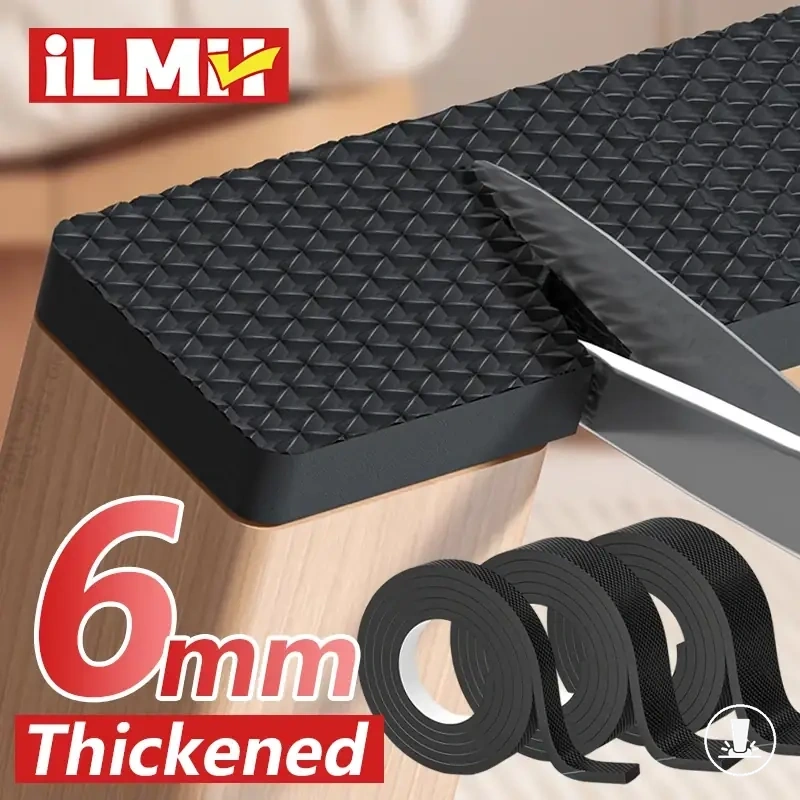
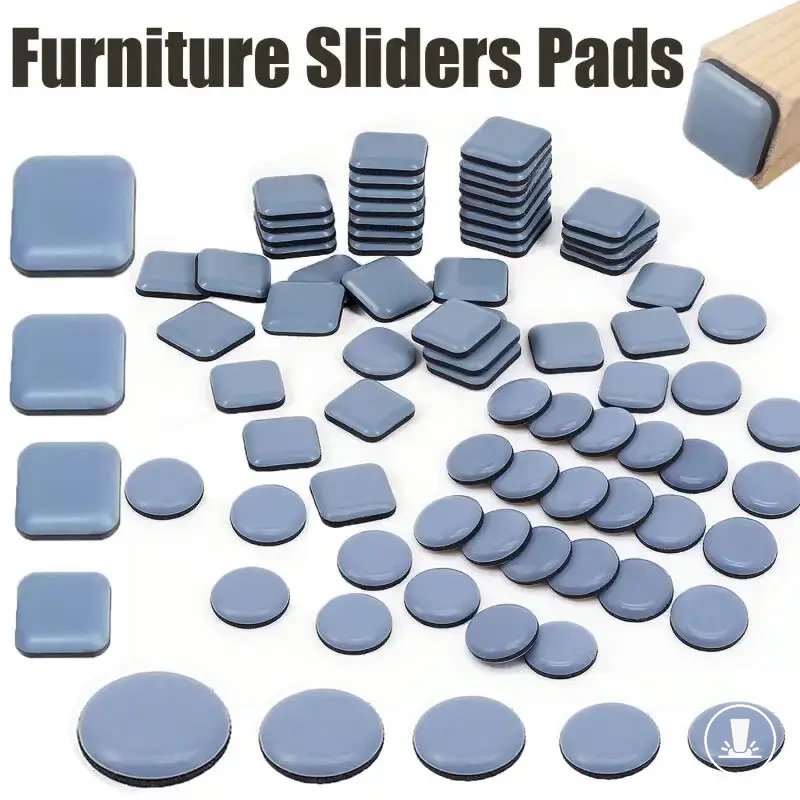
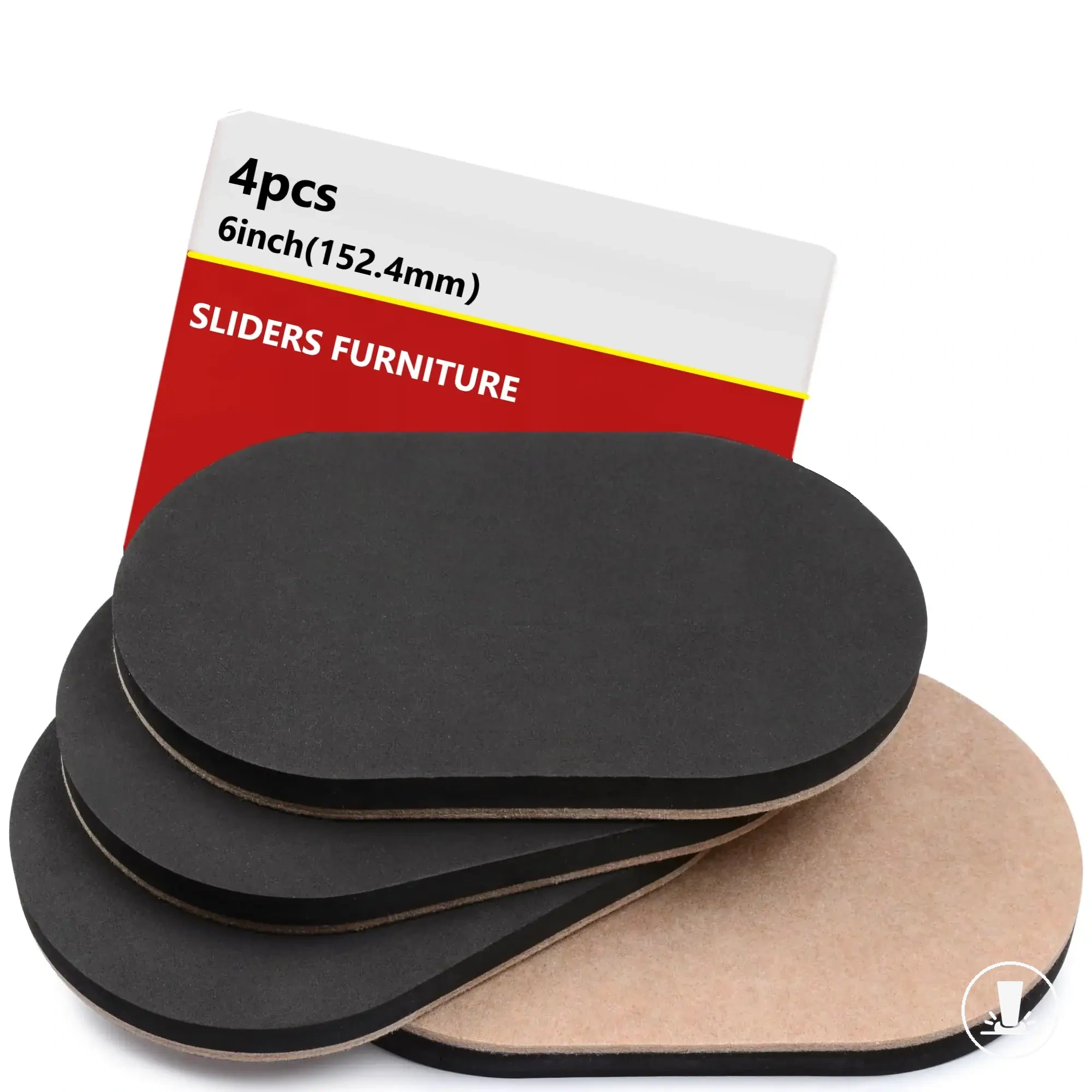
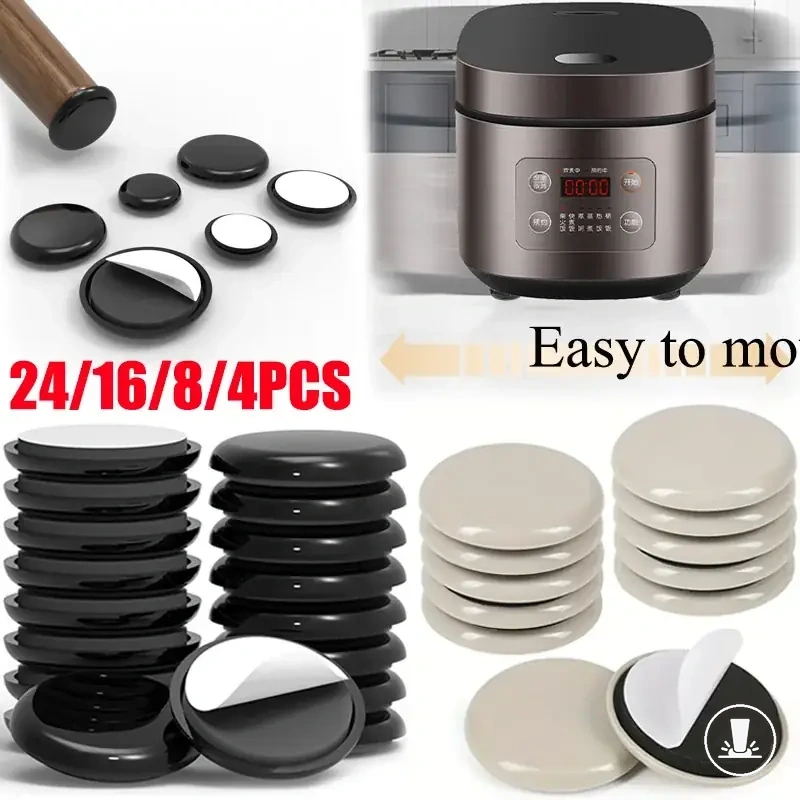
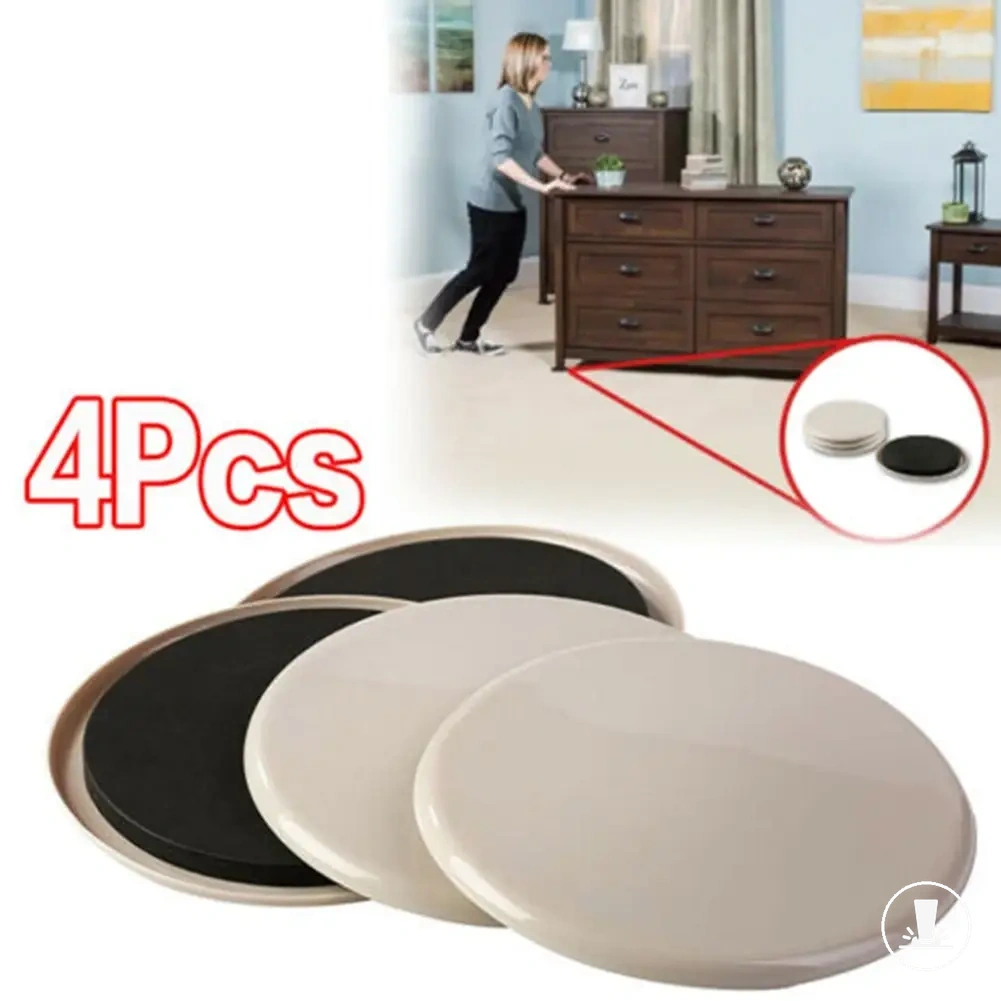
Here are product examples that may make comparison easier. Before buying, always review the compatibility criteria, essential features, and product details.
This chart shows how to select heavy duty furniture floor protectors by evaluating load, floor surface, and base shape together.
Match protector size to the furniture contact area
Protector size should match the furniture contact area because contact support depends on how well the protector covers the furniture foot. A closer size match can improve load spread and support stability under heavy furniture. Protector size should be verified against the actual contact area.
Contact area matters because heavy furniture transfers weight through a limited contact patch. Use the checklist below to verify protector fit and edge stability.
- Foot width: Check whether the furniture foot width is fully supported by the protector.
- Pad diameter: Verify that the pad diameter covers the main contact area without leaving unsupported edges.
- Cup diameter: Confirm that the cup diameter accommodates the furniture foot while maintaining stable contact.
- Overhang: Check whether excessive overhang could reduce edge stability under load.
- Load spread: Verify that the protector size supports load spread across the intended contact area.
An undersized protector reduces contact support because part of the furniture foot may extend beyond the protected area. For example, when a furniture foot is larger than the pad diameter or cup diameter, pressure may become more concentrated and dent risk can increase depending on floor conditions, load concentration, and edge stability.
Match protector material to floor sensitivity and movement
Protector material should match floor sensitivity and expected movement because material properties influence floor contact, grip, compression, and stability. Protector material affects how heavy furniture interacts with the floor surface under static or moving conditions. Floor sensitivity and movement are the primary filters for material choice.
Material differences change how floor sensitivity and movement outcomes are managed. The comparison below contrasts felt, rubber, cups, and harder glide surfaces through their main material attributes.
| Material | Primary attribute | Movement effect | Possible outcome |
|---|---|---|---|
| Felt | Softness and compression | Allows smoother movement | May support scratch reduction on sensitive floors |
| Rubber | Grip and friction | Helps limit movement | Marking tendency may depend on floor sensitivity and contact conditions |
| Cups | Support and containment | Can limit movement | May improve stability under concentrated loads |
| Harder glide surfaces | Lower compression and firmer contact | Support easier movement | Scratch risk may vary with floor sensitivity and surface conditions |
Felt and similar soft materials are often associated with scratch reduction through softer contact, while cups, rubber, and harder glide surfaces emphasize firm support, grip, or controlled movement. No protector material is universally safest because floor-safe contact, marking tendency, and stability depend on floor sensitivity, furniture movement, and the conditions of use.
Fit and placement checks before using heavy furniture protectors
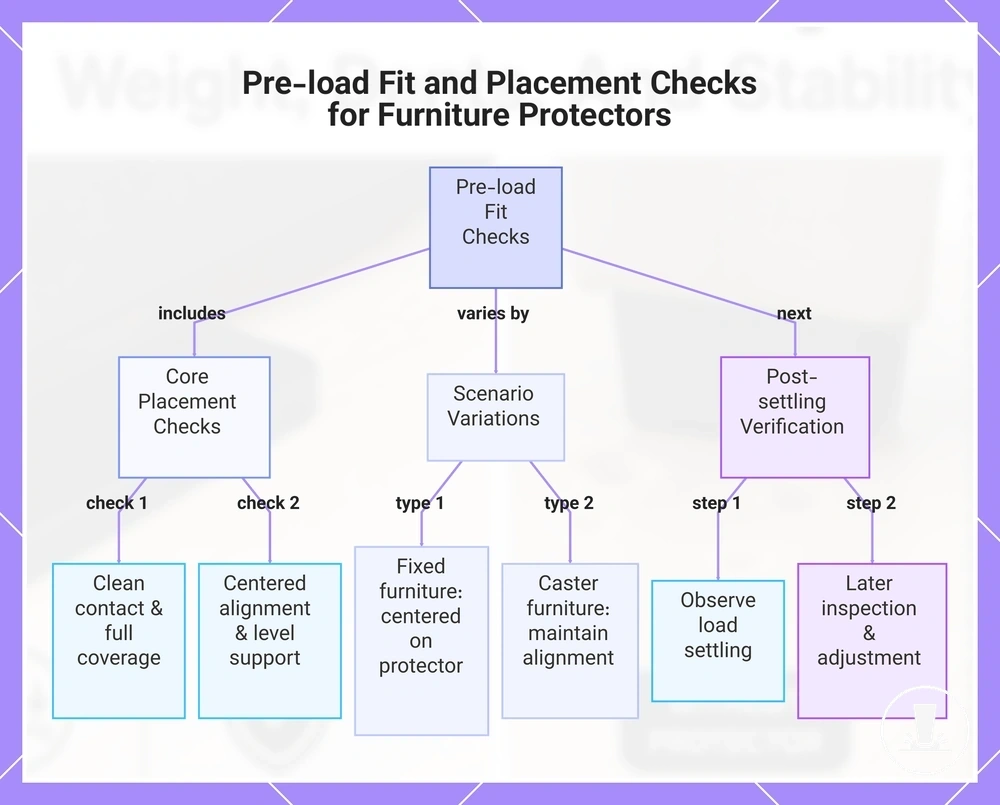
Fit checks and placement checks should be completed before full weight settles onto heavy furniture protectors because protector position, floor contact, and stability can change under load. Final checks help verify clean contact, full foot coverage, and alignment before long-term use. These checks matter because small placement issues may affect floor contact after load settling.
Use this mini-checklist to verify stability and floor contact before full load settles.
- Check for clean contact between the protector and the floor surface.
- Confirm full foot coverage at each furniture contact point.
- Verify correct alignment and centered protector placement.
- Check that the protector remains level and fully supported.
- Observe load settling and confirm that placement remains unchanged.
- Perform a later inspection to verify continued contact and alignment.
Scenario checks may vary by furniture type and floor condition. Fixed furniture should remain centered on the protector after load settling. Caster furniture should maintain alignment around wheel contact points when movement is limited. Mark-sensitive floors may benefit from an additional contact check for uneven placement, residue, or early surface marks.
Later inspection and adjustment help confirm that fit checks and placement checks remain valid over time. If alignment changes, contact becomes uneven, or full foot coverage is reduced, protector placement may need adjustment. Stability and floor protection outcomes can vary with furniture weight, floor conditions, and settling behavior, so periodic verification may be useful when conditions change.
Here are product examples that may make comparison easier. Before buying, always review the compatibility criteria, essential features, and product details.
This chart shows the essential fit and placement checks to perform before full weight settles on furniture protectors, including scenario variations and post-settling verification.