Furniture Floor Protectors for Laminate, Vinyl, and Carpet Floors
Furniture floor protectors depend on floor surface compatibility because the same contact material can behave differently on laminate floors, vinyl floors, LVP, and carpet floors. Furniture floor protectors are floor-contact accessories that help manage how furniture interacts with the surface beneath it. Compatibility is influenced by factors such as grip, pressure distribution, contact material, furniture weight, and movement patterns. As a result, the risk of scratches, marking, sliding, or indentation may vary depending on floor condition, protector design, and use.
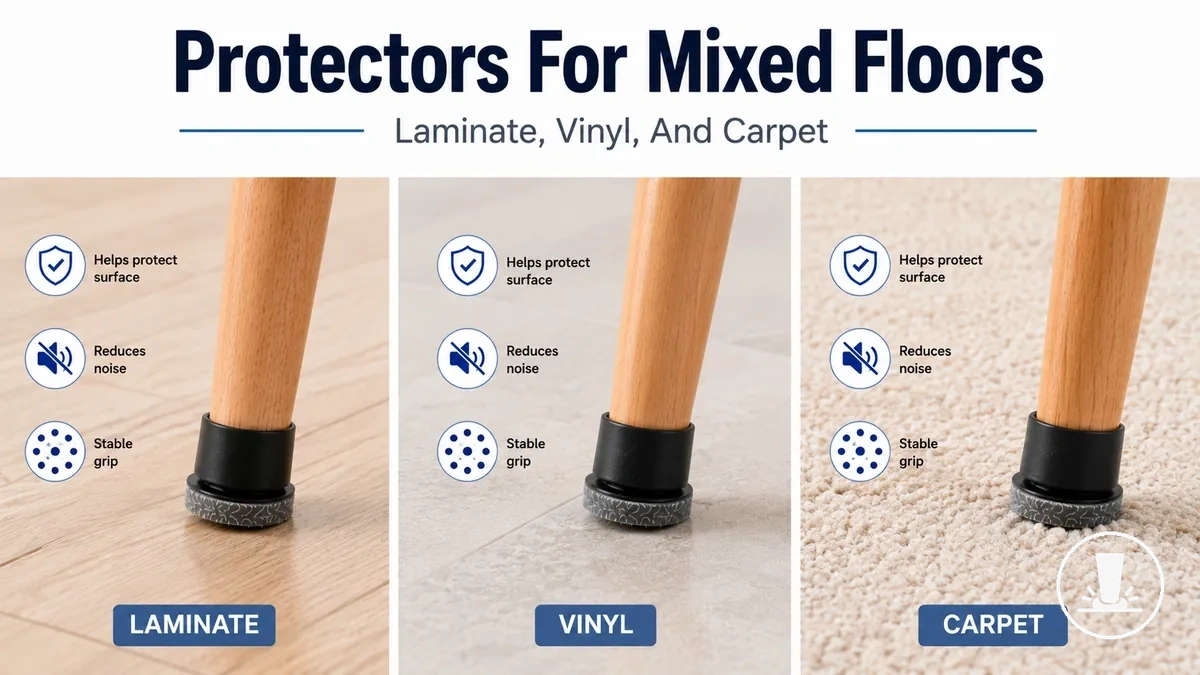
Furniture Floor Protectors for Laminate, Vinyl, and Carpet Floors are easier to evaluate when each floor surface is treated as a separate compatibility environment. The image below shows how floor surface differences can influence protector choice across hard and textile surfaces.
On hard floating floors such as laminate and vinyl, furniture pads may be selected to balance grip, pressure, and marking concerns, while carpet floors often shift attention toward furniture cups, furniture sliders, stability, and indentation management. furniture floor protectors are compatibility tools that connect furniture legs, contact materials, and floor surfaces in different ways depending on the use case. Felt pads may be considered where scratches and sliding are concerns on laminate floors, while backing material and pressure concentration can become more relevant on vinyl floors or LVP. Carpet floors create a different decision path because pile depth and load distribution can influence how protectors interact with the surface.
Furniture floor protectors should be chosen by matching the floor surface to the likely compatibility risk rather than assuming one solution fits every situation. Laminate floors, vinyl floors, LVP, and carpet floors respond differently to furniture weight, movement frequency, grip requirements, and contact pressure. The following sections examine these floor-surface differences in more detail to support surface-specific compatibility decisions.
How Floor Surface Changes Furniture Protector Compatibility
Floor surface changes furniture protector compatibility because the same protector can behave differently on laminate, vinyl, LVP, and carpet. Floor surface characteristics influence grip, pressure spread, marking risk, and movement, which can affect protector behavior under furniture. The main compatibility distinction is usually between hard floors and carpet, where surface sensitivity and load distribution differ.
Floor surface is the factor that influences how contact material transfers pressure and responds to furniture movement. On hard floors, compatibility may depend on balancing grip with a lower marking or scratch risk when furniture shifts. On vinyl and LVP, pressure spread and contact material can become more important when surface sensitivity is a concern. On carpet, pile structure may influence stability, indentation patterns, and movement under load.
How Floor Surface Changes Furniture Protector Compatibility becomes clearer when surface-specific factors are viewed side by side. The comparison below organizes grip, pressure spread, marking risk, and movement by floor surface.
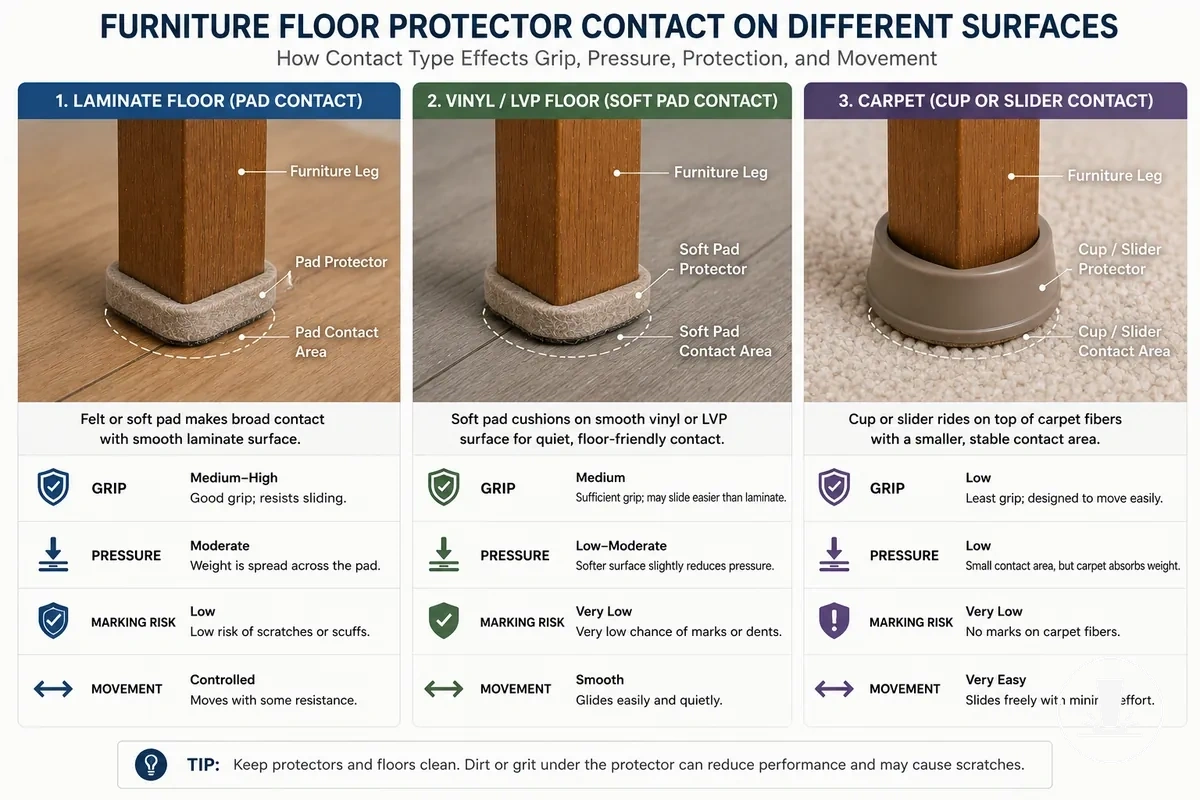
When comparing floor types, the goal is to identify which compatibility factors deserve the most attention before considering specific protector styles. Hard floors usually prioritize scratch risk, grip, and marking control, while carpet usually prioritizes indentation, stability, and movement, although outcomes can still depend on furniture weight, fit, contact material, and surface condition.
| Floor surface | Main risk | Protector behavior to check | Safer decision cue |
|---|---|---|---|
| Laminate | Scratch risk and visible marks | Grip, movement, and pressure spread | Match contact material to floor surface sensitivity |
| Vinyl or LVP | Marking risk and concentrated pressure | Pressure spread and contact material interaction | Consider how the protector distributes load across the surface |
| Carpet | Indentation and reduced stability | Load spread and movement control | Focus on stability across the carpet pile |
Laminate Floor Protectors for Scratches, Sliding, and Heavy Furniture
Laminate floor protectors depend on controlling scratches, sliding, and concentrated pressure where furniture meets the floor. Movement frequency and contact area matter because a laminate floor can respond differently to chair legs that move often than to heavy furniture that remains mostly stationary. Scratch transfer and sliding risk may vary based on pad material, furniture leg shape, adhesive hold, and floor condition.
When chair legs and other light furniture move frequently, laminate floor protectors are often evaluated for both movement control and surface protection. Felt pads may help reduce scratch transfer when clean contact is maintained between the pad and the laminate floor. Non-slip pads can help limit unwanted sliding in certain situations, although results may depend on adhesive hold and the condition of the floor surface. Furniture pads for laminate that match the shape and size of the furniture leg may support more consistent contact during movement.
Laminate Floor Protectors for Scratches, Sliding, and Heavy Furniture become easier to evaluate when contact area and movement patterns are visible. The image below highlights how protector size and furniture movement can influence scratch and sliding risk.
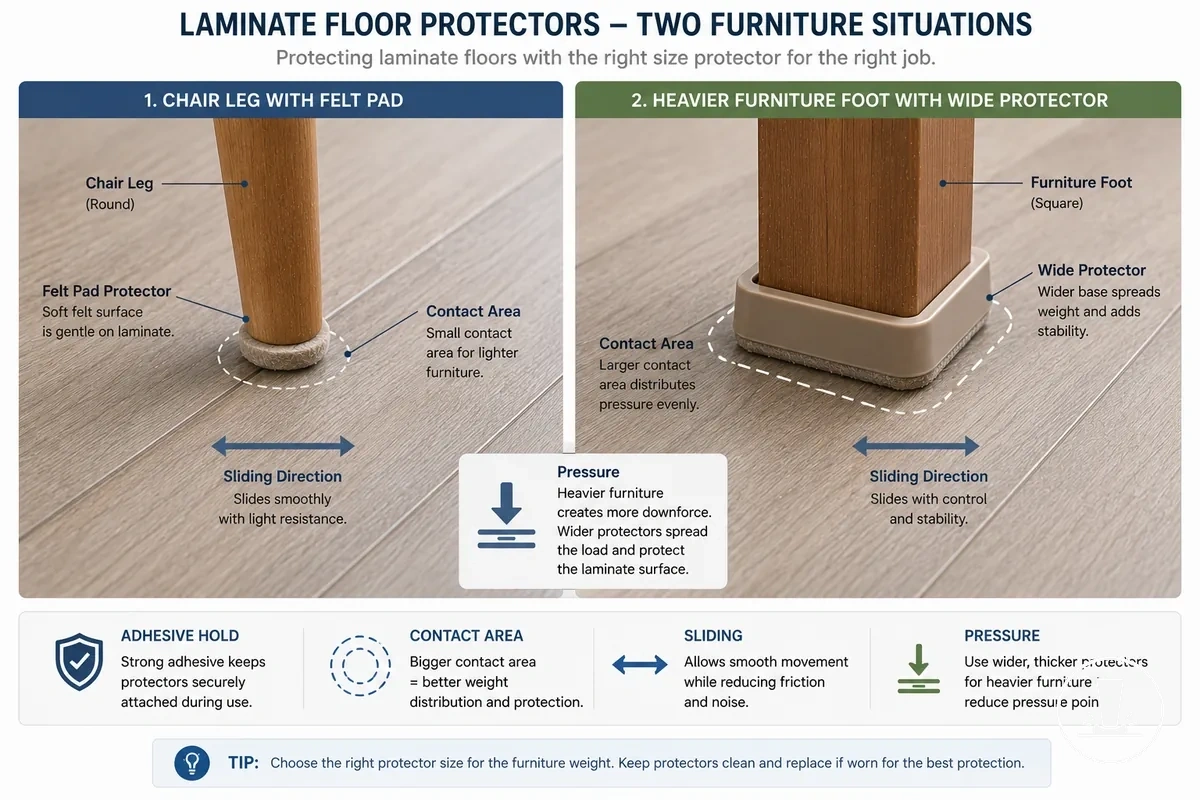
When heavy furniture such as sofas, tables, or cabinets remains in place for longer periods, contact area becomes a more important compatibility factor. A wider protector may spread pressure across a larger surface, while a smaller contact point can concentrate load beneath the furniture foot. Heavy furniture outcomes may still depend on pad thickness, furniture weight, movement during repositioning, and how well the protector maintains stable contact.
When scratches or sliding remain a concern, checking a few visible conditions can help identify compatibility issues before selecting or replacing protectors. Laminate Floor Protectors for Scratches, Sliding, and Heavy Furniture are easier to assess when scratch risk, slip risk, leg shape, and furniture weight are reviewed together as part of the same decision.
- Match pad size to the furniture leg shape and contact area.
- Keep felt pads and other floor pads clean to reduce scratch transfer risk.
- Review movement frequency, especially for chair legs and movable furniture.
- Check adhesive hold for lifting, shifting, or uneven attachment.
- Consider furniture weight when evaluating protector coverage and support.
- Inspect protectors for wear that may change grip or pressure distribution.
Felt Pads for Scratch Control on Laminate Floors
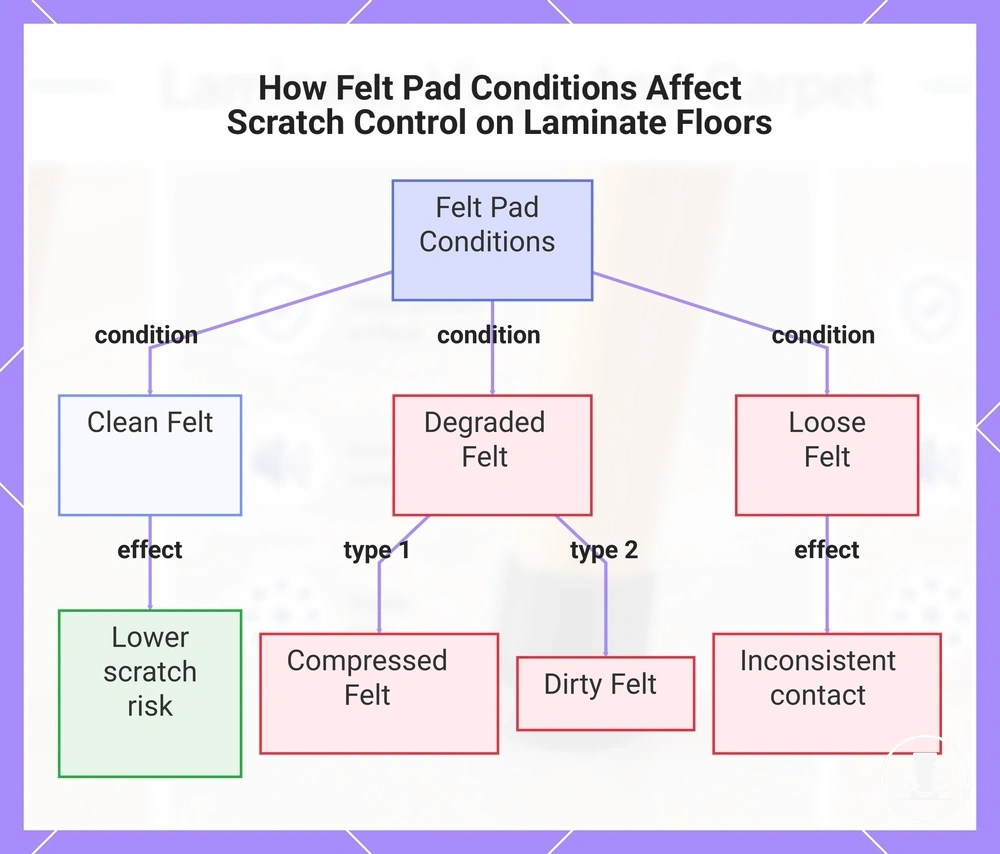
Felt pads can help with scratch control on laminate floors when clean felt maintains soft contact between the furniture leg and the floor surface. Felt furniture pads are often used for light chair movement because felt softness may reduce abrasive contact during normal use. Scratch control depends on clean felt, pad condition, and movement frequency rather than on felt alone.
When scratch marks begin to appear, debris trapped in dirty felt or pressure from compressed felt may increase scratch-transfer risk. Felt pads can retain debris over time, and compressed felt may provide less cushioning during chair movement. For frequently moved chairs, replacing worn felt floor pads when clean contact is no longer maintained may help reduce abrasive contact.
Felt Pads for Scratch Control on Laminate Floors can be assessed by checking common felt conditions:
- Clean felt: May support softer contact and lower scratch-transfer risk.
- Compressed felt: May provide less cushioning after extended use.
- Dirty felt: Debris retention can increase abrasive contact with the floor.
- Loose felt: Pad movement may affect consistent contact during chair movement.
This chart shows how different felt pad conditions (clean, compressed, dirty, loose) influence scratch control on laminate floors.
Non-Slip Pads for Furniture Movement on Laminate Floors
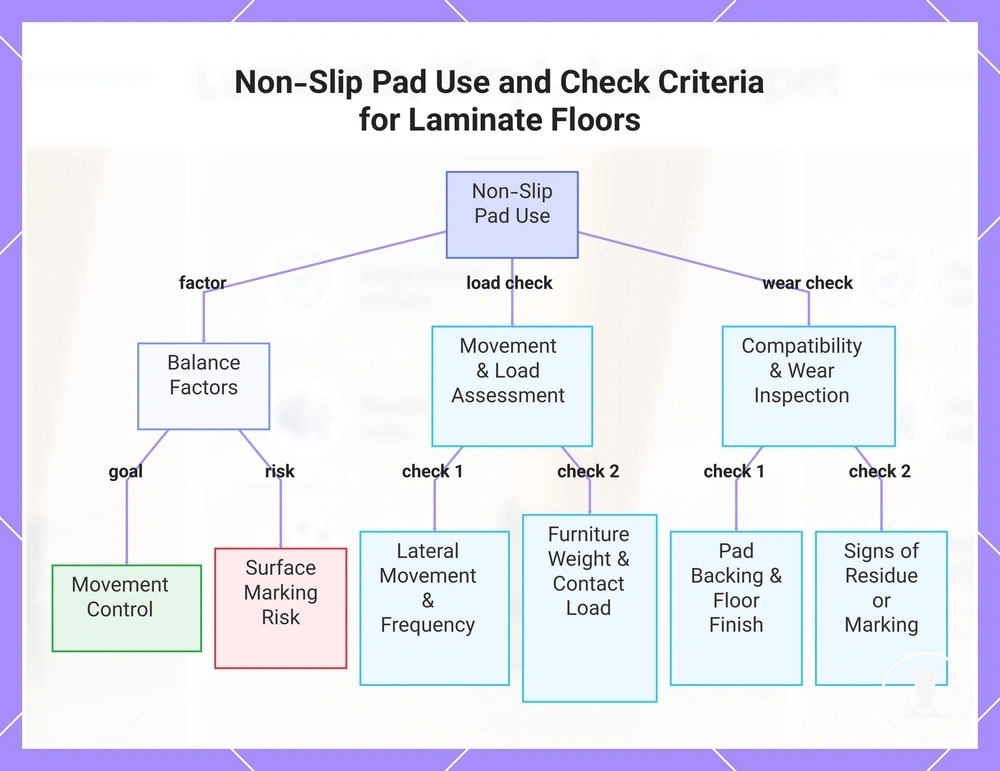
Non-slip pads can help reduce furniture movement on laminate floors when grip is needed to limit lateral movement. Grip can improve movement control, but the result may depend on pad backing, furniture weight, floor finish, and contact area. Non-slip pads are most useful when furniture movement is the primary concern rather than the only factor in protector selection.
More grip does not always mean a better outcome. Pad backing that is poorly matched to the laminate finish may increase the risk of residue or surface marking, even when movement control improves. The goal is usually to balance grip with floor-surface compatibility so that reduced slide does not introduce a different risk.
Non-Slip Pads for Furniture Movement on Laminate Floors can be checked using these criteria:
- Review movement frequency and the amount of lateral movement during use.
- Consider furniture weight and the load placed on each contact point.
- Check whether the pad backing is suitable for the floor finish.
- Inspect the contact area between the furniture leg and the pad.
- Look for signs of residue, shifting, or surface marking over time.
This chart shows the key factors to balance and the checks to perform when using non-slip pads to reduce furniture movement on laminate floors.
Vinyl and LVP Floor Protectors for Pressure, Staining, and Grip
Vinyl floor protectors and LVP floor protectors depend on pressure distribution, material contact, and grip behavior rather than scratch control alone. Pressure marks, staining, and movement can vary based on contact material, furniture load, and floor sensitivity. Vinyl plank flooring and luxury vinyl plank often require compatibility checks that consider how a protector interacts with the surface over time.
Pressure distribution refers to how load is spread beneath a furniture foot. A larger contact area or thicker soft contact pads may distribute pressure more broadly, while narrow contact points can concentrate force in a smaller area. Pressure marks may depend on furniture weight, pad thickness, and how long static furniture remains in one position. LVP and vinyl plank surfaces can respond differently depending on flooring composition and contact conditions.
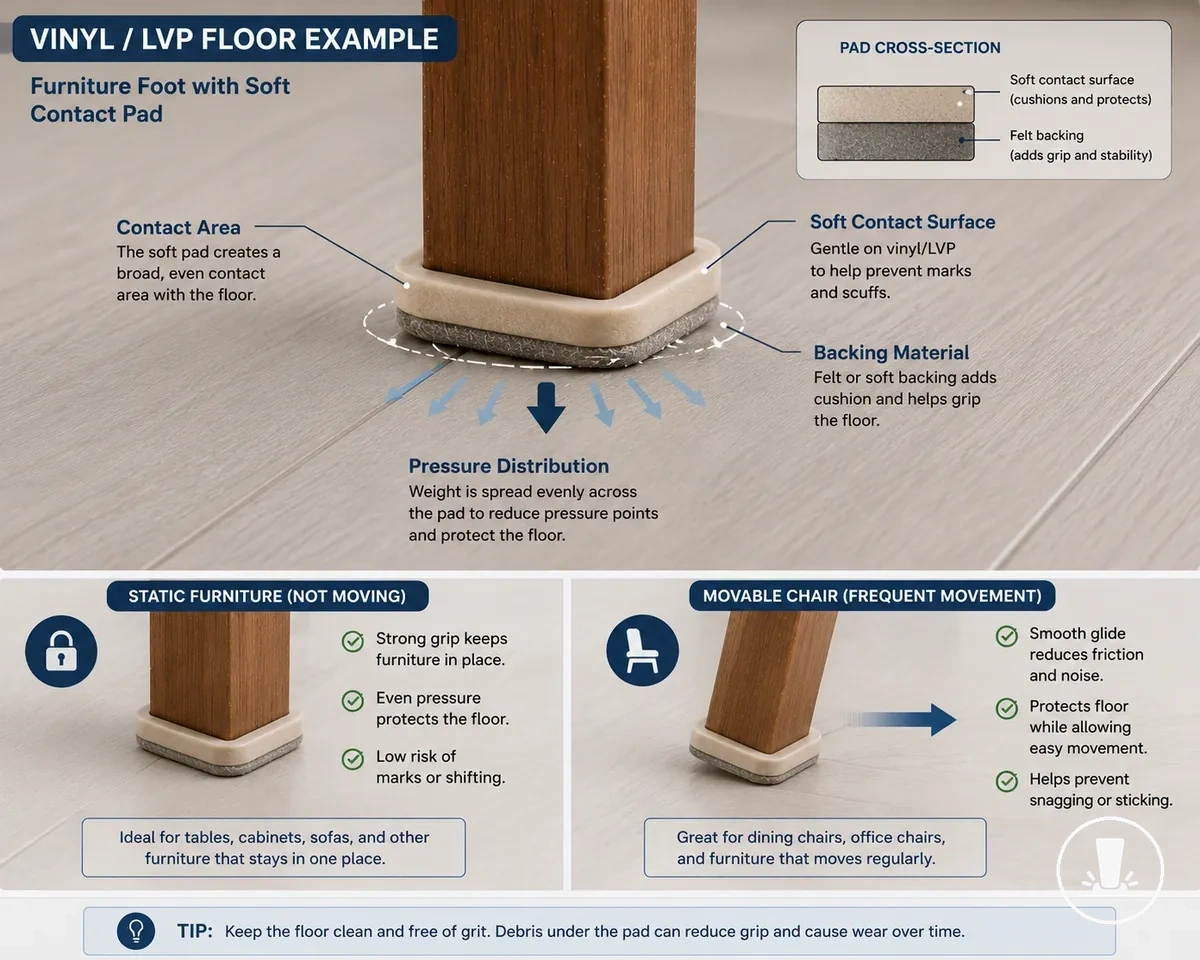
Vinyl and LVP Floor Protectors for Pressure, Staining, and Grip can be evaluated by comparing pressure, contact area, grip, and backing material together. The table below organizes common vinyl and LVP conditions and highlights which protector attributes may deserve closer attention.
| Vinyl or LVP condition | Protector attribute to check | Risk reduced | Caution |
|---|---|---|---|
| Static furniture | Contact area and pad thickness | Pressure concentration | Pressure marks may still depend on load and duration |
| Movable chairs | Grip level | Excess movement | Grip performance depends on surface sensitivity and contact material |
| Narrow legs | Soft contact pads | Localized pressure | Small contact points can concentrate force |
| Grippy backing | Backing material | Sliding | Staining or residue risk may depend on material compatibility |
When backing material creates concern about residue or marking, reviewing both material contact and floor sensitivity can help narrow the options. A protector that increases grip may not be suitable in every situation if staining, residue, or surface marking becomes a possibility. Matching the backing material to the floor condition is usually more useful than focusing on grip alone.
Static furniture and movable chairs can create different compatibility concerns. Static furniture often shifts attention toward pressure distribution and contact area, while movable chairs place more emphasis on grip and repeated movement. A protector that suits one scenario may require different contact characteristics in another.
Soft Contact Pads for Vinyl Furniture Legs
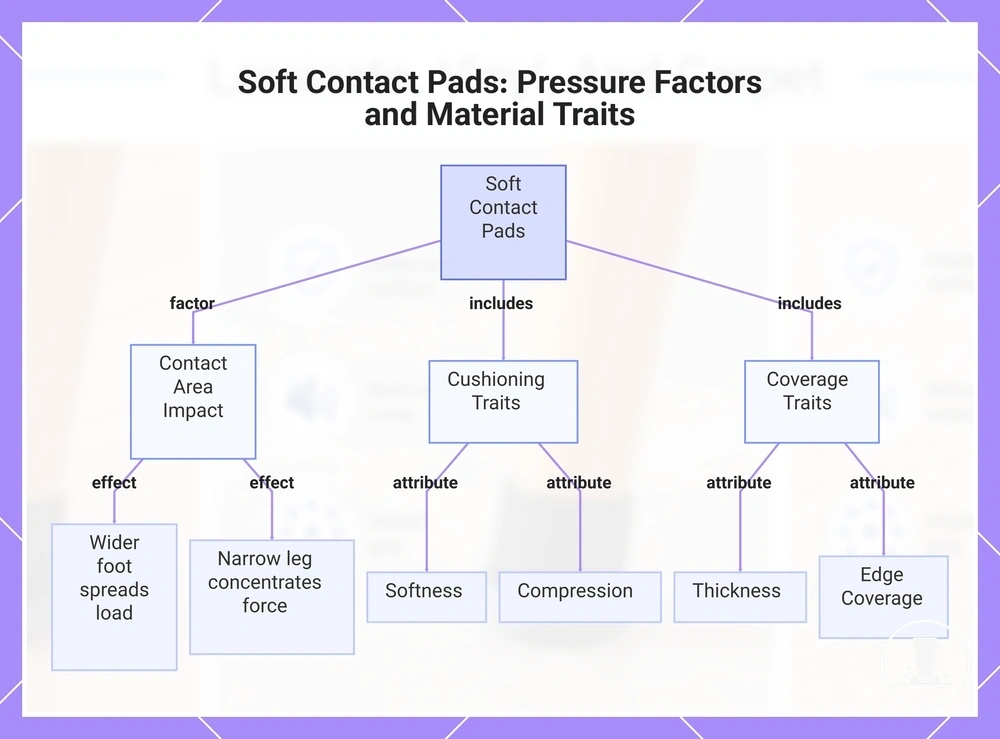
Soft contact pads can help reduce hard-point pressure on vinyl furniture legs when the pad fits properly, stays clean, and maintains stable contact with the floor. Soft contact pads increase contact area and influence compression beneath the furniture foot. Pressure outcomes may still depend on furniture weight, thickness, pad fit, and floor condition.
When a narrow chair leg and a wider furniture foot use the same pad material, contact area changes the outcome. A wider furniture foot can spread load across a larger surface, while a narrow leg may concentrate force into a smaller point even with soft pads. Soft contact pads may support more even pressure distribution, but compression behavior and edge coverage remain important to local contact performance.
Soft Contact Pads for Vinyl Furniture Legs can be evaluated through these material traits:
- Softness: Softer pad material may cushion contact when load is distributed appropriately.
- Thickness: Thickness can influence how pressure transfers beneath the furniture foot.
- Compression: Compression behavior may change under furniture weight and repeated loading.
- Edge coverage: Adequate edge coverage can help maintain more consistent contact across the pad surface.
This chart shows the key factors affecting pressure distribution and the material traits used to evaluate soft contact pads for vinyl furniture legs.
Rubber and Backing Materials That May Mark Vinyl Floors
Rubber and backing materials may contribute to marks, residue, or discoloration on vinyl floors when material contact and floor sensitivity are not well matched. Checking backing compatibility and cleanliness is important because trapped dirt, adhesive backing, and prolonged contact conditions may affect how vinyl floors and LVP respond over time.
Rubber and Backing Materials That May Mark Vinyl Floors are best evaluated by looking at both grip and contact conditions.
Caution: Rubber, grippy backing, and adhesive backing may provide useful grip, but grip does not automatically indicate lower marking risk. Marks, residue, or discoloration may depend on backing material, floor sensitivity, plasticizer-sensitive flooring conditions, and trapped dirt. Checking compatibility and keeping contact surfaces clean can help reduce avoidable contact issues.
A common myth is that all rubber marks vinyl floors or that all non-rubber materials are safe. In practice, marking risk depends on the specific backing material, vinyl contact conditions, and floor sensitivity. A rubber pad may perform differently across surfaces, so conditional evaluation is more reliable than absolute assumptions.
Carpeted Floor Protectors for Indentations, Stability, and Movement
Carpeted floor protectors depend on carpet pile, furniture weight, and movement intent because carpet changes the protector job from surface scratch prevention toward load spread, stability, and furniture movement. Carpeted floor protectors may help distribute pressure beneath a furniture foot, but indentation outcomes can vary with carpet pile, backing, contact diameter, and load distribution. Stability and movement behavior are often more relevant on carpet than hard-floor surface protection.
For static furniture, furniture cups are often used when indentation control and stability are the primary goals. A furniture cup can increase the contact area beneath a furniture foot, which may support broader load spread across the carpet surface. Indentations may still depend on carpet pile, furniture weight, and how long the load remains in place. Furniture cups can assist with stability, but they do not provide complete indentation prevention.
For moving furniture, furniture sliders are commonly used when movement across carpet is the main objective. Furniture sliders may reduce resistance during temporary repositioning, although results can vary with carpet backing, pile height, furniture weight, and slider fit. Moving sliders serve a different role from furniture cups because they focus on movement rather than long-term static support.
Carpeted Floor Protectors for Indentations, Stability, and Movement are easier to evaluate when static support and movement assistance are treated as separate use cases. The comparison below organizes the difference between furniture cups and furniture sliders on carpet.
| Static furniture on carpet | Moving furniture on carpet |
|---|---|
| Furniture cups may support load spread beneath a furniture foot. | Furniture sliders may assist with temporary furniture movement. |
| Often used when stability and indentation control are priorities. | Often used when repositioning furniture is the primary goal. |
| Results depend on carpet pile, furniture weight, and contact diameter. | Results depend on carpet backing, pile, furniture weight, and slider fit. |
Furniture Cups for Static Furniture on Carpet
Furniture cups are static support tools that can help improve load spread on carpet when furniture is intended to remain in place. Furniture cups increase the contact diameter beneath a furniture foot, which may help distribute weight across the carpet surface. Indentation depth can still vary with carpet pile, furniture weight, foot shape, and cup fit.
For a sofa, bed, or cabinet that remains in the same location, load spread is often more important than sliding. A properly matched furniture cup may support stability by creating a broader contact area between the furniture foot and the carpet. The effect on indentation can vary because carpet pile, furniture weight, and foot shape influence how pressure is distributed over time.
When selecting furniture cups, these fit-related checks can help evaluate compatibility with static furniture on carpet:
- Cup width: A wider cup may provide greater load spread across the carpet surface.
- Cup depth: Cup depth should accommodate the furniture foot while maintaining stable contact.
- Material: Cup material can influence how the furniture foot sits within the cup.
- Stability: Stability may depend on carpet pile, foot shape, and contact diameter.
- Foot fit: The furniture foot should fit the cup appropriately to support consistent positioning.
Furniture Sliders for Moving Furniture on Carpet
Furniture sliders are temporary movement aids for moving furniture on carpet. Furniture sliders place a slider surface between the furniture and the carpet, which may help reduce resistance during movement. Movement results can vary with carpet pile, furniture weight, movement distance, and slider fit.
When heavy furniture needs repositioning, furniture sliders may help support controlled movement across carpet. Heavy furniture can create balance and floor-drag concerns, so movement should remain controlled and appropriate for the furniture weight and path. Furniture sliders are intended for temporary use and are usually removed after repositioning is complete.
Furniture Sliders for Moving Furniture on Carpet are most useful when these usage checks are reviewed before movement:
- Placement: Position the slider surface evenly beneath each furniture contact point.
- Balance: Check that furniture remains stable before movement begins.
- Path: Review the carpet surface and movement path for obstacles or uneven areas.
- Movement distance: Longer movement distances may require additional attention to alignment and control.
- Removal: Remove furniture sliders after temporary use is complete.
Furniture Weight, Leg Shape, and Contact Area
Furniture weight, leg shape, and contact area are key decision factors because they influence pressure and floor response before a protector is selected. The same furniture item can create different pressure conditions depending on foot width, leg shape, and how much contact area reaches the floor. Floor response may vary when load is concentrated into a smaller area or distributed across a larger surface.
Contact area is the portion of the furniture foot or protector that transfers load to the floor. A narrow leg profile can concentrate pressure into a smaller footprint, while a wider furniture foot can spread pressure across more surface area. Pressure and floor response may differ across laminate, vinyl, and carpet because each surface reacts differently to weight distribution. Protector size and contact area are usually evaluated together as part of the same decision.
When heavy furniture is involved, contact area and weight distribution often become more important selection criteria. A narrow foot width combined with higher furniture weight can increase localized pressure, while a larger contact area may spread load under suitable conditions. As a criteria-based decision, protectors for heavy furniture are often evaluated by how they manage stability, pressure distribution, and contact area.
When pressure concentration becomes a concern, wider cups, thicker pads, or larger contact surfaces may be more appropriate. The choice depends on furniture weight, leg shape, pad thickness, and expected floor response. A wider protector may improve weight distribution, while additional pad thickness can change how load is transferred to the floor.
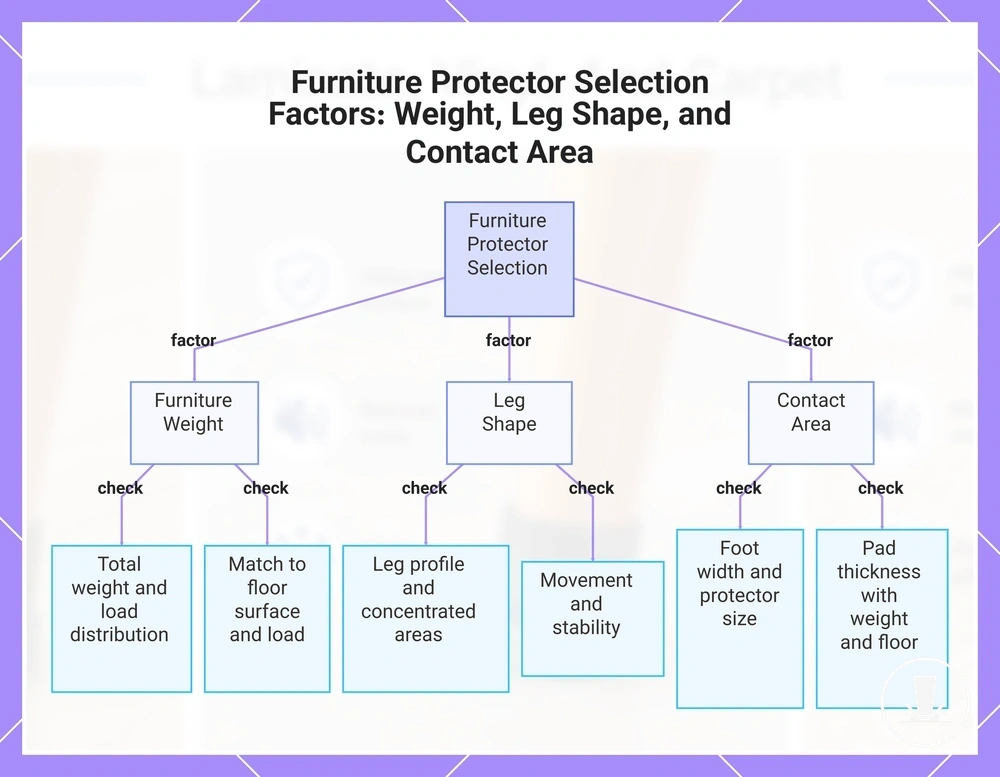
Furniture Weight, Leg Shape, and Contact Area are easiest to evaluate by checking pressure-related criteria before selecting a protector. The checklist below verifies the main factors that can influence compatibility across different furniture and floor conditions.
The products below are useful examples for comparing available options. Before buying, check that the compatibility criteria, key features, and product details match your needs.
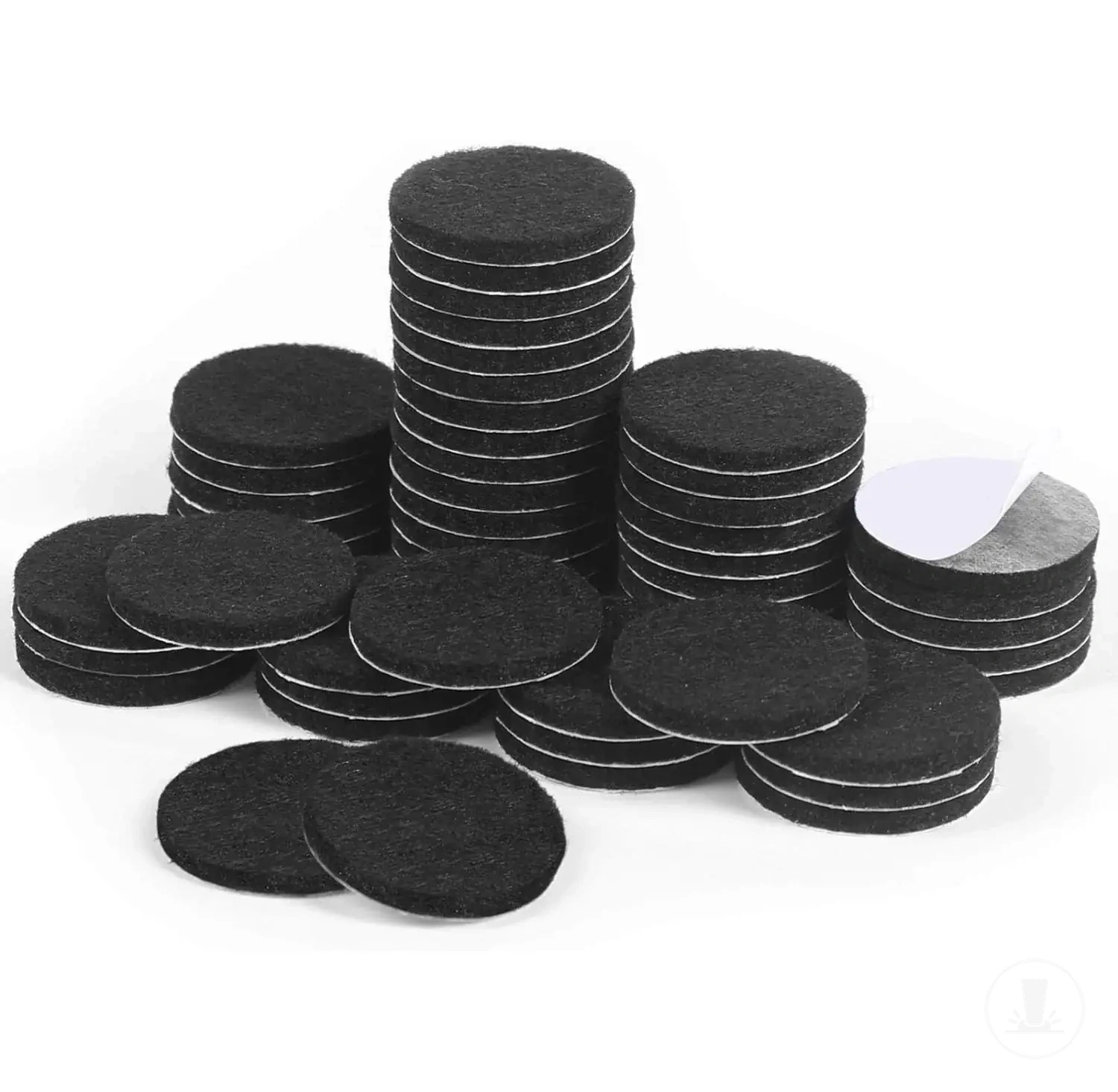
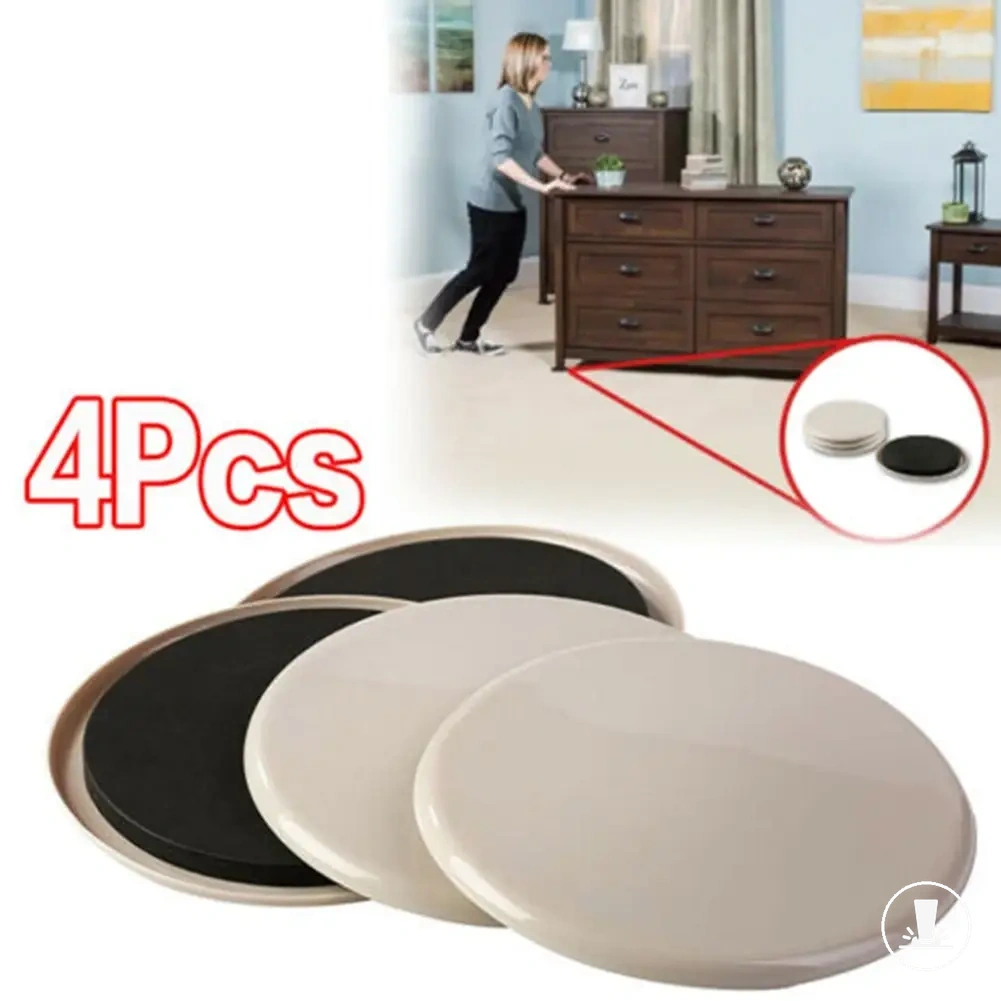
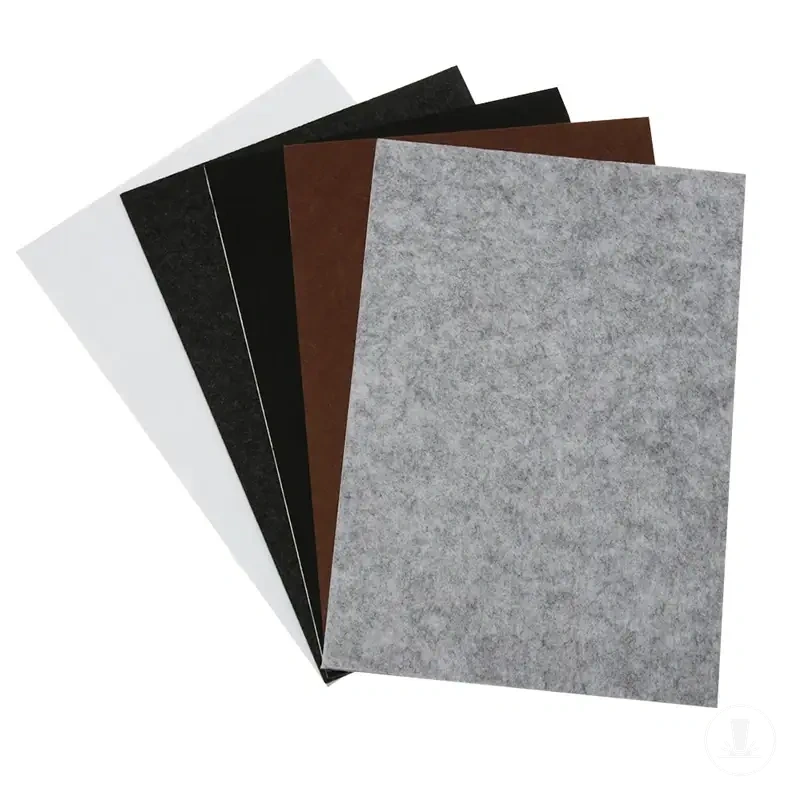
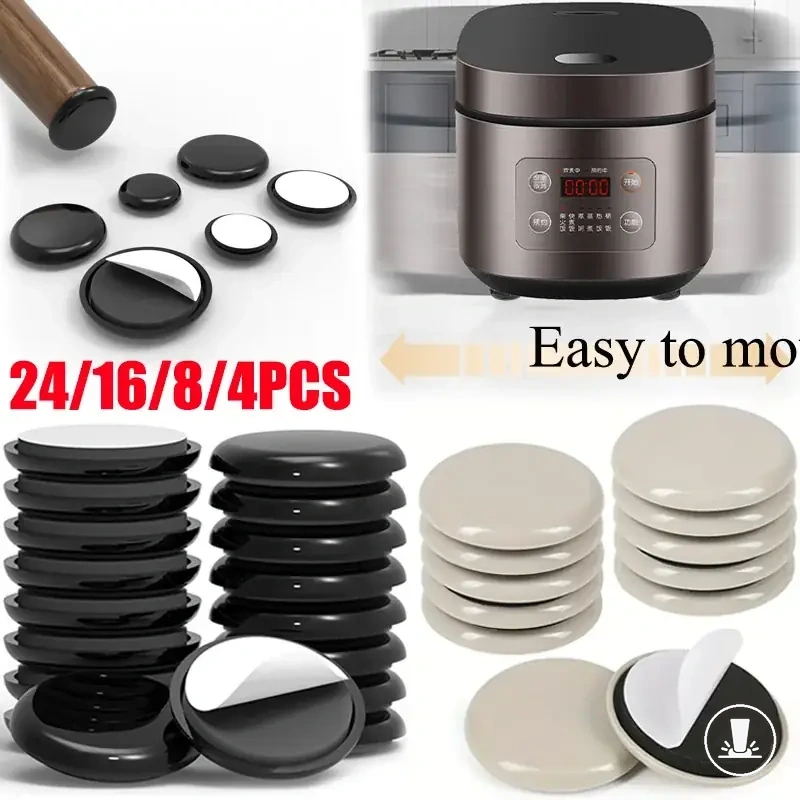
- Check total furniture weight and how the load is distributed across contact points.
- Review leg shape and leg profile for narrow or concentrated contact areas.
- Compare foot width with protector size and available contact area.
- Consider pad thickness in relation to furniture weight and floor response.
- Evaluate movement patterns and whether contact points remain stable during use.
- Match protector criteria to the floor surface and expected load conditions.
This chart summarizes the key factors and checklist for selecting furniture protectors based on weight, leg shape, and contact area.
Protector Material and Attachment Fit by Floor Risk
Protector material and attachment fit depend on the floor risk being managed because material contact and furniture movement can create different outcomes on laminate, vinyl, and carpet. Protector material influences how the protector interacts with the floor surface, while attachment fit influences whether the protector remains positioned during use. Both factors should be evaluated together rather than as separate decisions.
Protector material refers to the surface or backing that contacts the floor, while attachment fit refers to how the protector stays attached to the furniture. Felt, rubber, soft plastic, cups, and sliders each create different contact conditions. Adhesive hold may help keep a protector in place, while slip-on fit may reduce falling off risk when matched to the furniture foot. Floor sensitivity and furniture movement can affect how these choices perform over time.
When marking risk, slipping, or protector movement becomes a concern, matching protector material and attachment fit to the floor condition can help narrow the options. Felt, rubber, and soft plastic each involve trade-offs related to floor sensitivity, grip, and movement. For deeper comparison of material-specific characteristics, see furniture floor protector materials as a separate criteria resource. This page remains focused on how protector material and attachment fit relate to floor risk.
When laminate, vinyl, and carpet are compared, the risk pattern changes. Laminate often places more attention on scratching and sliding, vinyl may require closer review of pressure and marking risk, and carpet often shifts the decision toward cups, sliders, and movement management. The same protector material or attachment fit may not suit every floor condition.
Protector Material and Attachment Fit by Floor Risk is a selection decision that works best when material contact, attachment fit, and floor sensitivity are reviewed together. The table below organizes the main material and fit criteria by floor risk. For a broader selection process, see how to choose furniture floor protectors by floor risk before comparing individual product examples.
The products below are useful examples for comparing available options. Before buying, check that the compatibility criteria, key features, and product details match your needs.
| Floor risk | Material or attachment to check | Trade-off | Decision cue |
|---|---|---|---|
| Laminate scratching and sliding | Felt, adhesive hold, slip-on fit | Movement control may vary with attachment security | Check both surface contact and protector retention |
| Vinyl pressure or marking | Soft plastic, rubber, protector backing | Grip and marking risk may depend on floor sensitivity | Review material contact before prioritizing grip |
| Carpet indentation | Cups | Stability and load spread may vary by carpet condition | Match contact area to furniture support needs |
| Moved furniture | Sliders, attachment fit | Movement assistance may reduce stability during use | Select based on repositioning frequency and fit |
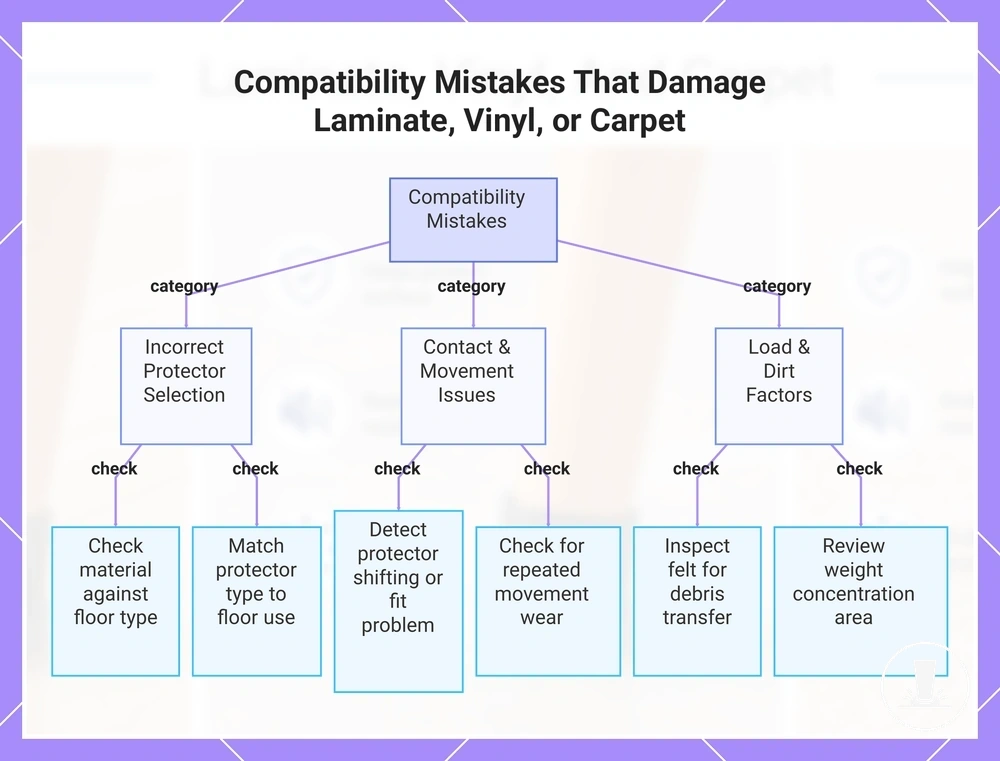
Compatibility Mistakes That Damage Laminate, Vinyl, or Carpet
When floor marks, instability, or unusual wear appear, compatibility mistakes are often linked to material mismatch, poor fit, dirt buildup, excessive load, or a wrong-use case. Compatibility Mistakes That Damage Laminate, Vinyl, or Carpet can increase floor damage risk when the protector no longer matches the floor type or furniture condition. Identifying likely mistake categories is usually more useful than assuming a single exact cause.
When scratch-like symptoms appear on laminate, dirty felt may contribute to scratch transfer because dirt buildup can change the contact surface during furniture movement. On vinyl, surface marking may be associated with backing material contact, although the outcome often depends on floor sensitivity, protector material, and contact conditions. A material mismatch does not automatically create damage, but reviewing the symptom alongside the protector material can help identify a safer correction.
When carpet shows instability, indentation, or uneven furniture support, a wrong protector type may be involved. A carpet use case that relies on a protector designed for a different floor surface may affect stability or load distribution. Poor fit combined with movement or excessive load may increase floor risk, while safer correction usually involves reassessing the protector type, attachment condition, and furniture use pattern rather than assuming a permanent repair is needed.
Compatibility Mistakes That Damage Laminate, Vinyl, or Carpet are easier to diagnose when the checklist below separates likely causes from visible symptoms.
- Material mismatch: Check whether the protector material matches the floor type and observed symptom.
- Poor fit: Look for protector movement, shifting, or a fit problem at the furniture contact point.
- Dirt buildup: Inspect felt or contact surfaces for debris that may contribute to scratch transfer.
- Excessive load: Review whether furniture weight may be concentrating pressure in a small contact area.
- Wrong protector type: Confirm that cups, sliders, pads, or other protectors match the intended floor use case.
- Movement pattern: Check whether repeated furniture movement may be contributing to wear, marking, or instability.
This chart groups the six common compatibility mistakes into three categories and shows the key checks to identify each mistake type.