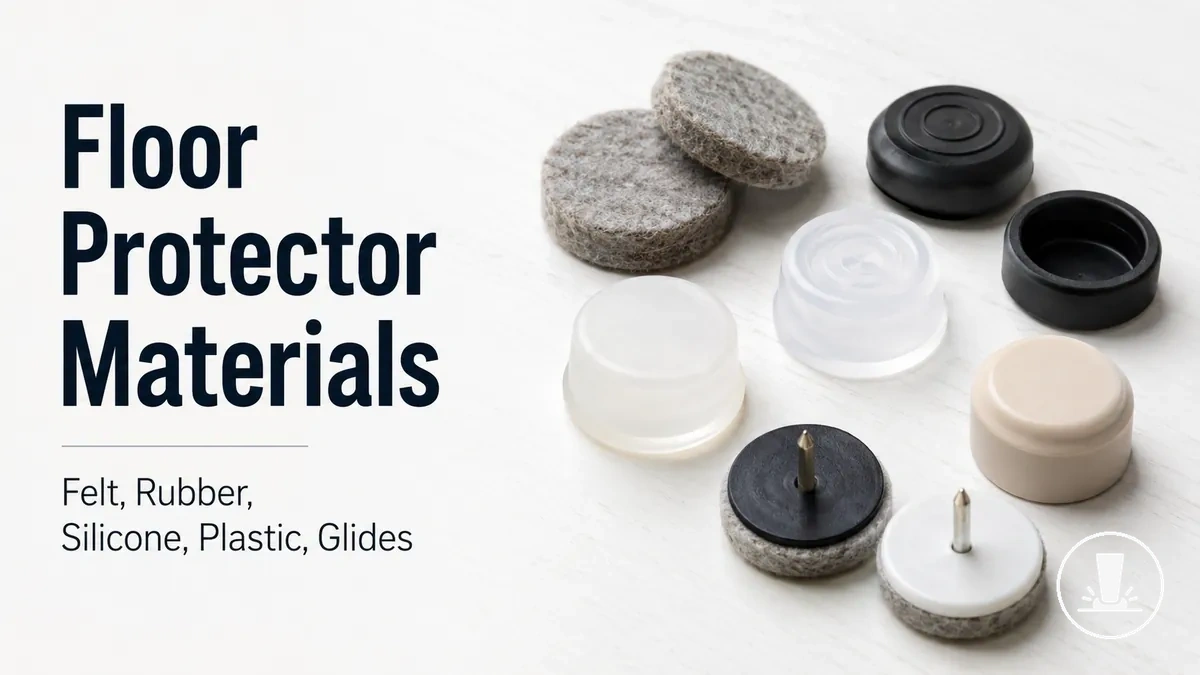
Furniture Floor Protector Materials for Grip, Glide, and Floor Safety
Furniture floor protector materials are the contact surfaces placed between furniture legs and a floor to influence grip, glide, and overall floor contact. Common material categories include felt, rubber, silicone, and plastic or glide-based contact surfaces. These materials can change how furniture moves, how pressure is distributed, and how the floor responds during everyday use. Material choice affects grip, glide, and floor contact rather than guaranteeing protection.
When furniture is moved often, remains stationary under load, or sits on a sensitive floor finish, the material at the contact point can influence the result. Different materials may respond differently to dirt buildup, movement frequency, furniture weight, leg shape, and attachment condition. Material selection should be evaluated separately from protector type, fit, and attachment method because those factors can also change performance. In the context of furniture floor protectors, material defines the contact behavior while other design factors influence how that behavior is delivered.
Furniture floor protector materials are the primary factor that shapes floor contact, movement response, and floor safety characteristics. Felt is commonly associated with glide, rubber with grip and stability, silicone with soft cap-style contact, and plastic or glides with firmer movement-oriented contact surfaces. The effect of these materials can vary based on floor finish, furniture weight, movement frequency, and attachment quality. The next step is understanding how material behavior changes under different conditions and use patterns.
How Material Changes Furniture-to-Floor Contact
The contact layer is the material between furniture legs and the floor that influences how floor contact occurs during use. Material can change how force is distributed across a contact surface and how movement is transferred to the floor. Different materials may respond differently under load or repeated movement. The main variables in this contact layer are contact pressure, friction, and surface softness.
When furniture shifts, slides, or remains under weight for long periods, the material in the contact layer can influence floor response. A material with more compression may change how pressure is distributed, while a firmer contact surface may respond differently during movement. Material affects contact behavior directly, but fit and attachment still influence how consistently that behavior is maintained. Outcomes can vary depending on furniture weight, floor finish, and movement frequency.
How Material Changes Furniture-to-Floor Contact becomes clearer when viewed as a relationship between the furniture leg, the contact layer, and the floor surface. The diagram below highlights how pressure, friction, grip, and glide can change through the material layer.
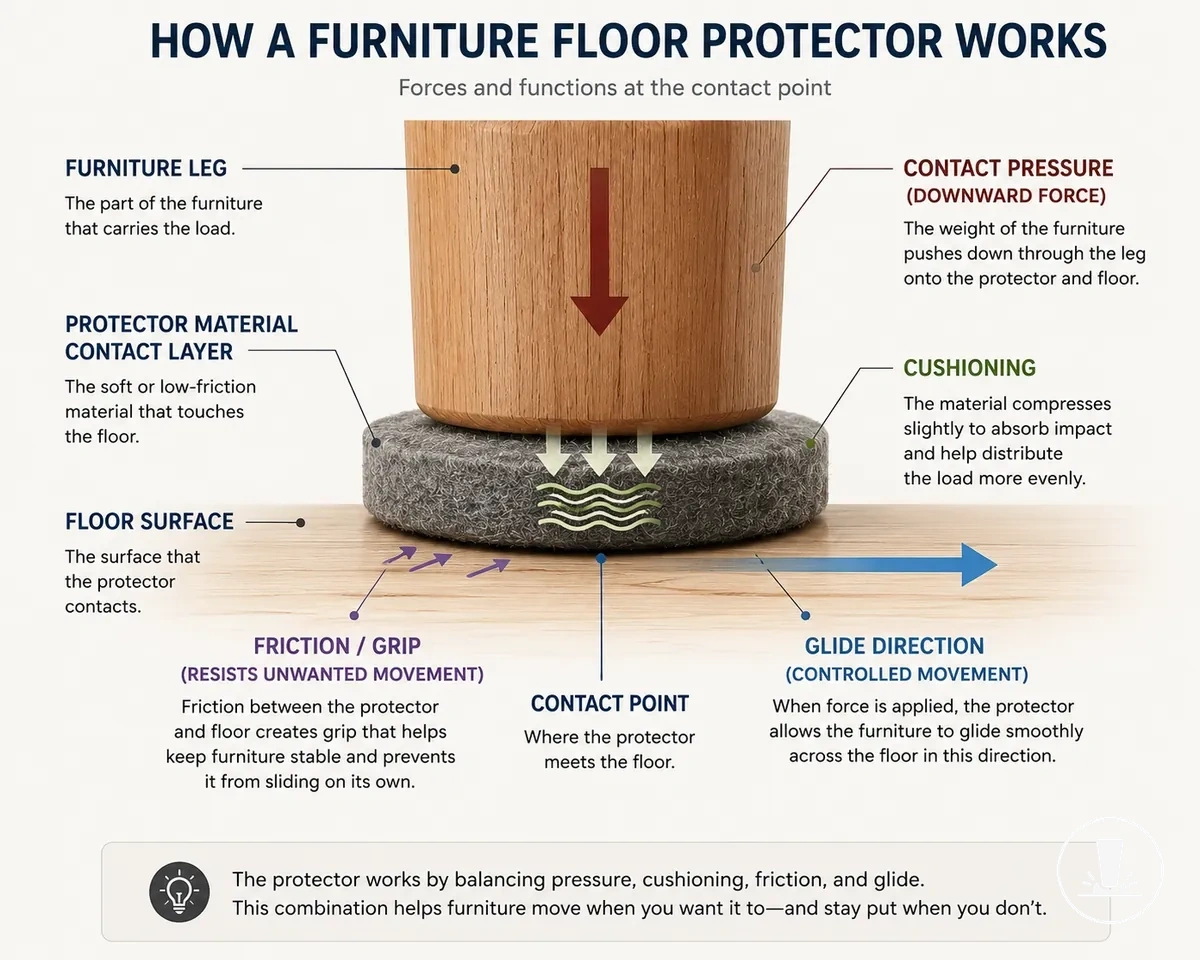
- A softer contact layer may increase cushioning and change how pressure is distributed across the floor contact area.
- A higher-friction contact texture can increase grip and may reduce sliding under certain conditions.
- A lower-friction contact surface can support glide when furniture is moved across the floor.
- Material compression can influence floor response by changing how furniture weight is transferred through the contact layer.
Material changes contact behavior directly, while fit, attachment, weight, and floor finish still affect the final result. Understanding this distinction provides a foundation for evaluating individual material families and their contact characteristics.
Main Materials Used in Furniture Floor Protectors
Main materials used in furniture floor protectors are defined by how they behave at the contact base between furniture and the floor. Common material families include felt, rubber, silicone, plastic, nylon, and glides. The same protector form may use different materials, which can change friction, softness, movement response, and surface interaction. These material families are most useful when grouped by behavior rather than by product naming.
Main Materials Used in Furniture Floor Protectors can be identified visually before comparing their behavior. The image below labels the major material families commonly used in pads, caps, grippers, and glide bases.
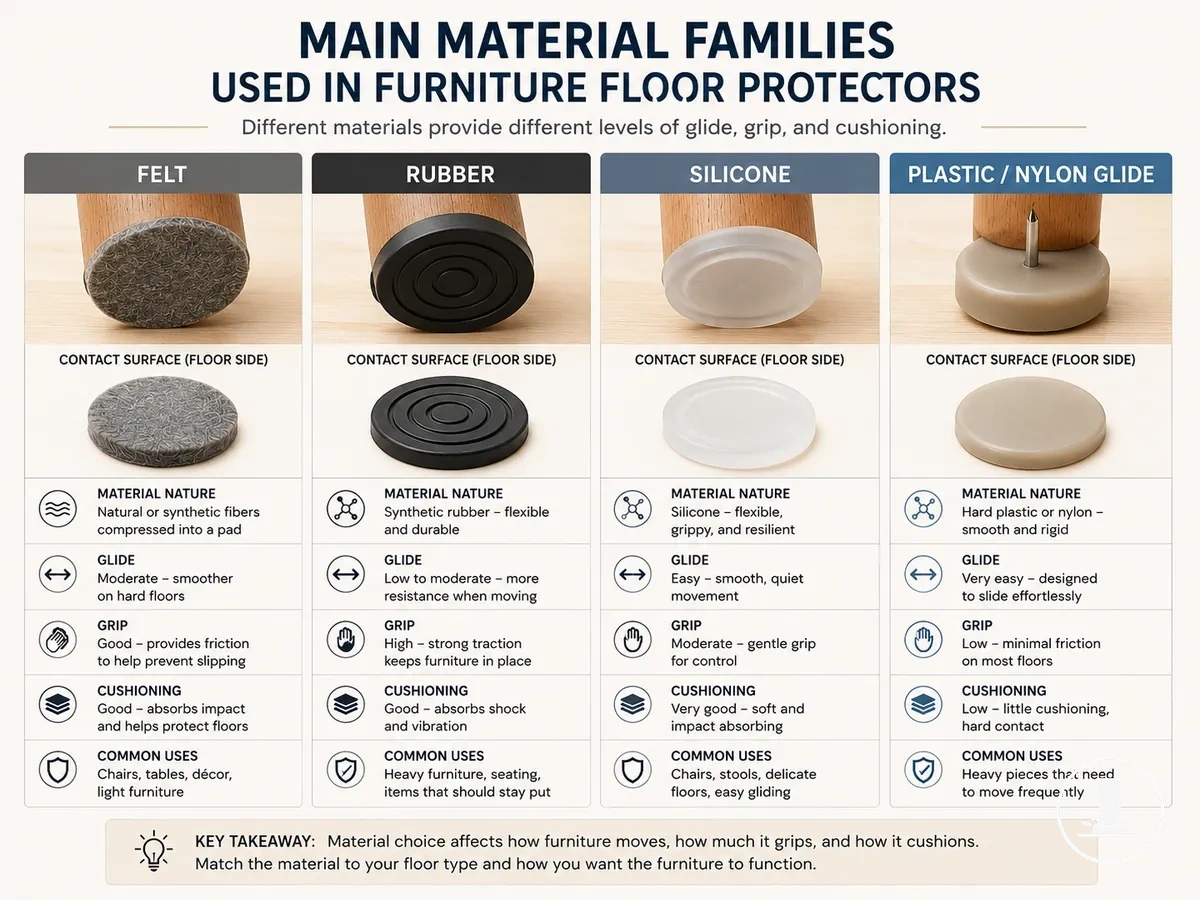
When furniture remains stationary, slides frequently, or experiences repeated movement, the protector material can influence how the contact base responds. Felt may support lower-friction movement, while rubber often emphasizes grip and stability. Silicone is commonly used in flexible caps and soft contact bases, whereas plastic, nylon, and glides are often associated with firmer movement-oriented surfaces. The table below summarizes the main material families and their general behavior.
| Material family | Contact behavior | Common protector forms | Main caution |
|---|---|---|---|
| Felt | Often supports softer, lower-friction sliding | Pads, floor pads | Movement response may change if debris accumulates |
| Rubber | Often increases grip and stability | Grippers, pads | Residue risk may vary by material and conditions |
| Silicone | Flexible contact with a soft base | Caps, chair leg caps | Fit can influence contact consistency |
| Plastic, Nylon, and Glides | Typically provide a firmer glide-oriented contact base | Glides, glide bases | Durability and movement behavior can vary by use conditions |
Material families describe how a protector material behaves, while protector forms describe how that material is attached or shaped. A felt pad and a felt cap may share similar contact characteristics even though their forms differ. For additional context, types of furniture floor protectors explain how material and protector type are related but not identical.
Felt Pads and Felt-Bottom Protectors
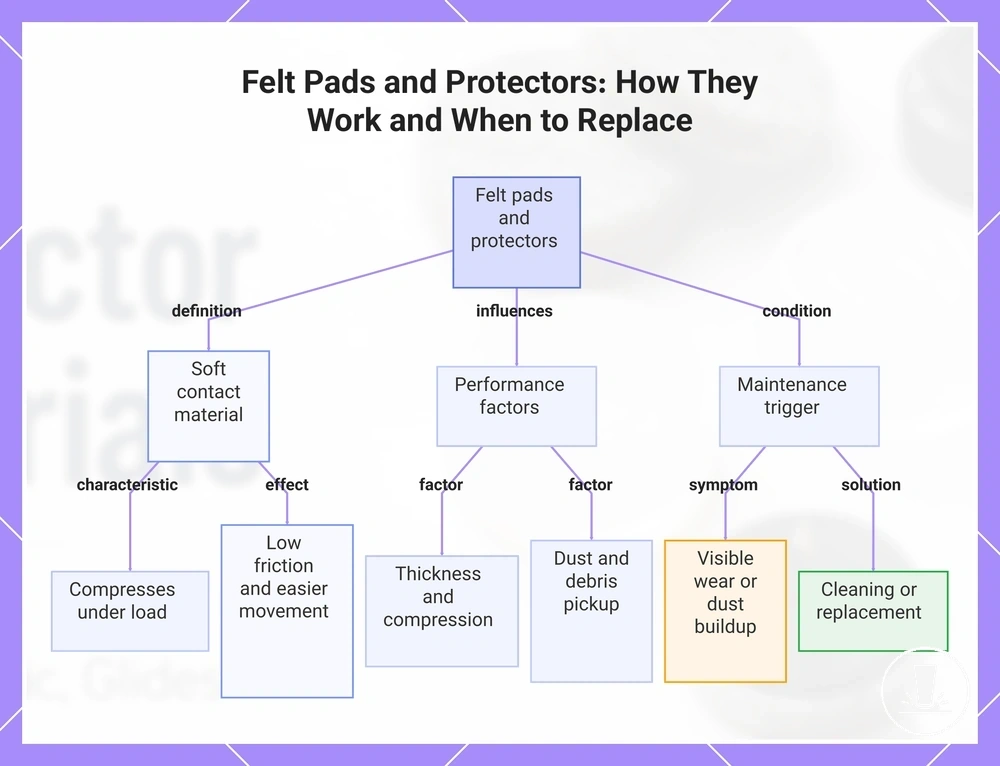
Felt pads and felt-bottom protectors are soft contact materials placed beneath chair legs and other furniture contact points. Felt furniture pads, felt bottom caps, and felt contact layers compress under load and create a softer interface with the floor. This soft contact characteristic is commonly associated with low friction and easier chair movement.
When furniture is moved frequently, felt pads can help reduce direct contact between chair legs and the floor while supporting smoother sliding. Felt thickness and compression may influence sliding ease, while dust pickup and debris can contribute to wear over time. For example, a chair that moves smoothly with a clean felt contact layer may respond differently after debris accumulates or the material compresses. If felt-bottom protectors show noticeable wear, compression, or dust buildup, cleaning or replacement may be appropriate depending on movement conditions.
This chart shows the meaning of felt pads and protectors, the factors affecting their performance, and the conditions that indicate cleaning or replacement.
Rubber Pads and Gripper Surfaces
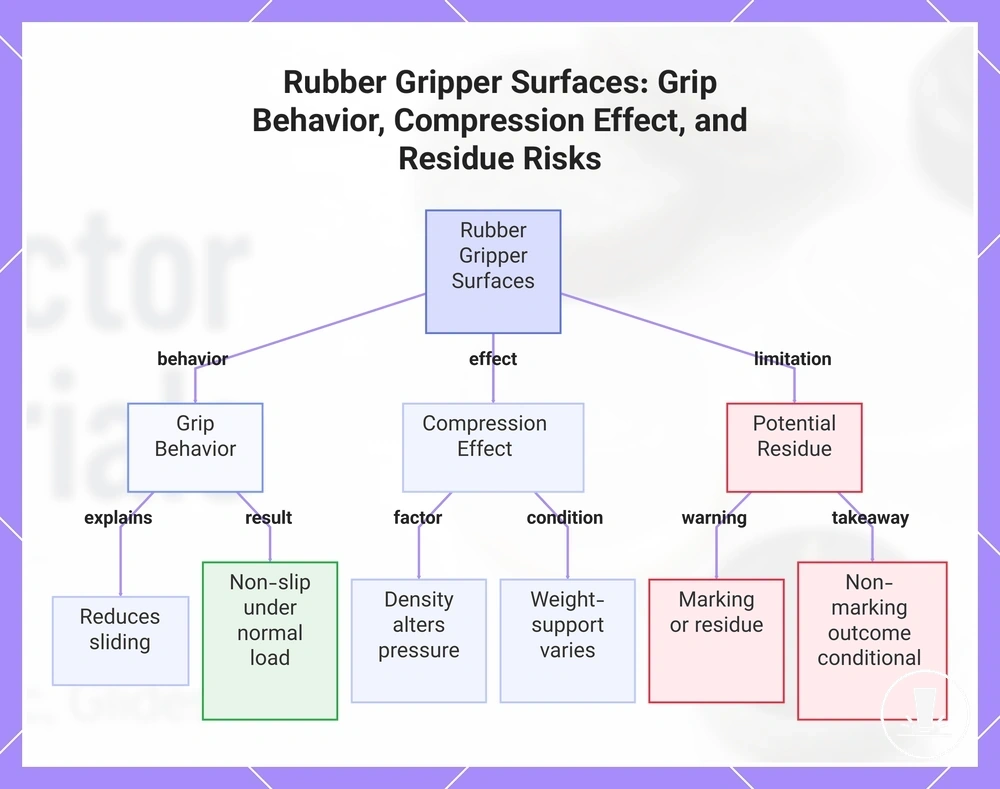
Rubber pads and gripper surfaces are contact materials designed to increase grip between furniture and the floor. Rubber grippers typically create higher traction, and rubber density can influence how pressure is distributed beneath furniture. This combination of traction and compression is commonly associated with grip and stability.
When furniture is intended to remain stable rather than glide, rubber pads may help reduce unwanted movement under normal use conditions. A rubber contact base can provide non-slip behavior, but results may vary with furniture load, surface cleanliness, and floor finish. Possible marking, residue transfer, and weight-support behavior can depend on the rubber compound, contact condition, and furniture load.
- Gripper behavior: Higher traction can increase grip and reduce sliding.
- Compression: Rubber density may influence pressure distribution under furniture weight.
- Residue risk: Possible marking or residue can vary by floor finish and material condition.
Because floor-finish sensitivity differs across materials and environments, any non-marking outcome should be treated as conditional rather than assumed.
This chart shows the key attributes, effects, and limitations of rubber pads and gripper surfaces for furniture stability.
Silicone Caps with Soft Contact Bases
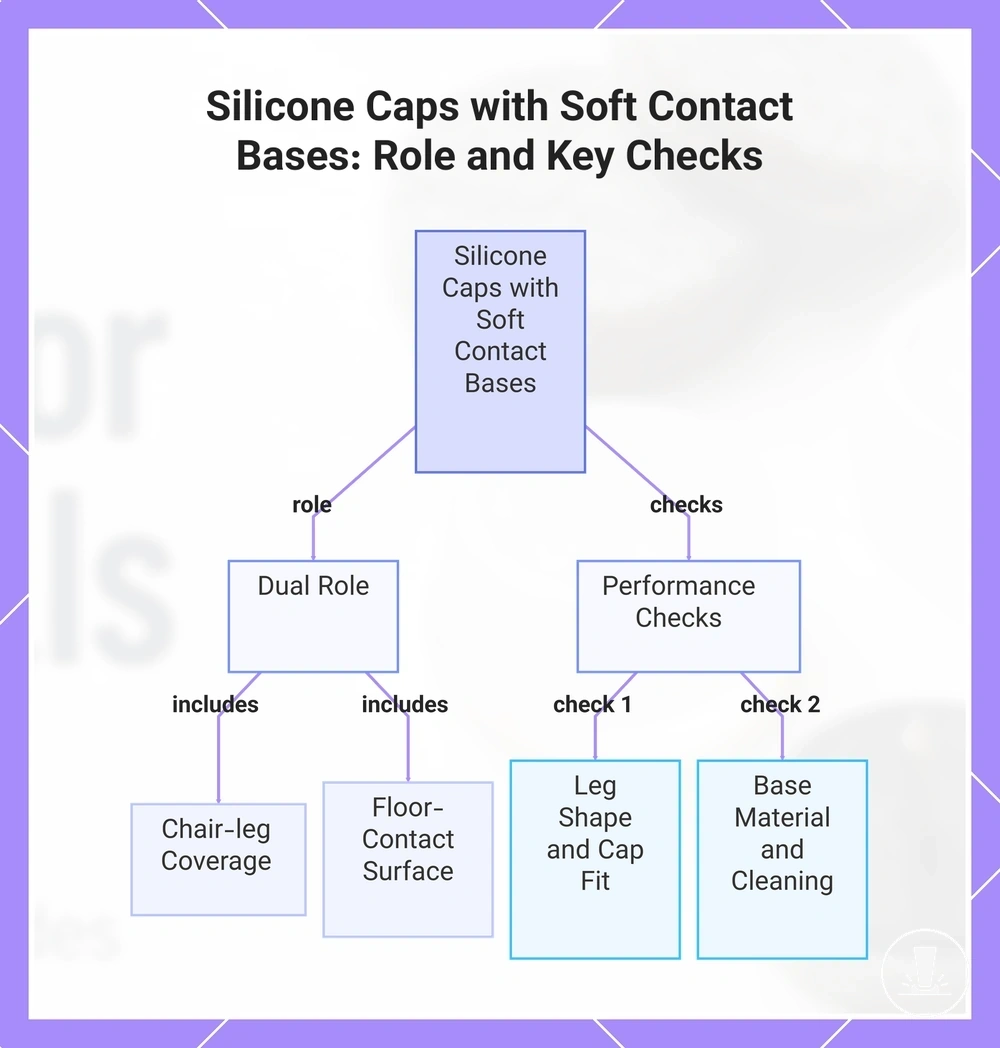
Silicone caps with soft contact bases are protective covers that combine chair-leg coverage with a floor-contact material in a single component. Silicone caps use elasticity to adapt to minor variations in leg shape, while the soft contact base creates the floor-contact surface. This combination gives silicone caps a dual role as both a cover and a contact base.
- Leg shape: Check whether the silicone cap matches the furniture leg shape.
- Cap fit: A secure cap fit can help maintain consistent chair-leg coverage.
- Base material: The soft contact base influences grip and floor-contact behavior.
- Cleaning condition: Dirt buildup may affect appearance and contact performance.
When furniture legs are compatible with the cap design, silicone chair leg protectors can provide flexible fit and broad chair-leg coverage. Grip behavior may vary depending on the soft contact base material, floor condition, and cleaning needs. Silicone covers remain visible around the furniture leg, which may influence appearance preferences in some settings. Performance depends on leg shape, cap fit, and the material used in the contact base.
This chart shows the dual role of silicone caps with soft contact bases and the key checks that affect their performance.
Plastic, Nylon, and Hard Glide Bases
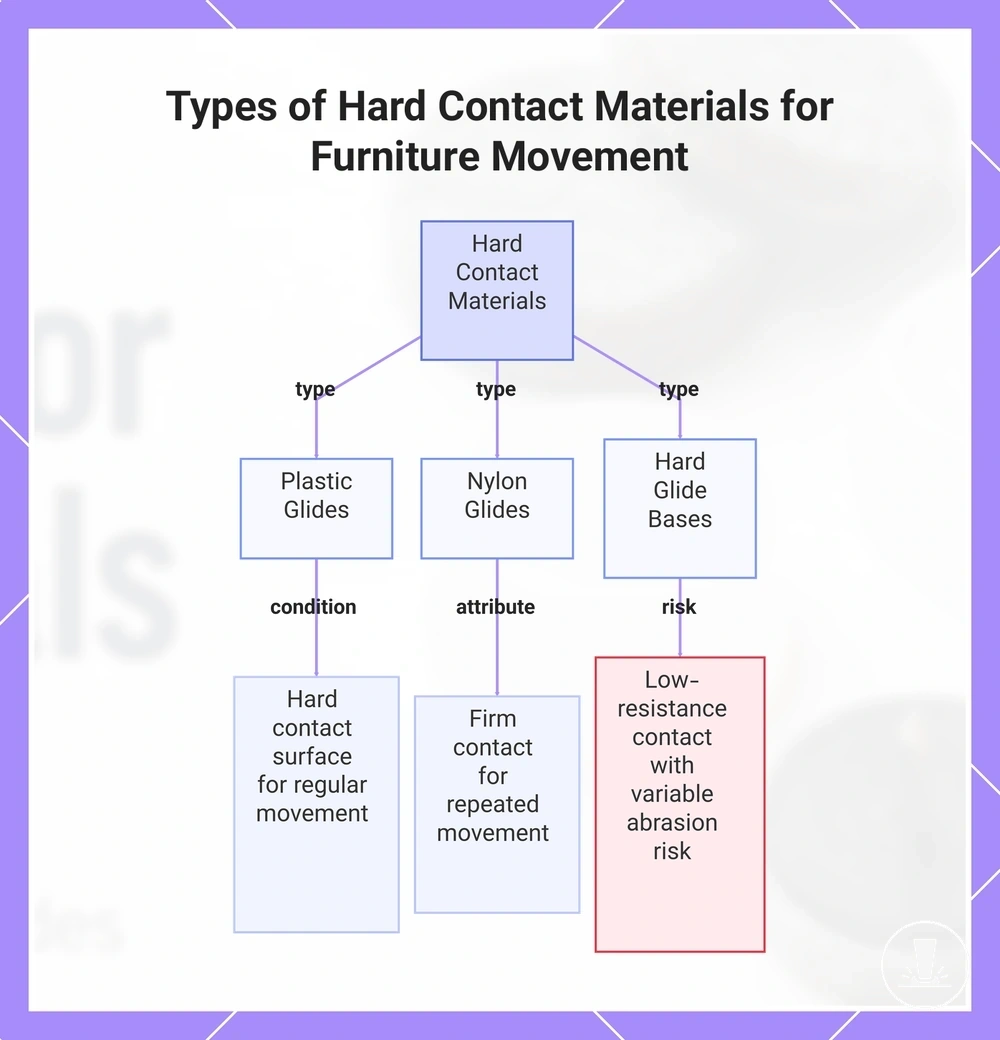
Plastic glides, nylon glides, and hard glide bases are firm contact materials designed to support furniture movement across a floor surface. These materials create a harder contact point than soft-contact materials and are commonly associated with glide behavior and durability. Their defining characteristics are firm contact, movement, and controlled resistance during sliding.
- Plastic glides: Plastic furniture glides provide a hard contact surface that can support regular movement under suitable conditions.
- Nylon glides: Nylon glides are firm contact surfaces often used where repeated movement is expected.
- Hard glide bases: Hard glide bases emphasize movement and low-resistance contact, although abrasion risk can vary by floor condition and use patterns.
When furniture is moved frequently, hard glides can help reduce movement resistance compared with softer contact materials. Movement ease may vary with furniture load, floor finish, movement frequency, and the presence of grit or debris at the contact point. Hardness can contribute to durability and load handling, but abrasion risk may increase on sensitive floor surfaces under certain conditions. Suitability depends on floor sensitivity, furniture load, and surface condition.
This chart illustrates the three main types of hard contact materials—plastic glides, nylon glides, and hard glide bases—and their defining characteristics.
Material Trade-Offs for Scratches, Grip, Noise, and Marks
Material trade-offs depend on how scratches, grip, noise, and marks are affected by both the protector material and the conditions in which it is used. Furniture weight, floor finish, movement frequency, and dirt at the contact point can change outcomes. Felt, rubber, silicone, and glides each emphasize different contact behaviors rather than solving every concern at once. Each material may improve some outcomes while increasing other risks.
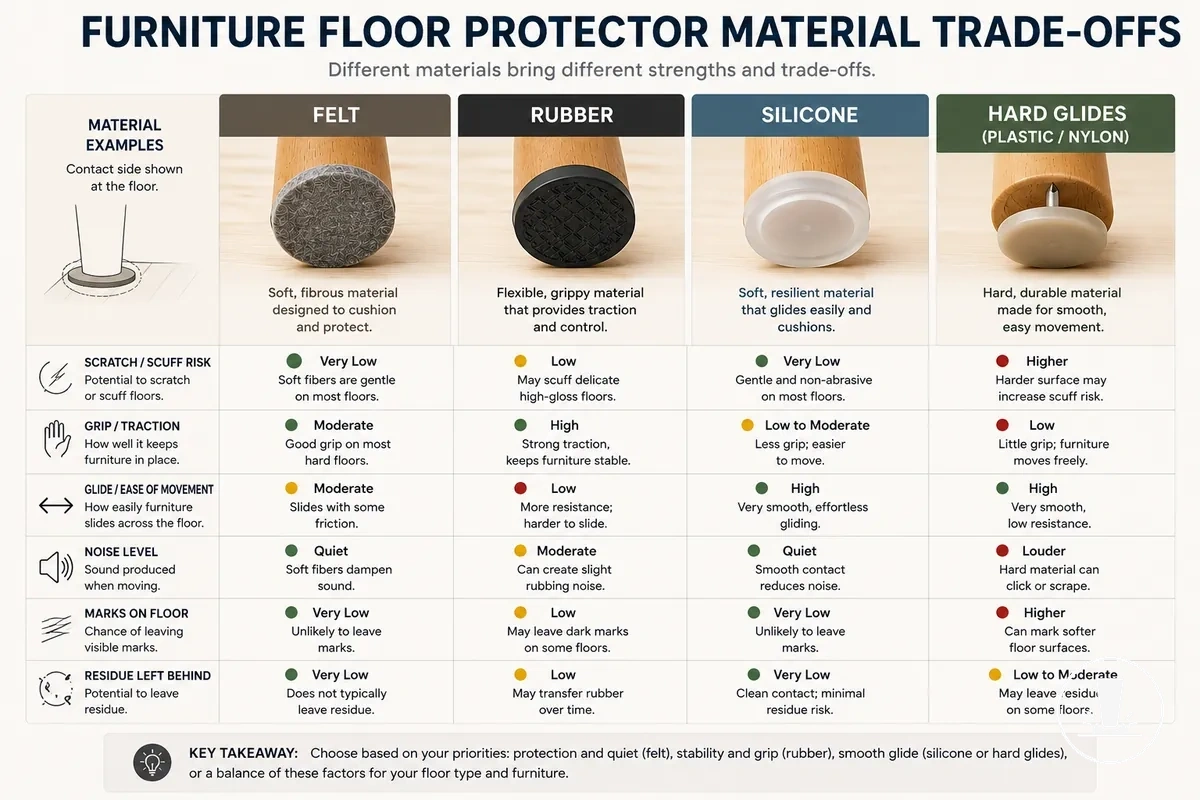
When reducing one concern is the priority, another consideration may become more important. Easier movement can reduce sliding resistance but may provide less stability, while increased grip can help limit movement yet may raise concerns about residue or surface marks under certain conditions. Silicone emphasizes flexible contact, while hard glides focus on controlled movement through firm contact. The table below summarizes common material tendencies and the conditions that can change them.
| Outcome | Material tendency | Condition that changes it | Decision cue |
|---|---|---|---|
| Scratches | Felt is often associated with lower-friction contact | Dirt, grit, and wear condition | Consider maintenance and movement frequency |
| Grip | Rubber often emphasizes grip | Floor finish and contact condition | Prioritize stability when movement is unwanted |
| Noise | Soft-contact materials may help reduce floor noise | Furniture weight and floor surface | Evaluate contact softness and movement patterns |
| Marks | Residue or material transfer may affect surface marks | Material condition and floor sensitivity | Monitor contact surfaces over time |
| Movement | Glides often support easier sliding | Floor finish, furniture load, and debris | Balance movement needs against floor sensitivity |
A common misconception is that one material can prevent scratches, marks, noise, and movement concerns at the same time. In practice, material trade-offs are conditional and depend on floor finish, furniture use, cleaning condition, and contact behavior. The most suitable choice depends on which outcome matters most for the specific situation.
Low-Friction Movement Versus Anti-Slip Stability
Low-friction movement and anti-slip stability depend on whether furniture needs to move smoothly or remain fixed. Felt and glides are commonly associated with smoother chair movement, while rubber and silicone are often associated with greater grip. The trade-off is between easier movement and increased stability.
| Movement Priority | Stability Priority |
|---|---|
| Felt and glides may support low-friction movement and a smooth glide. | Rubber and silicone may support anti-slip stability and a more stable base. |
| Often considered when chair movement happens frequently. | Often considered for stationary furniture that is expected to stay in place. |
| Results can vary by floor finish, furniture weight, and contact condition. | Grip and non-slip behavior can vary by floor condition and furniture load. |
When chair movement is frequent, felt or glides may help reduce resistance during repositioning. When furniture serves a stationary purpose, rubber or silicone may provide more grip under suitable conditions. Floor finish and furniture weight can influence both movement and stability outcomes. The more suitable option depends on the intended use case.
Soft Contact Versus Hard Contact on Sensitive Floors
Soft contact versus hard contact depends on how sensitive floors respond to material hardness, furniture weight, and movement. Soft contact often uses a cushioned base that can increase pressure spread across the contact area, while hard contact creates a firmer point of contact. On sensitive floors, the distinction is primarily between broader pressure spread and potentially different abrasion risk during movement.
- Soft contact: Often increases pressure spread across the contact area and may reduce concentrated force on a floor finish.
- Hard contact: Uses firm contact that may influence movement behavior and abrasion risk depending on surface condition.
- Contact area: Contact area can affect how furniture weight is transferred to sensitive floors.
- Floor finish: Floor finish condition can influence how soft contact and hard contact perform over time.
When furniture is heavy or moved frequently, contact area, furniture weight, and movement can influence the outcome. Soft contact may provide broader pressure spread, while hard contact may present different abrasion risk characteristics when grit, debris, or repeated movement are present. Sensitive floors can respond differently depending on the floor finish and contact conditions. For hardwood or another delicate floor finish, floor-specific risks may require a more detailed compatibility assessment.
Non-Marking Risk, Dirt Pickup, and Surface Residue
Non-marking risk, dirt pickup, and surface residue are common causes of visible floor marks, but the source often depends on material condition, floor contact, and cleaning condition. Marks may result from material transfer rather than floor damage, and the cause can vary by floor finish and use pattern. Common mark sources include rubber transfer, adhesive residue, trapped grit, and dirt buildup within the contact material.
- Dark or colored marks: May indicate rubber transfer or other material transfer on the contact surface.
- Sticky residue: May suggest adhesive residue around the protector edge or contact area.
- Fine scuffs or lines: May be associated with trapped grit beneath the protector.
- Dirty felt surface: May indicate dirt pickup that can increase contamination at the floor contact point.
- Dust buildup: May collect on silicone surfaces and affect cleaning condition over time.
When marks appear, checking the protector condition can help narrow the likely cause. Rubber transfer, adhesive residue, and dirt buildup often leave different visible clues, while floor finish sensitivity can affect how noticeable those clues become. Before attributing marks to the protector material alone, inspect the contact area for trapped grit or residue.
When floor marks appear after furniture movement, the protector material may not be the only contributing factor. Furniture weight, floor finish condition, cleaning history, and debris at the contact point can also influence visible marks. For a broader diagnostic process, see floor protectors leaving marks.
Choosing Material by Floor Type and Surface Sensitivity
Material choice depends on floor type, surface sensitivity, and the conditions that affect floor contact. The same material can present different benefits or risks depending on the finish, furniture movement, moisture exposure, and the presence of grit. Surface condition influences how materials interact with the floor over time. For that reason, floor type changes the risk profile of the same material.
When furniture is moved frequently or a floor has a sensitive finish, material attributes often matter more than material names alone. A material that performs well on one floor surface may require closer attention to residue, moisture, or dirt on another. Movement, furniture load, and surface condition can all influence outcomes. The table below summarizes material tendencies by floor surface.
| Floor surface | Material tendency | Watch-out condition | Selection cue |
|---|---|---|---|
| Hardwood | Soft-contact materials may be preferred where finish sensitivity is a concern. | Grit, finish condition, and repeated movement. | Match material choice to finish sensitivity and maintenance needs. |
| Tile | Grip-oriented materials may help reduce movement and noise. | Moisture, rubber transfer, and surface condition. | Balance grip requirements against residue concerns. |
| Laminate and Vinyl | Lower-residue materials may suit surfaces with residue sensitivity. | Adhesive residue, material transfer, and moisture. | Consider residue risk alongside movement needs. |
| Carpet-adjacent | Glides or movement-oriented materials may support repositioning. | Furniture load, edge transitions, and movement patterns. | Choose based on whether movement or stability is the priority. |
Material choice should be based on floor type, surface sensitivity, movement patterns, and contact conditions rather than assuming universal compatibility. Finish condition, moisture, grit, and furniture load can all affect material suitability. When hardwood requires deeper evaluation of finish-related risks, see hardwood floor protector materials.
Material Choice for Chairs, Heavy Furniture, and Moving Furniture
Material choice depends on how furniture is used, not just the material itself. Chairs, heavy furniture, and moving furniture place different demands on floor contact, pressure distribution, and movement control. Furniture weight, leg contact area, movement frequency, and stability needs can all influence material behavior. These differences can be grouped into movement, weight, and stability priorities.
When chairs are moved frequently, movement frequency often becomes the main selection factor. Materials associated with smoother movement may help reduce resistance during repositioning, while floor risk can still depend on grit, surface condition, and maintenance. A small leg contact area may concentrate pressure differently than a wider contact point. The checklist below summarizes material priorities based on furniture behavior, including chair-movement criteria.
| Furniture behavior | Material priority | Risk to check | Practical decision |
|---|---|---|---|
| Frequently moved chairs | Controlled movement and reduced resistance | Grit buildup and floor wear | Consider materials suited to repeated movement. |
| Heavy furniture | Pressure distribution and contact stability | Compression and floor sensitivity | Match material choice to furniture weight and leg contact area. |
| Moving furniture | Controlled sliding | Floor finish condition and debris | Balance movement needs against floor risk. |
| Static furniture with stability needs | Grip and position retention | Residue and surface interaction | Prioritize stability when movement is unwanted. |
When heavy furniture remains in one position for long periods, furniture weight and leg contact area often become more important than movement frequency. Heavy loads may change how materials compress and transfer pressure to the floor surface. Floor risk can vary with finish condition, contact area, and the presence of trapped debris. These conditions form the core heavy-furniture criteria.
Material choice should be guided by furniture behavior, floor risk, stability requirements, and movement frequency rather than by a single material preference. Chairs, heavy furniture, and moving furniture often benefit from different material priorities because their contact conditions differ.
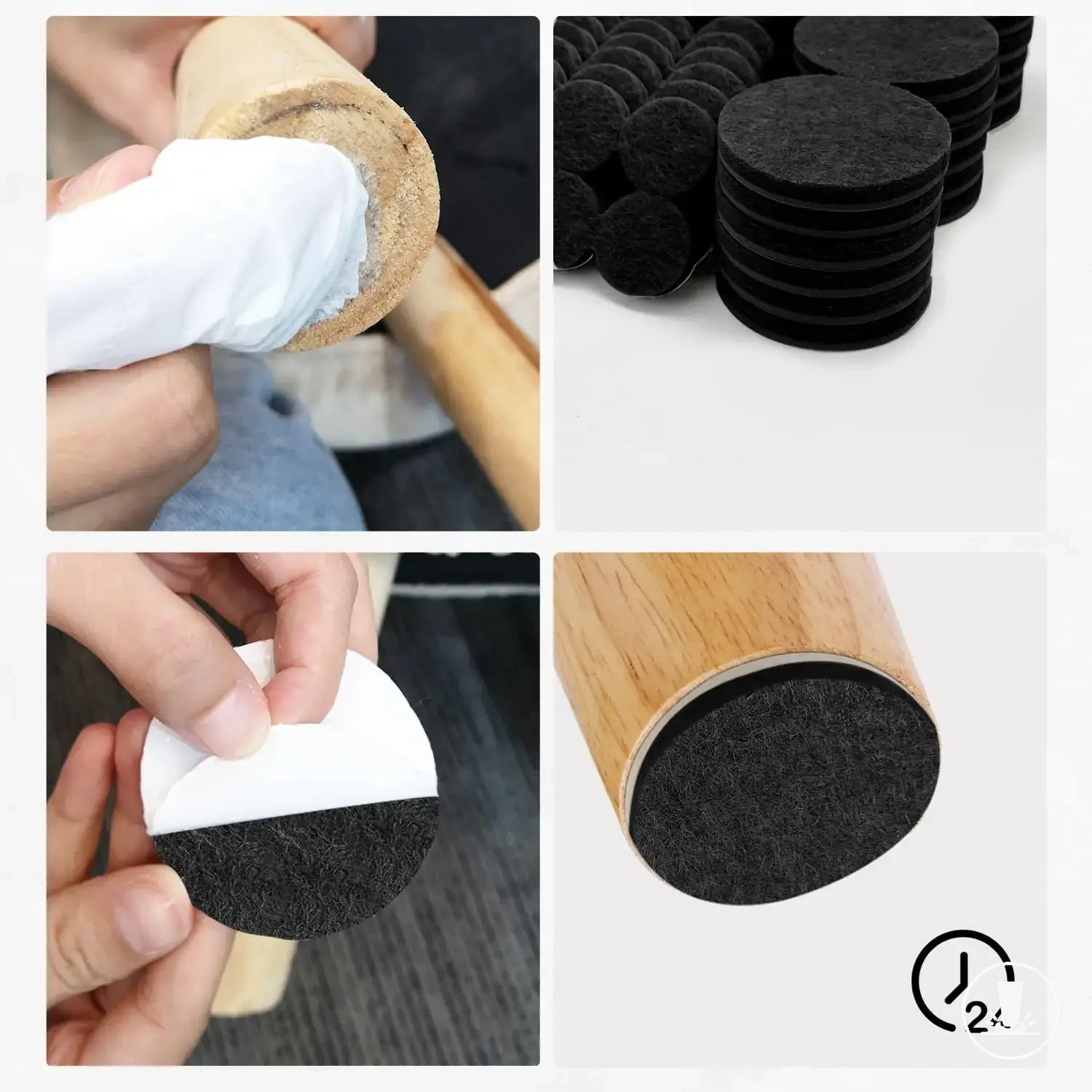
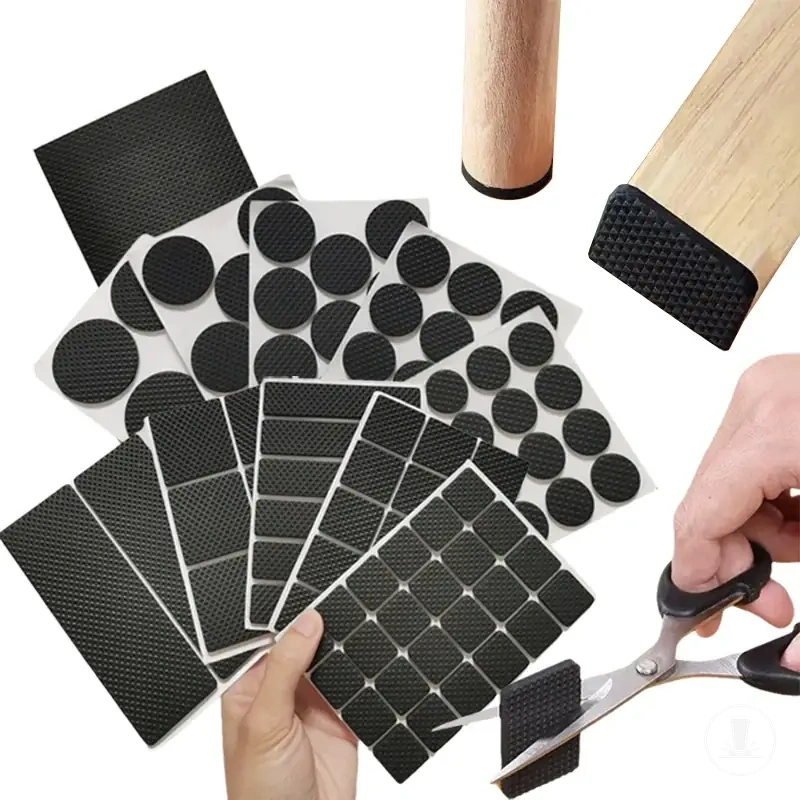
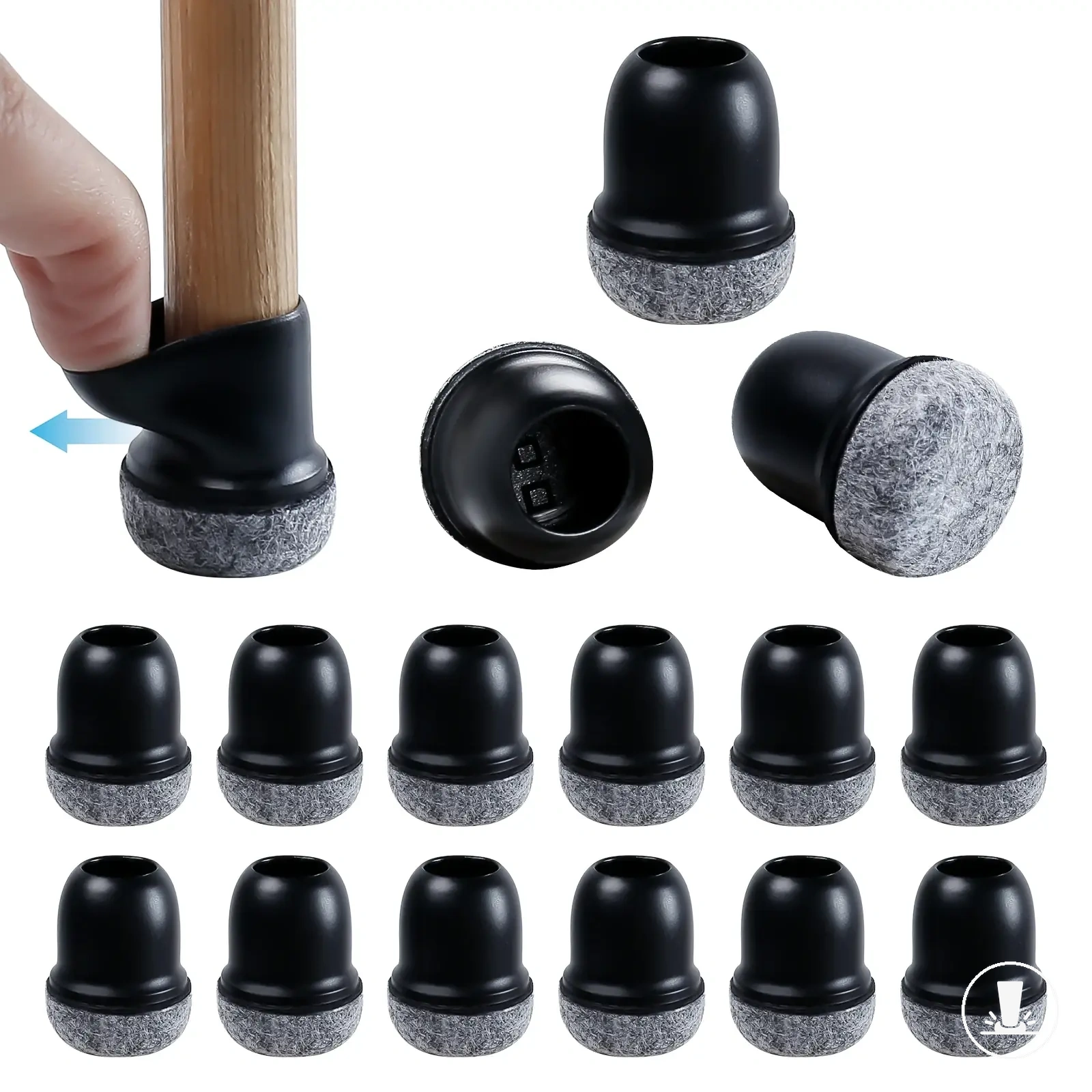
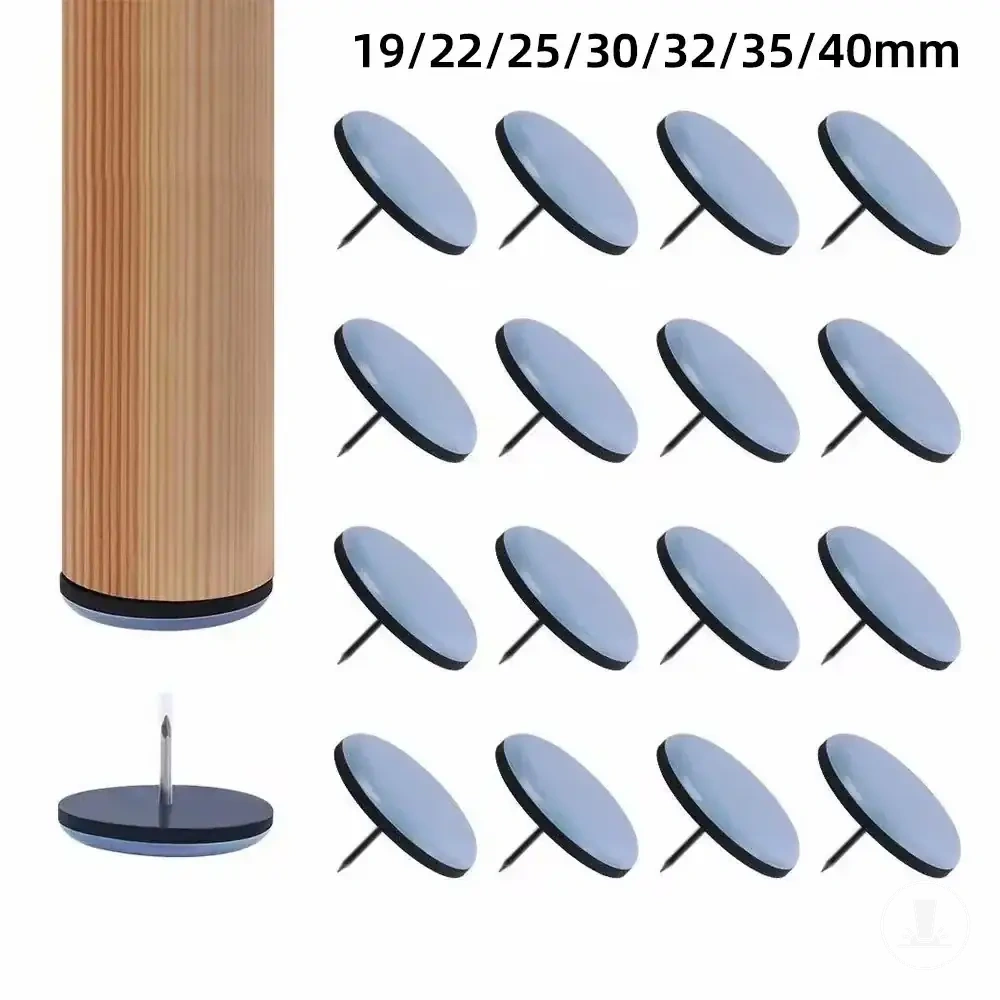
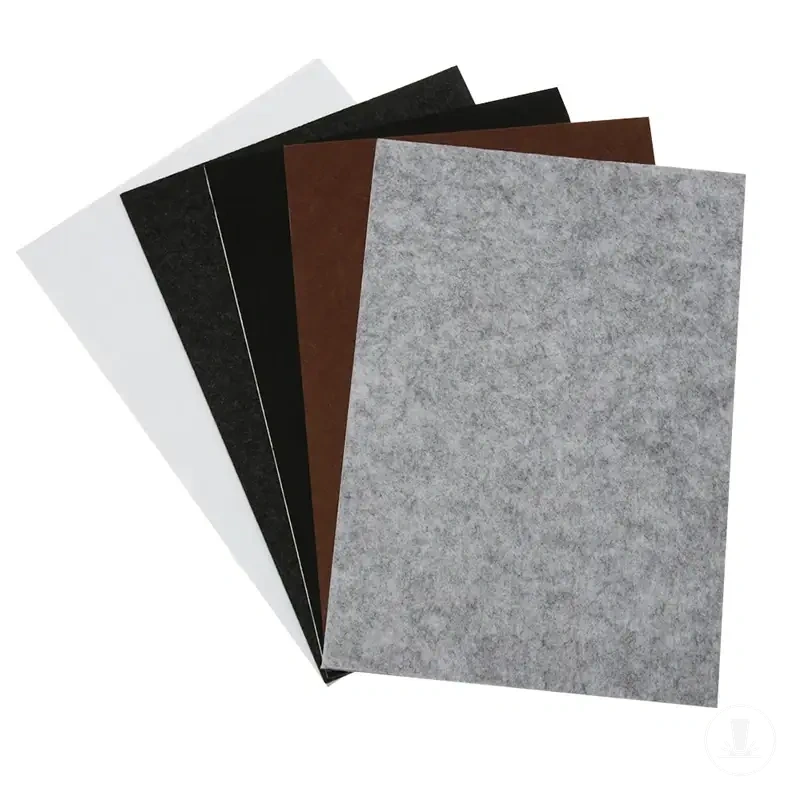
Here are product examples that may make comparison easier. Before buying, always review the compatibility criteria, essential features, and product details.
When Material Choice Depends on Protector Type or Attachment
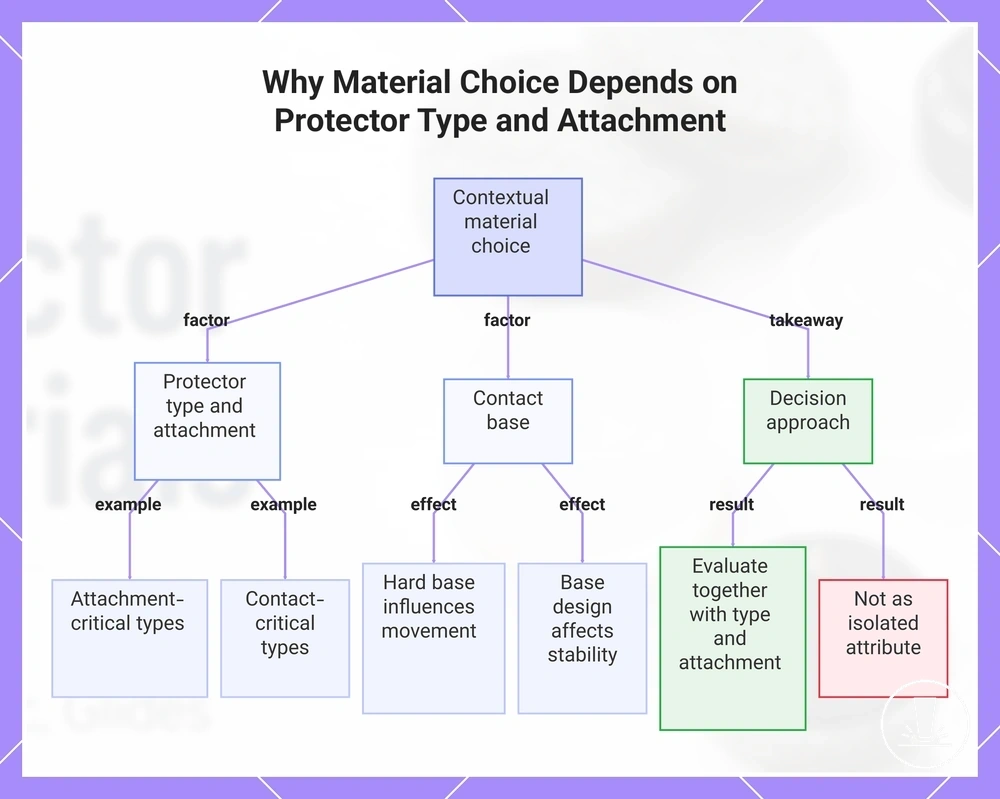
Material choice cannot always be judged on material alone because protector type and attachment method can change how the material behaves. The same material may perform differently as an adhesive pad, slip-on cap, glide, or gripper because the contact base and attachment style influence floor contact. Material and attachment can change each other’s performance.
When a material is used in different protector forms, the outcome may depend on more than the material itself. A soft material in an adhesive pad can behave differently from the same material in a slip-on cap because adhesive condition, leg shape, cap fit, and movement force affect the contact layer. A glide may emphasize movement through its contact base, while a gripper may emphasize stability through a different attachment method. These differences become more noticeable across adhesive, slip-on, cap, and glide contexts.
- Adhesive pad: Material behavior may depend on adhesive condition and how consistently the contact base remains attached.
- Slip-on cap: Material performance can vary with leg shape, cap fit, and contact stability.
- Glide: Material choice may interact with a hard contact base that influences movement characteristics.
- Gripper: Material behavior may depend on contact base design and the level of stability required.
Material choice should be evaluated alongside protector type, attachment method, and contact base rather than as an isolated attribute. When fit, attachment condition, or movement force significantly affect performance, protector form becomes part of the decision. In those situations, material choice is best judged together with protector type and attachment method.
This chart shows that material performance for furniture protectors is influenced by protector type, attachment method, and contact base, and must be evaluated together rather than in isolation.
How to Compare Materials Without Turning Them Into Product Choices
Compare materials by criteria first, not by brand, model, or SKU-level claims. Material comparison is most useful at the category level because floor sensitivity, furniture movement, and stability needs often influence suitability more than individual product choices. A criteria-led approach helps separate material attributes from marketing differences. This keeps category criteria distinct from product choices.
Material comparison should focus on the conditions that affect performance rather than on product examples. Floor sensitivity may influence marking risk, while furniture movement and stability can create different material trade-offs. Replacement expectation and attachment dependency can also affect how a material performs over time. The framework below summarizes the main comparison factors.
| Criterion | What to check | Material implication | Product-example caution |
|---|---|---|---|
| Floor sensitivity | Surface finish and marking concerns | May influence material suitability | Do not assume all products in a category behave identically |
| Furniture movement | Movement frequency and sliding needs | Can affect material preference | A product example does not replace category evaluation |
| Stability | Grip and position retention needs | May change the material trade-off | Avoid treating one product as universally suitable |
| Replacement expectation | Wear, maintenance, and service conditions | Can influence long-term material choice | Category behavior matters more than individual listings |
| Attachment dependency | Protector form and attachment method | May change material behavior | Compare categories before comparing products |
When narrowing from a material class toward a suitable protector category, the goal is to preserve the criteria-first comparison. A felt material and a rubber material may lead to different decisions depending on movement, stability, and floor sensitivity rather than on product branding. For a more focused category comparison, see felt vs rubber furniture floor protectors.
Criteria should remain the primary decision framework even when product examples are introduced later. Product choices are easier to evaluate after floor sensitivity, furniture movement, stability, marking risk, replacement expectation, and attachment dependency have been considered. This approach keeps material comparison at the category level before moving toward product examples.
Here are product examples that may make comparison easier. Before buying, always review the compatibility criteria, essential features, and product details.