Best Furniture Floor Protectors for Floor Risks and Use Cases
Furniture floor protectors depend on floor risk, furniture behavior, fit, and the protection priority for a specific space. A protector that suits chair legs with frequent movement may not be the same choice for heavy furniture that remains stationary. The best choice depends on conditions rather than a single protector type or material.
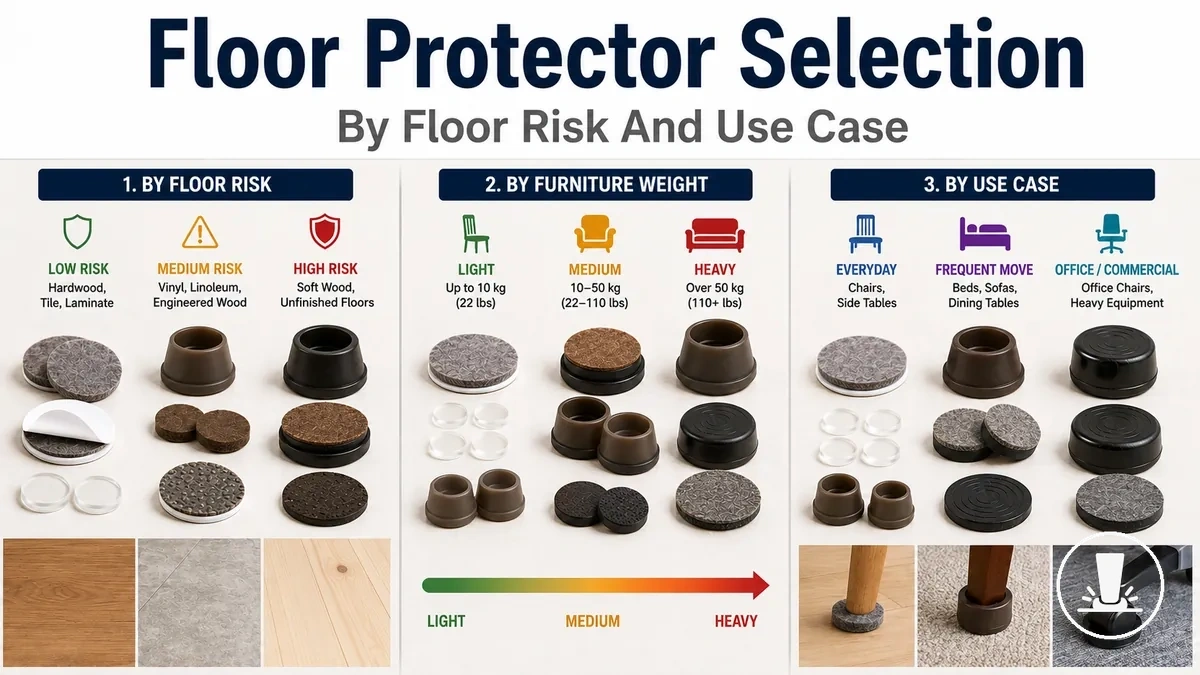
Floor risk and use case provide the main framework for selecting furniture floor protectors. Hardwood floors and tile floors can respond differently to pressure, movement, grip, and surface contact. A setup focused on scratch protection and noise reduction may require a different approach than one focused on dent resistance or sliding control. Furniture weight, chair movement, and surface finish all influence which protection method may be more suitable.
Material behavior and fit help refine the selection. Felt, rubber, silicone, and other furniture pads can perform differently depending on floor finish, movement frequency, contact area, and furniture load. Grip, stability, leg shape, and protector fit may affect how well chair leg protectors or floor pads stay in place and reduce scuff or scratch risk. These conditions establish the selection factors that should be evaluated before considering specific protector options.
Selection factors that change the best furniture floor protector
Selection factors determine which furniture floor protector is more suitable for a specific situation because performance depends on the floor surface, furniture behavior, and fit conditions. furniture floor protectors should be evaluated against the risks they are expected to address rather than by material alone. The main criteria are floor surface, furniture weight, movement frequency, leg shape, contact area, and fit stability.
Floor and furniture variables often interact. A floor surface with higher finish sensitivity may place more importance on marking risk, while heavier furniture can increase contact pressure and influence load distribution. Frequent movement may increase pad wear, slipping risk, or replacement need over time. Leg shape and contact area can also affect how securely a protector stays positioned during use.
Selection factors that change the best furniture floor protector are easier to compare when each condition is reviewed separately. The image below highlights the variables that influence protector choice and can be used as a quick reference before comparing specific options.
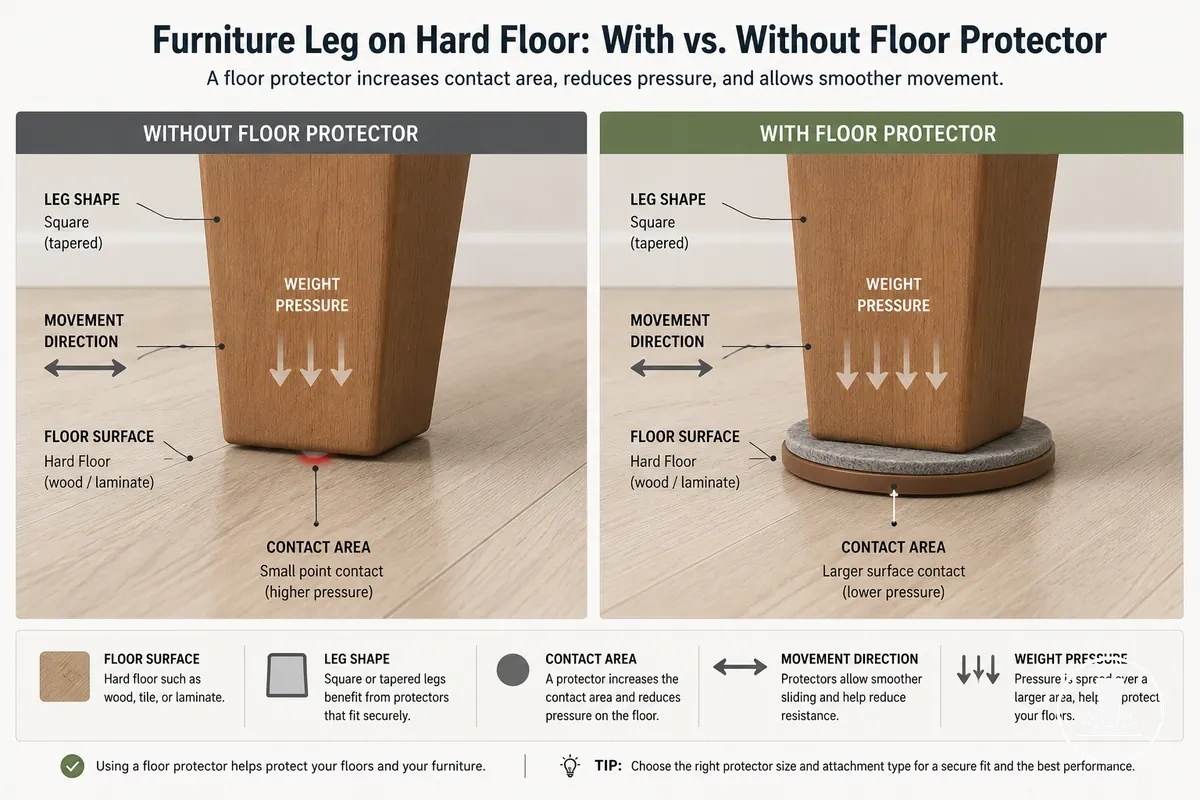
- Floor surface: Different floor finishes may respond differently to protector material, affecting marking risk and overall suitability.
- Furniture weight: Higher furniture weight can increase contact pressure and may change which protector type distributes load more effectively.
- Movement frequency: Frequent sliding or chair movement can increase wear and may influence replacement need.
- Leg shape: Round, square, angled, or irregular leg shapes can affect protector retention and long-term fit stability.
- Contact area: A larger or smaller contact area may change stability, pressure concentration, and protector performance.
- Fit stability: A more secure fit can reduce slipping risk, while a loose fit may increase movement or premature wear.
For example, movement frequency can outweigh furniture weight in certain situations. A lightweight chair used repeatedly throughout the day may place greater emphasis on fit stability and wear resistance than a heavier item that remains stationary.
Floor surface and finish sensitivity
Floor surface and finish sensitivity depend on how a floor reacts to pressure, grip, and abrasion, making them a primary compatibility filter when choosing a furniture floor protector. Hardwood, tile, laminate, vinyl, and carpet can respond differently to contact and movement, especially when coatings, dust, moisture, texture, or furniture load vary. The main compatibility filter is matching protector material and attachment type to the floor surface, finish sensitivity, and marking tolerance.
| Floor surface | Sensitivity factor | Protector implication |
|---|---|---|
| Hardwood | Finish sensitivity, debris, scratch risk | Protector selection may depend on abrasion control and surface cleanliness. |
| Tile | Grip, noise, sliding | Material choice may influence movement behavior and contact noise. |
| Laminate | Pressure, surface wear | Load and movement patterns can affect compatibility and wear risk. |
| Vinyl | Pressure, indentation potential | Protector performance may vary with furniture weight and contact area. |
| Carpet | Cup support, stability, load | Support and stability may become more important than abrasion resistance. |
This comparison narrows the main selection choice rather than providing complete floor-specific guidance. For deeper hardwood-specific compatibility considerations, see hardwood floor protectors, where finish conditions and protector interactions are explored in greater detail.
Furniture weight and movement frequency
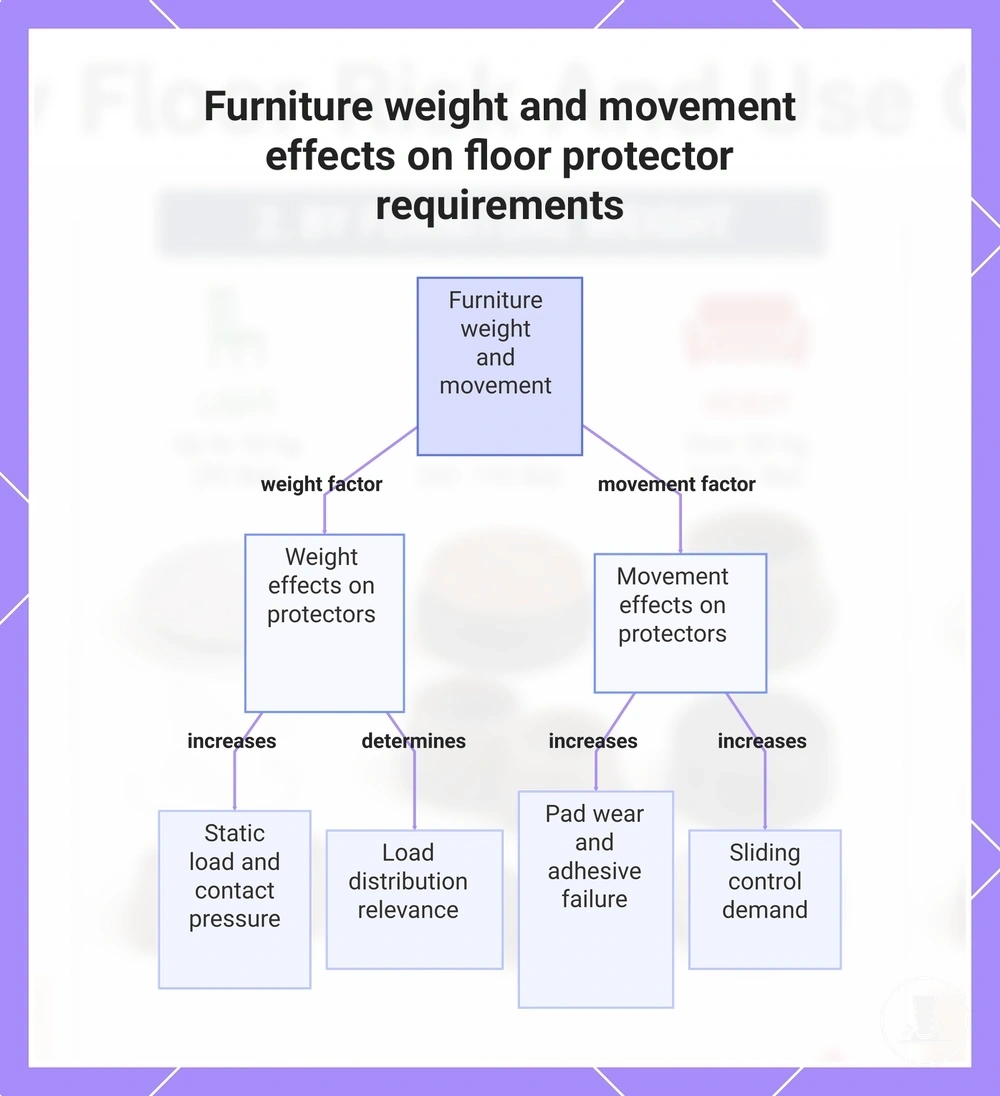
Furniture weight and movement frequency determine how much strength, grip, and wear resistance a furniture floor protector may need. Furniture weight affects static load, contact pressure, and load distribution, while repeated movement can increase pad wear, adhesive failure, or sliding control demands. Evaluating static load separately from repeated movement helps distinguish different protection requirements.
Weight and movement create different selection conditions because pressure load and movement pattern do not affect protectors in the same way. The following examples show how furniture behavior can influence dent risk, stability, wear, and sliding control.
- Light furniture: Lower contact pressure may reduce dent risk, but frequent repositioning can still contribute to pad wear or movement-related instability.
- Medium furniture: Moderate furniture weight may require a balance between load distribution, grip, and sliding control depending on the movement pattern.
- Heavy furniture: Higher static load can increase contact pressure, making load distribution and floor resilience more relevant selection factors.
- Frequently moved furniture: Repeated movement may increase pad wear, adhesive failure risk, or the need for greater sliding control.
- Chair legs and active furniture feet: Continuous movement can place more emphasis on wear resistance and stability than static load alone.
This chart explains how furniture weight and movement frequency separately influence the need for load distribution, wear resistance, and sliding control in floor protectors.
Leg shape, contact area, and fit stability
When a protector does not match the furniture leg properly, it may shift, wear unevenly, or provide less consistent floor protection. Leg shape, contact area, and fit stability influence how well a protector stays aligned during use. Poor fit can make a suitable material perform poorly because movement and floor contact may change over time.
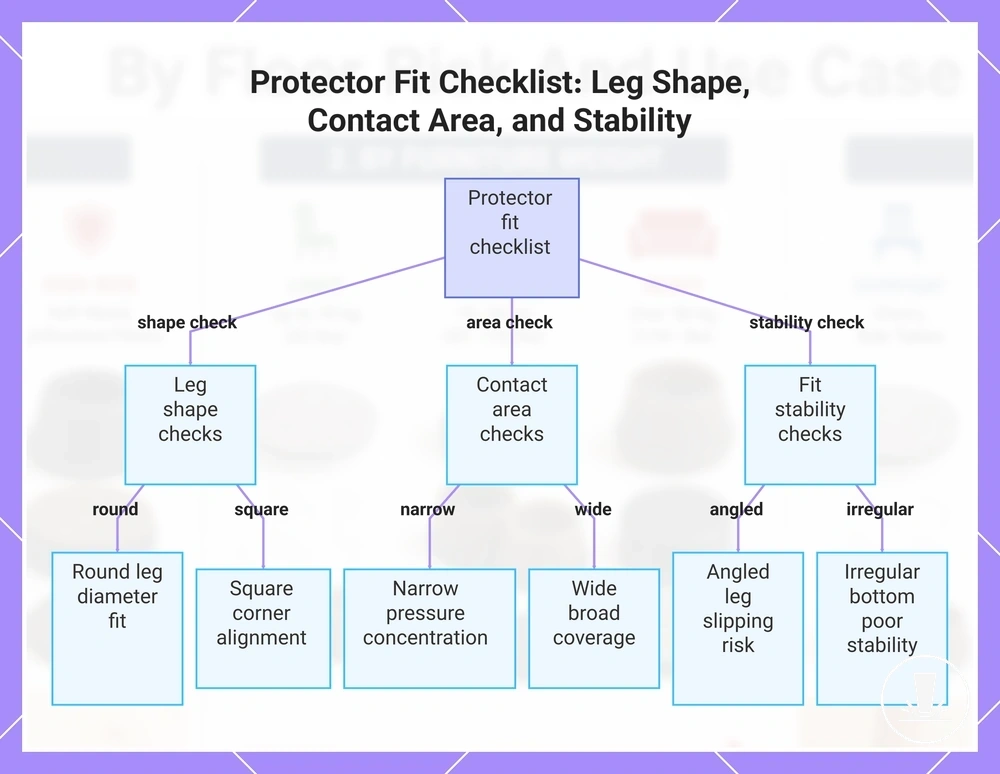
Use this checklist to evaluate visible fit characteristics that can affect protector selection without turning the process into a sizing tutorial.
- Round legs: Cap fit may depend on the leg diameter and how consistently the protector contacts the leg surface.
- Square legs: Pad coverage may depend on corner alignment and how evenly the protector covers the bottom contact area.
- Angled legs: Leg angle can affect fit stability and may increase slipping risk when movement changes pressure distribution.
- Narrow feet: A smaller contact area may concentrate pressure and make pad coverage more important for stable floor contact.
- Wide feet: A larger contact area may support broader coverage, but protector fit should still match the bottom surface shape.
- Irregular bottom contact: Uneven floor contact may reduce fit stability and can affect how well a protector stays aligned during use.
This checklist chart summarizes the key visible fit characteristics to evaluate when selecting a furniture leg protector.
Best protector matches by floor risk
Best protector matches by floor risk depend on the specific surface risk, material behavior, and furniture use pattern rather than a single protector type. A protector that may help reduce scratch, scuff, or noise risk can involve a trade-off for sliding control, while a solution focused on grip may behave differently under pressure or movement. Risk-based matching is more useful when the floor risk and protection priority are identified first.
Best protector matches by floor risk become easier to compare when each risk category is separated by protector behavior and likely trade-offs. The table below organizes the comparison by floor risk rather than by products, brands, or rankings.
| Floor risk | Usually useful protector behavior | Watch-out condition | Best-fit use case |
|---|---|---|---|
| Scratch and scuff | Soft contact surfaces with lower abrasion tendency | Debris buildup may increase surface wear risk | Furniture moved across hard floors |
| Sliding | Higher grip and movement resistance | More grip may reduce repositioning ease | Furniture that shifts unintentionally |
| Noise | Contact surfaces that soften movement impact | Results may vary with floor type and movement frequency | Chair movement on hard floors |
| Dent and pressure | Wider support and broader load distribution | Performance may depend on floor resilience and furniture load | Heavier furniture with concentrated contact points |
| Marking | Materials with lower transfer tendency | Surface finish, moisture, and floor condition can influence outcomes | Floors sensitive to visible contact marks |
Best protector matches by floor risk can also be visualized through protector behavior rather than material names. The image below compares which protector behaviors may help clarify scratch, sliding, noise, dent, pressure, and marking risks under different floor and furniture conditions.
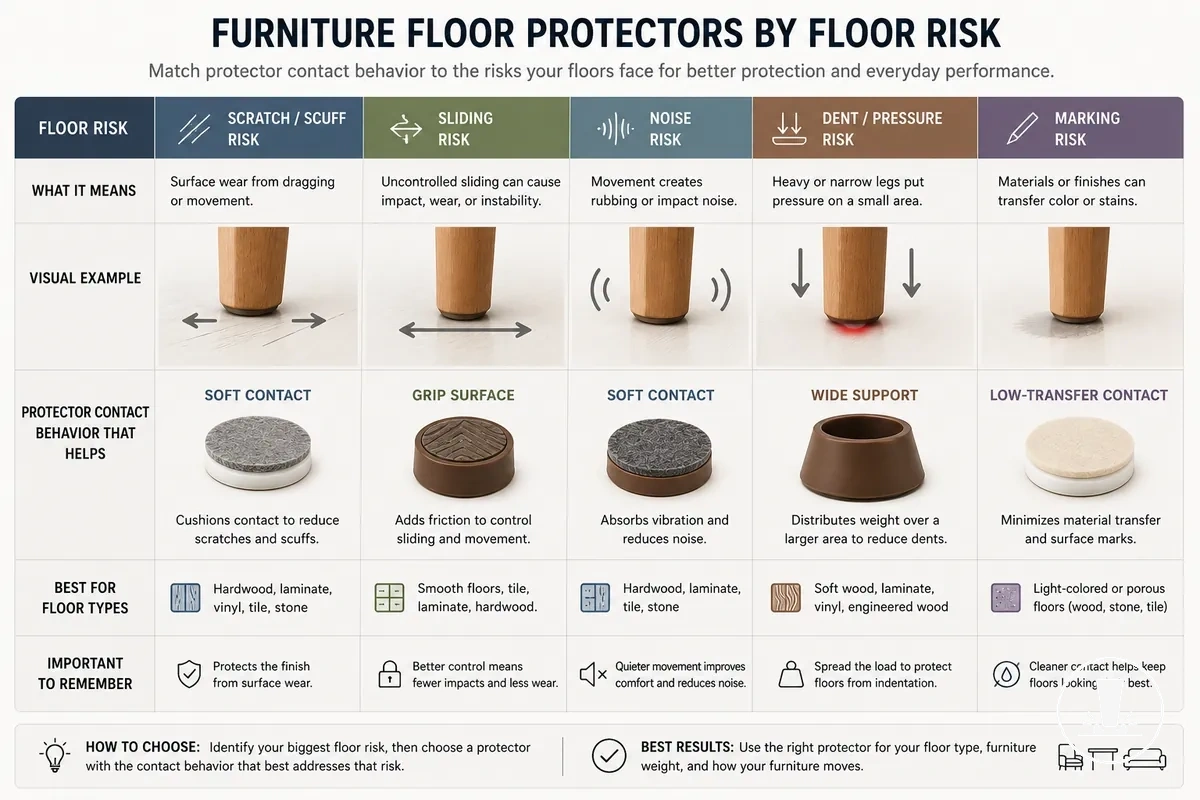
A material tendency that helps one floor risk may create a different trade-off for another. Soft contact behavior may help with scratch, scuff, or noise concerns, while higher-grip behavior may better address sliding risk, so the match depends on the surface condition, furniture load, and movement pattern.
Hardwood scratch and scuff risk
Hardwood scratch and scuff risk depends on finish sensitivity, debris, protector softness, and movement pattern rather than on a single protector material. A protector that may reduce scratch risk on one hardwood floor can behave differently on another when floor coating, surface condition, or movement changes. A safer material match depends on how these factors interact during use.
Finish condition, debris, and movement pattern often determine whether hardwood protection remains consistent. Frequent chair movement may place more emphasis on soft contact and debris control, while heavy stationary furniture can shift the focus toward pressure distribution and stable floor contact.
- Finish sensitivity: Hardwood finishes with higher sensitivity may benefit from protector softness, but suitability depends on the specific hardwood finish and use conditions.
- Debris: Trapped debris can increase scratch risk even when a protector uses a softer contact surface.
- Movement pattern: Repeated movement may increase scuff risk, making consistent floor contact more important for scratch reduction.
- Stationary load: Heavy furniture with limited movement may place greater emphasis on pressure management than on movement-related scuff reduction.
Tile sliding, scraping, and noise risk
Tile sliding, scraping, and noise risk depends on tile floor smoothness, hardness, grout line transitions, and material grip. Furniture movement on a tile floor may create more noticeable sliding or noise than on softer surfaces, so protector selection often depends on balancing grip with sound reduction. Grip and noise control are usually the key local decision factors.
The following tile conditions can help evaluate compatibility and protector behavior.
- Smooth tile: Lower surface friction may increase sliding, making grip characteristics more relevant for movement control.
- Grout line: Repeated movement across a grout line may increase scraping risk when furniture shifts during use.
- Hard floor contact: Tile floor hardness can make chair movement more noticeable, so sound reduction may vary by protector material and movement frequency.
- Surface texture: Tile texture can influence grip consistency and how a protector interacts with the floor surface.
- Chair movement: Frequent dining-chair movement may place greater emphasis on balancing grip and noise control than furniture that remains mostly stationary.
Laminate, vinyl, and carpet pressure risks
Laminate, vinyl, and carpet pressure risks depend on different combinations of surface resilience, pressure sensitivity, texture, and furniture load. These floor types should not be treated as a single category because indentation, sliding, and stability can vary by floor construction and contact conditions. Separating laminate, vinyl, and carpet helps narrow protector selection at a comparison level.
Pressure and stability outcomes often depend on furniture load, contact duration, surface resilience, and texture. The comparison below provides selection-level guidance rather than complete floor-specific treatment.
| Floor type | Main pressure or stability risk | Protector implication |
|---|---|---|
| Laminate | Smooth surface, sliding, and concentrated pressure | Grip and stable contact may become more important when furniture moves frequently. |
| Vinyl | Pressure sensitivity and possible indentation under load | Protector choice may depend on furniture load, contact area, and contact duration. |
| Carpet | Reduced stability around furniture feet | Cup-style support may help improve stability depending on carpet texture and furniture load. |
Best furniture floor protectors by use case
Best furniture floor protectors by use case depend on the furniture situation, chair movement, stationary weight, sliding tendency, room pattern, and protection priority. A protector type that suits one scenario may involve a different trade-off in another because movement, load, and leg shape can change material behavior over time. In many cases, the use case becomes the selection signal that overrides a default material preference.
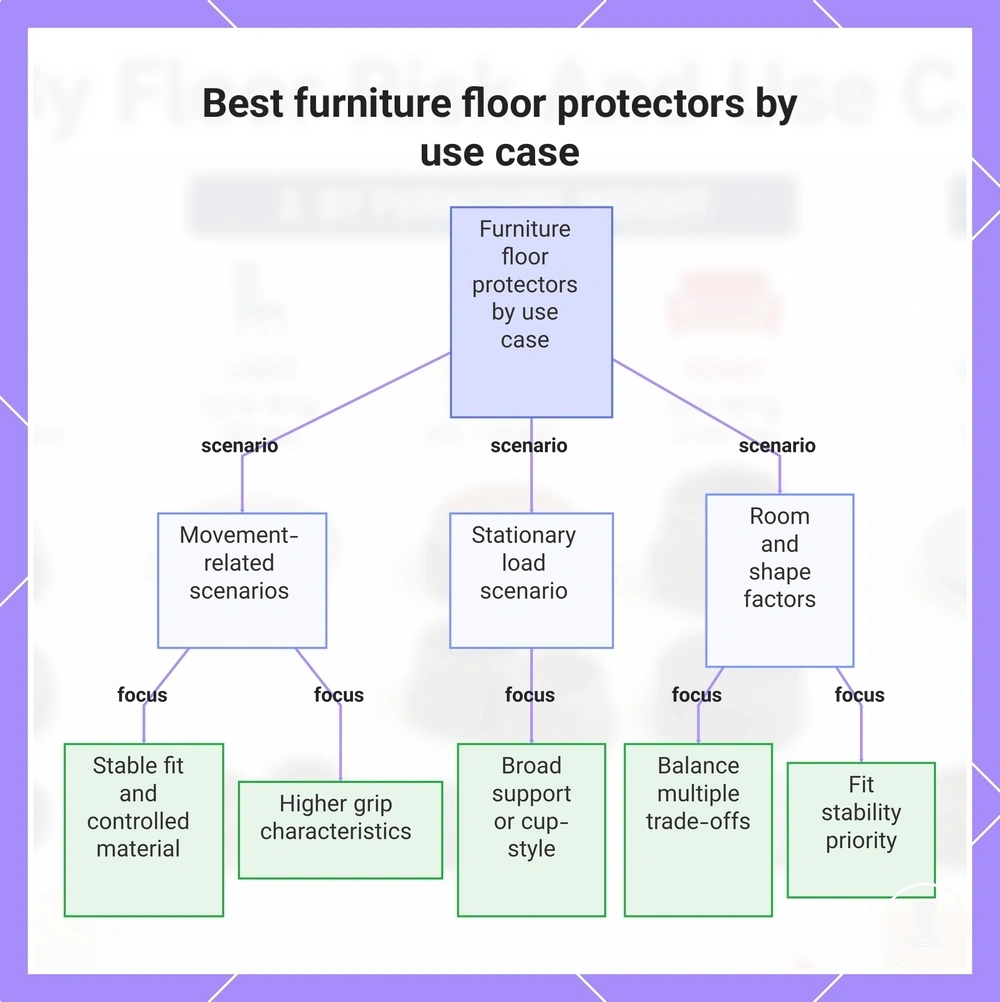
The scenarios below connect common furniture use cases to protector categories and the conditions that may influence selection.
- Dining chairs with frequent chair movement: Main risk includes noise, fit stability, and pad wear. Protector categories that emphasize stable fit and controlled material behavior may be more suitable when chairs move repeatedly throughout the day.
- Heavy stationary furniture: Main risk includes pressure distribution concerns and dent risk. Protector categories that focus on broader support or cup-style behavior may become more relevant when stationary weight remains in one position for extended periods.
- Furniture with a sliding tendency: Main risk includes unintended movement and reduced grip. Protector categories with higher grip characteristics may help when smooth floors and movement patterns increase sliding risk, although trade-offs can vary by material behavior.
- Mixed furniture in active rooms: Main risk includes competing protection priorities. A room pattern that combines chair movement and stationary weight may require balancing multiple trade-offs rather than selecting for a single condition.
- Irregular leg shapes or changing layouts: Main risk includes fit consistency and movement-related wear. Protector type selection may depend more on fit stability than on material preference alone.
Furniture use case selection works best when movement, load, room use, and protection priority are evaluated together rather than separately. A practical use scenario often provides a stronger selection signal than material choice alone because the same protector category can behave differently under different conditions.
After identifying the most relevant furniture situation, the next step is understanding the criteria that narrow the final choice. See how to choose furniture floor protectors for a more structured selection process.
This chart maps common furniture use case scenarios to the recommended protector focus for each situation.
Chair legs and frequently moved dining furniture
Chair legs and frequently moved dining furniture depend on fit stability, floor surface, and repeated movement more than on material preference alone. Dining chairs that move throughout the day can create wear, noise, and shifting contact patterns, especially when chair feet slide repeatedly across the same area. The main decision factors are chair leg shape, bottom size, movement frequency, and floor surface.
The checks below help narrow protector categories for frequently moved seating without turning selection into a measuring process.
- Chair leg shape: Round, square, or tapered chair legs may influence whether a pad, cap, glide, or chair leg protector maintains fit stability during repeated movement.
- Bottom size: Bottom size can affect pad coverage and cap fit, especially when chair feet have a limited contact area.
- Movement frequency: Frequent movement may increase wear and can change how well a pad, cap, or glide stays aligned over time, depending on fit and floor surface.
- Floor surface: Smooth and textured floor surfaces may influence glide behavior, grip characteristics, and protector wear patterns.
- Noise priority: When dining chairs create noticeable noise, soft-contact categories such as felt-bottom caps may help reduce sound, depending on floor surface, fit stability, and movement frequency.
Heavy sofas, tables, cabinets, and stationary furniture
Heavy sofas, tables, cabinets, and stationary furniture depend on pressure distribution, dent resistance, stability, and contact duration more than movement-related wear. Unlike dining chairs that move repeatedly, stationary furniture places a more consistent static load on the same floor contact points. The main selection factors are foot width, floor resilience, contact duration, and pressure distribution.
The furniture types below show how static load conditions can influence protector type selection and indentation risk.
- Heavy sofas: Narrow furniture feet may concentrate pressure in a smaller area, so wide pads or furniture cups may help improve pressure distribution depending on floor resilience and contact duration.
- Tables: Table stability often depends on foot width and floor contact consistency. Protector types with wide support may help maintain more even contact across the floor surface.
- Cabinets: Cabinets can remain in one position for long periods, making contact duration and indentation risk more relevant than movement-related wear.
- Stationary furniture: Heavy stationary furniture may place greater emphasis on dent resistance and stability, while heavy furniture that is moved periodically may require a different balance between pressure distribution and movement control.
- Furniture with concentrated contact points: When weight rests on small feet, furniture cups, wide pads, or other heavy-duty protector categories may help distribute load across a broader contact area.
For deeper guidance focused on static-load scenarios and protector categories, see protectors for heavy furniture.
Recliners and furniture that slides on smooth floors
Recliners and sliding furniture depend on floor smoothness, furniture motion, leg material, and protector grip when unwanted sliding becomes the main concern. Smooth floors can allow unwanted sliding, while the same furniture may behave differently as surface contamination, protector wear, or furniture weight changes. The selection goal is usually anti-slip support while managing the trade-off between slip control and ease of movement.
The checks below help distinguish unwanted sliding from intentional movement before selecting a grip-oriented protector category.
- Floor smoothness: Smooth floors may reduce resistance to furniture movement, making protector grip and anti-slip support more relevant selection factors.
- Furniture motion: If sliding furniture moves unintentionally during normal use, grip-focused protectors may be more suitable than options designed primarily for easier movement.
- Leg material: Leg material can influence how furniture interacts with a smooth surface, which may affect slip control, noise control, and marking risk.
- Intentional movement: Furniture that must be moved regularly may require a balance between anti-slip support and mobility because excessive grip can make repositioning less convenient.
Material trade-offs behind the best protector choice
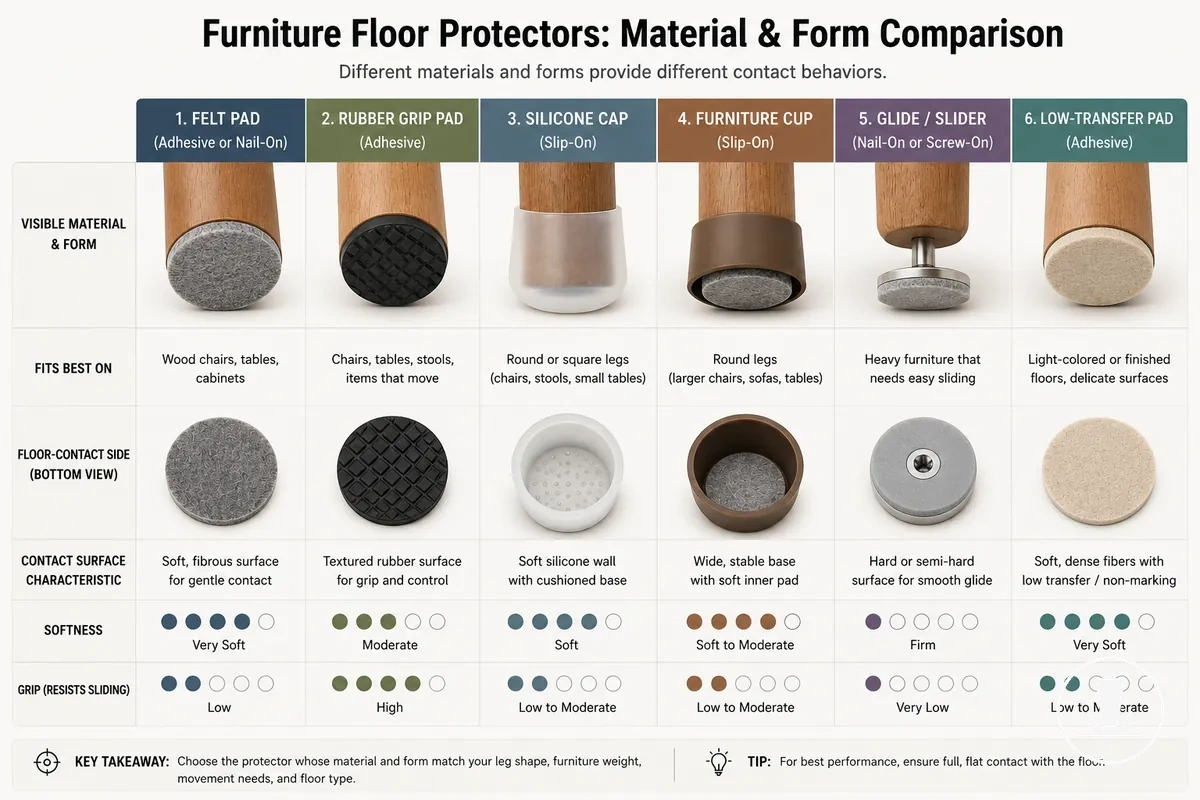
Material trade-offs behind the best protector choice depend on which floor risk, movement pattern, and furniture condition matter most. Felt, rubber, silicone, caps, cups, and glides solve different risk patterns because softness, grip, durability, fit dependency, and movement behavior do not improve equally across every situation. Selection works best when material behavior is treated as a series of trade-offs.
Material trade-offs become easier to compare when the focus stays on behavior rather than material preference. For a deeper comparison of material behavior, see compare protector materials. Material trade-offs behind the best protector choice are easier to visualize when comparing contact surfaces, grip, softness, and fit-dependent forms in the image and table below.
| Material or type | Strongest attribute | Main trade-off | Better use case |
|---|---|---|---|
| Felt | Softness | May provide less grip on smooth floors | Scratch reduction and smoother movement |
| Rubber | Grip | Marking tendency can vary by floor and material behavior | Stability and slip control |
| Silicone | Elasticity and cap fit | Fit dependency may influence long-term performance | Chair legs and fitted protectors |
| Caps | Fit-focused coverage | Performance depends on leg shape and size | Furniture requiring stable attachment |
| Cups | Pressure distribution | May be less suitable when frequent movement is needed | Heavy furniture and dent resistance concerns |
| Glides | Movement behavior | Usually provide less slip control than grip-oriented options | Furniture moved regularly |
The main pattern across these material trade-offs is that a protector material that supports one goal can create a limitation elsewhere. Felt may support scratch reduction through soft contact but offer less grip, while rubber may improve stability but involve a different marking tendency. Cups can support pressure distribution for heavy furniture, whereas glides may be more suitable when regular furniture movement is expected. Softness, grip, durability, fit dependency, and movement behavior should be evaluated together rather than in isolation.
Felt for smooth movement, scratch reduction, and quieter chairs
Felt is a movement-friendly protector material when smooth movement, scratch reduction, and quieter chairs are the main priorities. Felt creates soft contact between furniture and the floor, which can help reduce friction-related marks and movement noise under many conditions. Its strongest use is supporting chair movement while reducing direct hard-surface contact.
The benefits and limits of felt depend on thickness, adhesive quality, debris retention, movement frequency, and pad wear. The points below show how these factors influence performance over time.
- Soft contact: Felt protectors can support smooth movement and scratch reduction when the floor-contact surface remains clean.
- Thickness: Greater felt thickness may provide more cushioning, but performance can vary with furniture weight and movement frequency.
- Adhesive quality: Adhesive quality can influence how well felt pads stay attached during repeated chair movement.
- Debris retention: Trapped grit or debris retention can increase residual scratch risk, especially when felt pads become dirty.
- Pad wear: Worn pads may provide less protection over time, creating a replacement need when felt becomes compressed or damaged.
Felt does not prevent all scratches or noise because floor finish, debris retention, adhesive quality, movement frequency, and pad wear can change the outcome. Periodic inspection for dirt buildup and pad wear can help maintain the trade-off between quieter chairs, smooth movement, and scratch reduction.
Rubber and silicone for grip, stability, and anti-slip support
Rubber and silicone are grip-oriented materials when stability and anti-slip support matter more than smooth movement. Rubber relies on friction and contact area to help resist unwanted movement, while silicone uses elasticity and fit retention to maintain stable contact. Their main trade-off is that stronger grip can help stationary furniture stay stable but may make frequently moved furniture less convenient to reposition.
| Grip benefit | Movement or surface trade-off |
|---|---|
| Rubber can improve grip and stability through friction and floor contact area. | Higher friction may reduce smooth movement, and marking risk can vary with floor sensitivity. |
| Silicone caps can support anti-slip support through elasticity and fit retention. | Performance may depend on moisture, dust, heat, and contact-surface conditions. |
Rubber and silicone should be evaluated with floor sensitivity in mind because grip behavior can vary across surfaces. Marking risk, stability, and anti-slip support may change with finish sensitivity, contact area, moisture, dust, wear, and furniture conditions. These materials are often suitable when slip control is a higher priority than smooth movement.
Caps, cups, and glides for fit-dependent protection
Caps, cups, and glides depend on fit-dependent protection because attachment method, leg shape, contact area, and movement behavior can influence performance as much as material choice. These protector types serve different furniture conditions and floor-contact needs. Their effectiveness depends on how well the protector form matches the furniture and use case.
Attachment style and contact geometry can change stay-on reliability, floor contact control, and stability. The comparison below focuses on protector type and fit conditions rather than detailed attachment methods.
- Caps: Chair leg caps depend on leg shape and attachment method for fit retention. Stay-on reliability may vary with chair movement and how closely the cap matches the furniture leg.
- Cups: Furniture cups use a broader contact area to support stability. They are often associated with heavy furniture where contact control and load distribution are higher priorities.
- Glides: Furniture glides are linked to movement behavior and floor contact. Their performance may depend on contact area and movement patterns, including situations where scraping risk is a consideration.
Attachment details can influence outcomes, but a separate comparison would be needed for a complete evaluation. At this level, fit-dependent protection is primarily determined by how caps, cups, and glides match furniture shape, contact conditions, and intended use.
Protection outcomes to prioritize before buying
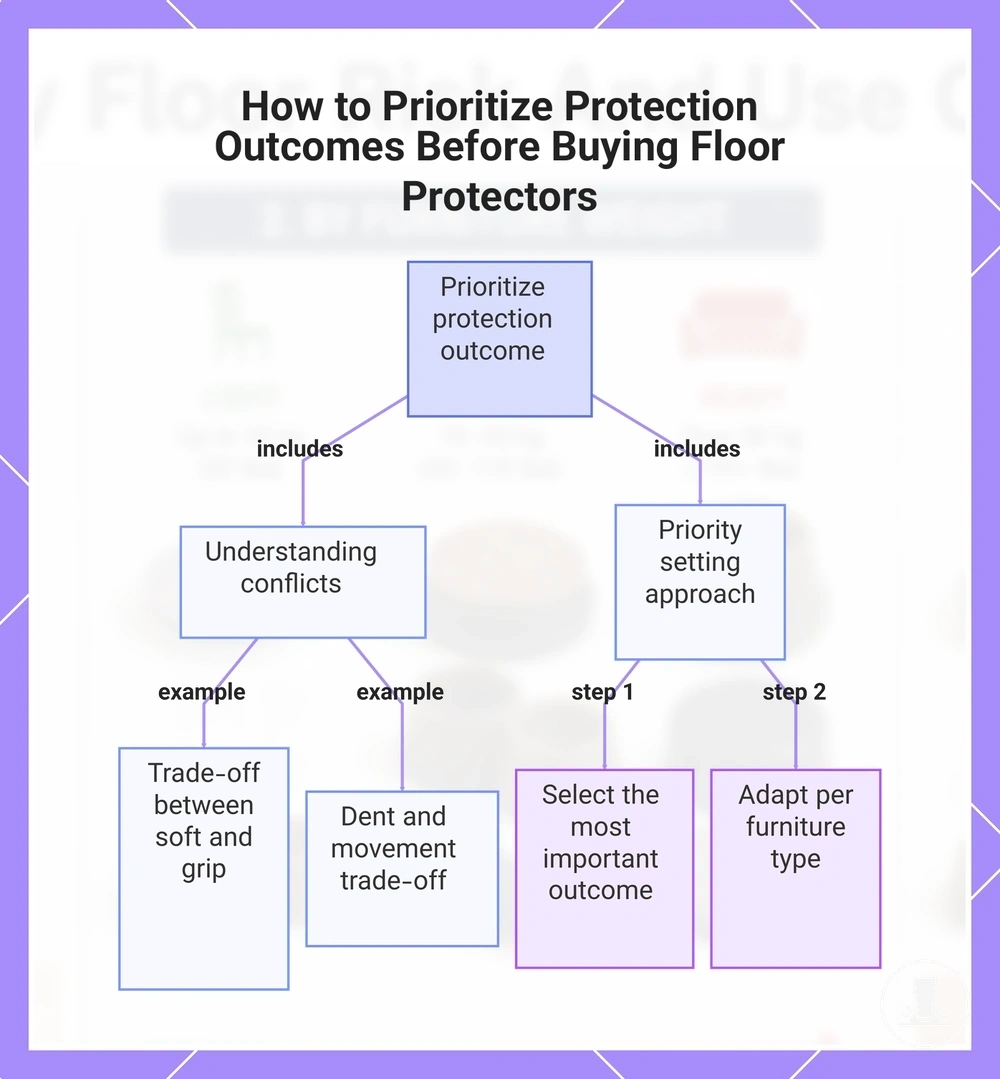
Protection outcomes should be prioritized before buying because scratch reduction, noise control, dent resistance, slip control, and floor marking risk do not always improve together. A protector that supports one outcome may introduce a different trade-off under certain floor conditions or furniture uses. The most effective buying decision starts by selecting the protection outcome that matters most.
Protection outcomes can conflict when furniture movement, floor finish, weight, and contact behavior create competing needs. Soft contact may support scratch reduction and noise control, while stronger grip may support slip control but increase floor marking risk on sensitive floors. Prioritizing one outcome helps narrow the preferred behavior before comparing protector types.
- Scratch reduction: Prioritize soft contact when floor finish sensitivity and furniture movement are the main concerns. The trade-off may involve less grip or different behavior when debris accumulates.
- Noise control: Prioritize quieter floor contact when chair movement on a hard floor creates unwanted sound. The trade-off depends on movement frequency and material fit.
- Dent resistance: Prioritize pressure distribution and contact area when heavy furniture remains in one position. The trade-off may involve reduced suitability for furniture that moves frequently.
- Slip control: Prioritize grip when unwanted movement is the main concern. The trade-off may include greater resistance to smooth movement and a higher need to consider floor marking risk.
- Floor marking risk: Prioritize low-transfer floor contact when sensitive floors are a concern. The trade-off may depend on grip requirements, floor condition, and material fit.
A room may require different protection priorities for different furniture. Dining chairs may place more emphasis on scratch reduction and noise control, while heavy furniture may place greater emphasis on dent resistance and stability. Before buying, choosing a clear protection priority helps keep trade-offs visible and prevents every outcome from being evaluated as equally important.
This chart shows how to prioritize floor protection outcomes by recognizing conflicts between outcomes and following a two-step priority-setting approach.
Scratch and scuff prevention
Scratch and scuff prevention depends on contact softness, cleanliness, movement, and surface finish rather than on a protector alone. Soft contact can support scratch reduction and scuff reduction, but prevention remains conditional because debris, damaged pads, and high-friction movement can still create floor marks. The level of scratch prevention and scuff prevention often depends on contact softness, cleanliness, and wear state.
Contact softness can help reduce direct friction against a surface finish, while cleanliness helps limit debris retention that may increase residual risk. A worn protector may provide less consistent protection as its wear state changes over time. For example, a worn protector that becomes compressed or damaged may create a replacement need because residual risk can increase during repeated movement.
- Scratch prevention: Contact softness and a clean contact surface may support scratch reduction, especially when movement occurs on a sensitive surface finish.
- Scuff prevention: Scuff reduction may depend on movement patterns, contact softness, and whether debris retention increases friction during use.
- Residual risk: Grit, damaged pads, high-friction movement, and a worn protector can still contribute to floor marks, even when a protector is present.
Noise reduction during daily chair movement
Noise reduction during daily chair movement starts with reducing hard contact between the chair and the floor. Floor hardness, contact material, and chair movement patterns can influence scraping sound and vibration during use. Protector choice may support noise reduction when protector softness, fit security, and wear remain suitable for the furniture and floor condition.
Chair noise often changes with floor hardness, contact material, and movement frequency. Softer contact materials may contribute to quieter chairs on hard floors, while fit security and wear can influence whether sound reduction remains consistent over time. The checklist below highlights common noise causes and selection implications.
- Hard floor contact: Greater floor hardness may make scraping sound more noticeable, so protector softness can become a higher selection priority.
- Loose fit security: A protector that shifts during chair movement may contribute to vibration and continued noise risk.
- Protector wear: Wear can change contact behavior over time and may reduce noise reduction compared with a less worn contact surface.
- Contact material behavior: Different contact materials may influence sound reduction differently, especially when daily chair movement is frequent.
Dent resistance under heavier furniture
Dent resistance under heavier furniture depends on pressure distribution rather than on a protector alone. Heavier furniture can increase weight concentration at floor contact points, especially when foot width is small and the duration of contact is long. Dent resistance may improve when pressure distribution is spread across a wider support area.
Indentation risk often depends on weight concentration, foot width, floor softness, and duration of contact. Softer surfaces such as vinyl or carpet may still develop pressure marks under a heavy load, even when anti-dent support is used, because floor resilience can vary.
- Narrow foot width: Smaller contact area can increase weight concentration and indentation risk, making wider support more relevant.
- Greater floor softness: Softer floors may be more susceptible to pressure marks during extended contact.
- Long duration of contact: Furniture that remains stationary for long periods may place more emphasis on pressure distribution and anti-dent support.
- Wider support or furniture cups: Broader contact area or cup-style protection may help distribute a heavy load more evenly and support stability.
Slip control without floor marking
Slip control without floor marking depends on balancing anti-slip performance with floor surface sensitivity. A common assumption is that more grip is always safer, but higher friction can also increase floor marking risk under certain conditions. Effective slip control usually depends on maintaining a grip-marking balance.
Grip material, floor coating sensitivity, and furniture movement can influence whether anti-slip performance remains suitable for a particular floor finish. On sensitive surfaces, safer testing may help evaluate residue potential and marking risk before long-term use. Visible marks, floor residue, or staining belong to a separate problem-specific topic rather than a slip-control assessment.
| More grip helps with | More grip can create |
|---|---|
| Slip control during furniture movement on a smooth floor | Higher floor marking risk when floor coating sensitivity is high |
| Additional anti-slip performance through greater friction | Greater residue potential depending on wear, moisture, dust, and contact conditions |
Value checks for furniture floor protector sets
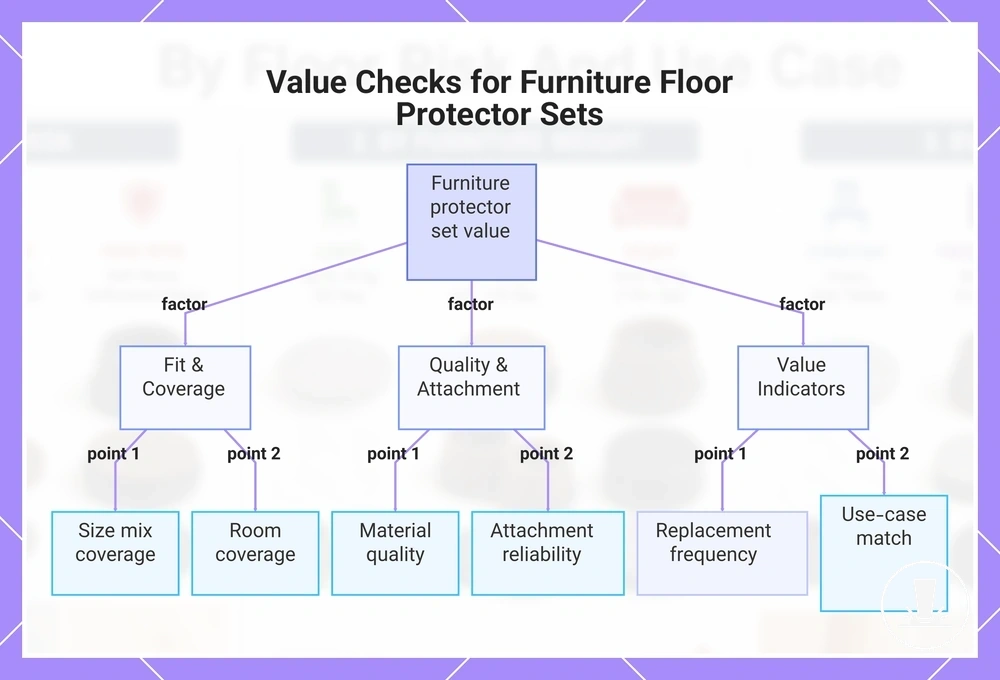
Value checks for furniture floor protector sets depend on fit, replacement frequency, material suitability, and pack usefulness rather than quantity alone. A larger protector pack may not provide more practical value if many pieces do not match the furniture. Value is usually determined by fit and suitability rather than quantity.
Size mix and room coverage influence how effectively a protector pack can support different furniture across the same space. A mixed set may provide practical value when furniture uses multiple leg shapes or dimensions, while a limited assortment can increase waste risk when compatibility is low.
Material quality and attachment reliability help determine whether furniture floor protector sets remain useful over time. Suitable materials and reliable attachment may reduce replacement need, while less suitable combinations can increase maintenance and replacement frequency.
Replacement need is an important part of value because frequent replacement can reduce practical value and increase waste risk. After evaluating these criteria, the furniture floor protectors buying guide can provide broader decision support for comparing protector categories.
- Size mix: Better size coverage can reduce unused pieces and improve room coverage.
- Material quality: Suitable materials may improve practical value for the intended use case.
- Attachment reliability: More reliable attachment can help reduce premature replacement.
- Replacement need: Lower replacement frequency may reduce waste risk over time.
- Room coverage: Wider coverage can improve usefulness across multiple furniture pieces.
- Use-case match: A specialized protector type may be safer when a specific floor risk is the primary concern.
Furniture floor protector sets generally offer the strongest practical value when the assortment matches furniture dimensions, floor conditions, and expected replacement needs. A mixed set may be useful for varied furniture throughout a room, while a specialized protector type may support a safer purchase decision for a specific use case or floor risk.
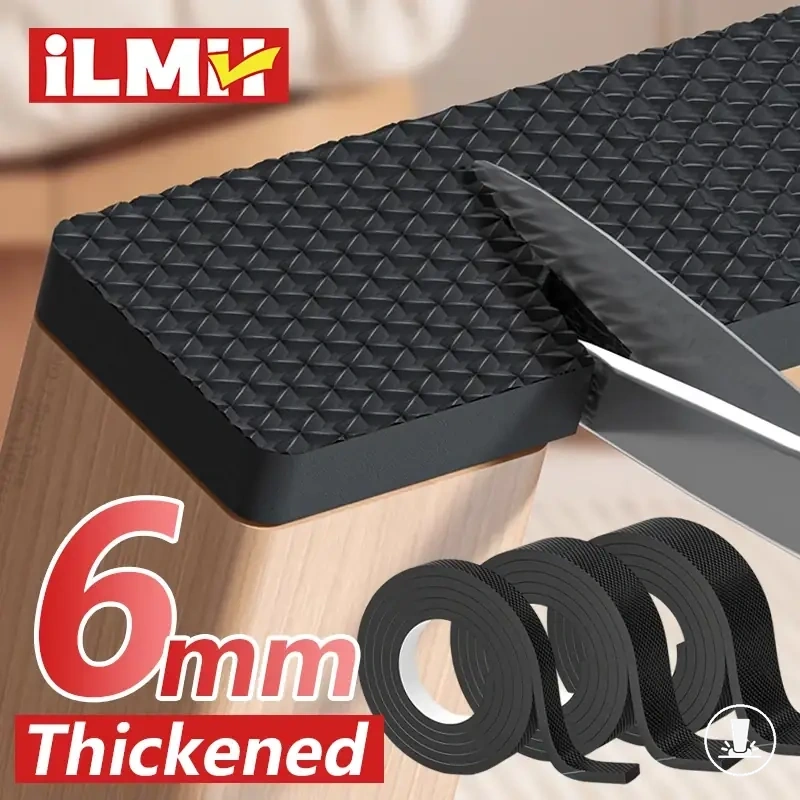
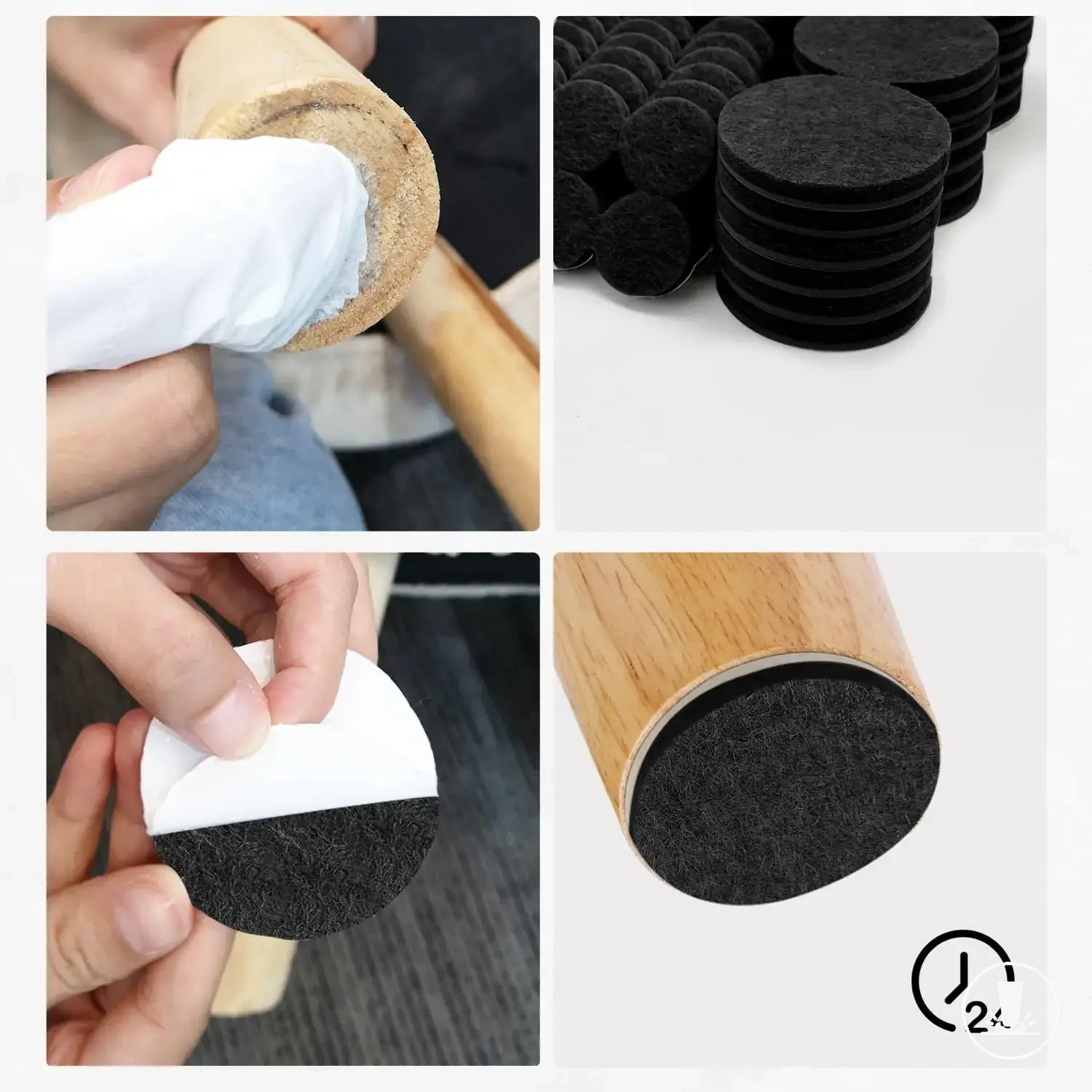
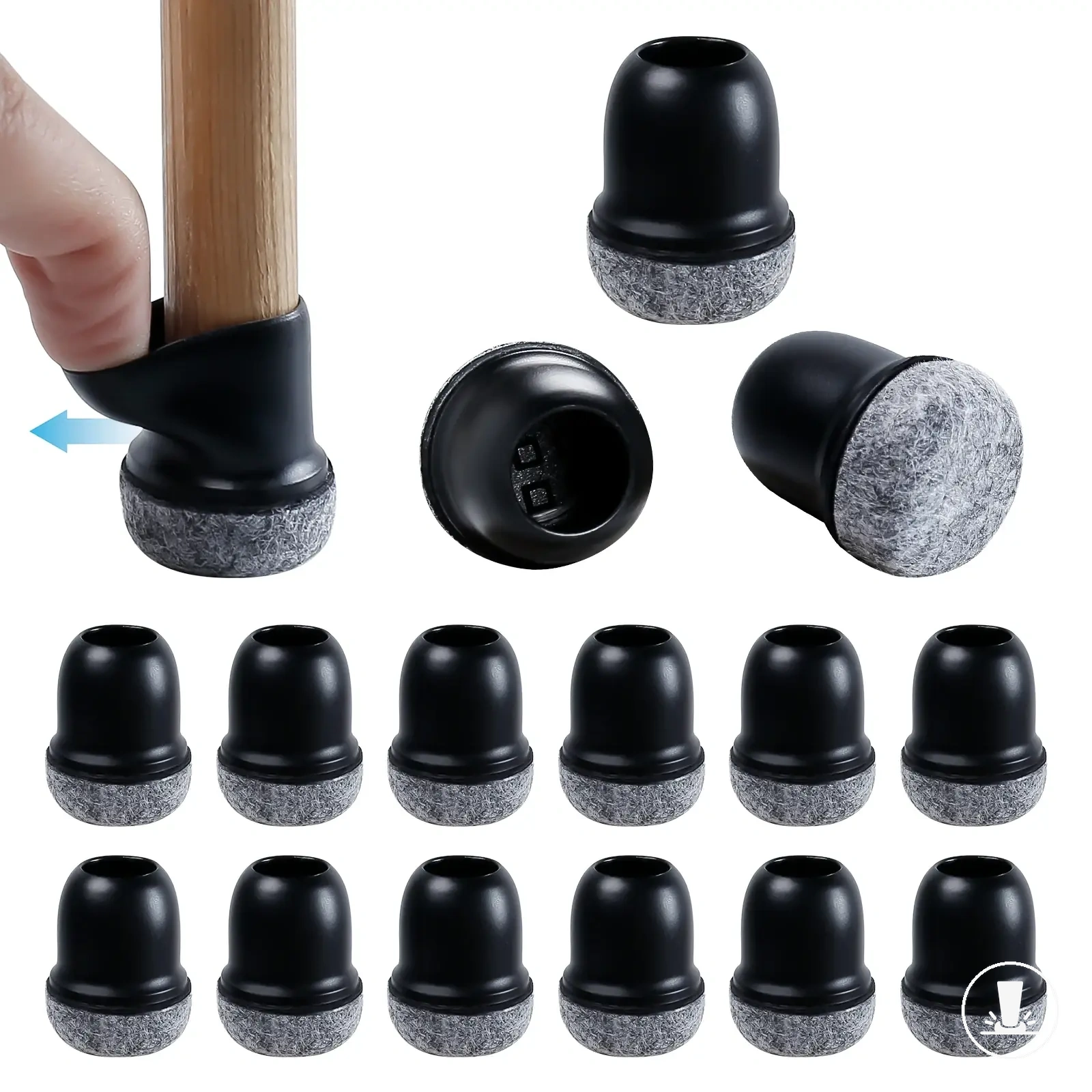
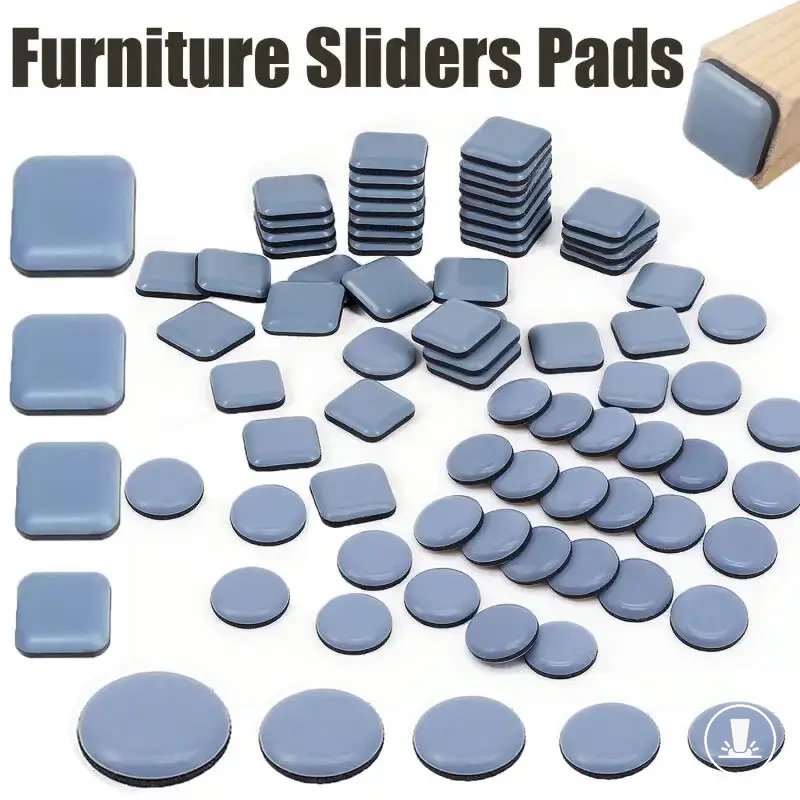
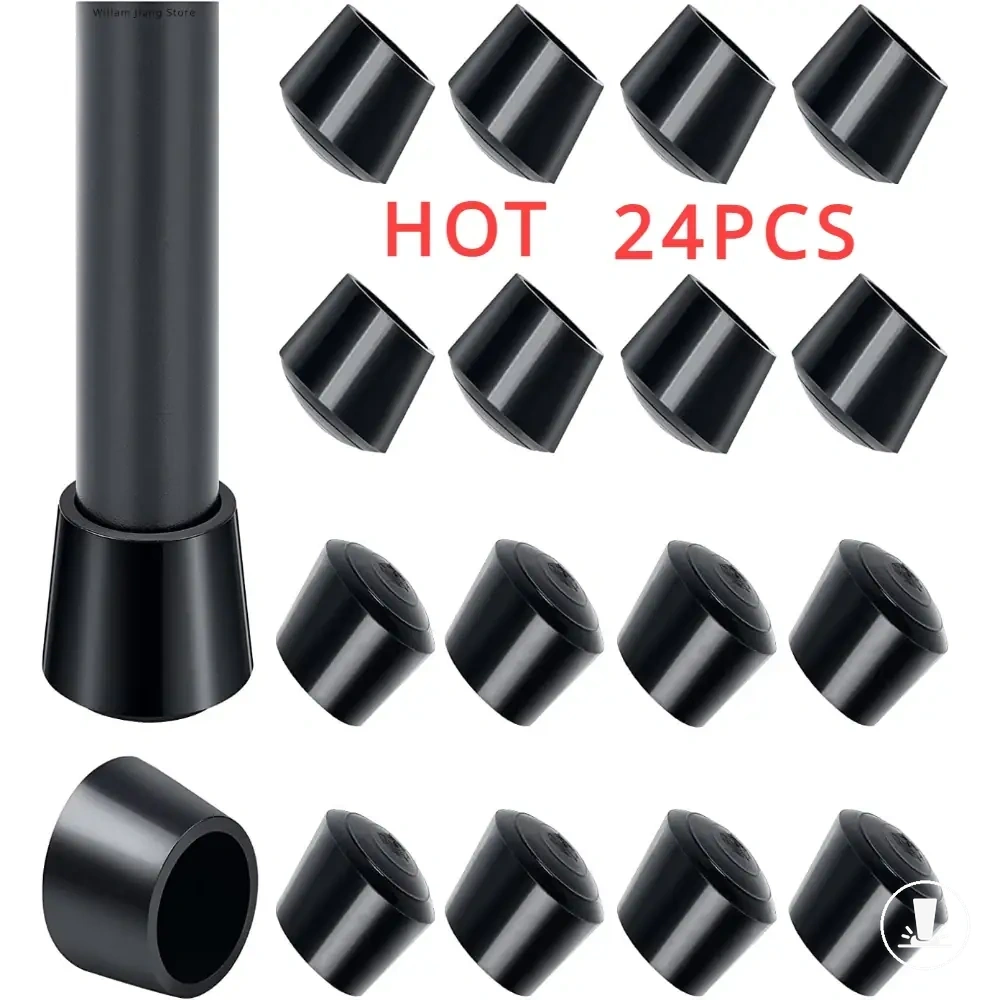
Here are product examples that may make comparison easier. Before buying, always review the compatibility criteria, essential features, and product details.
This chart shows the key criteria for evaluating the practical value of furniture floor protector sets, covering fit, quality, and outcome indicators.