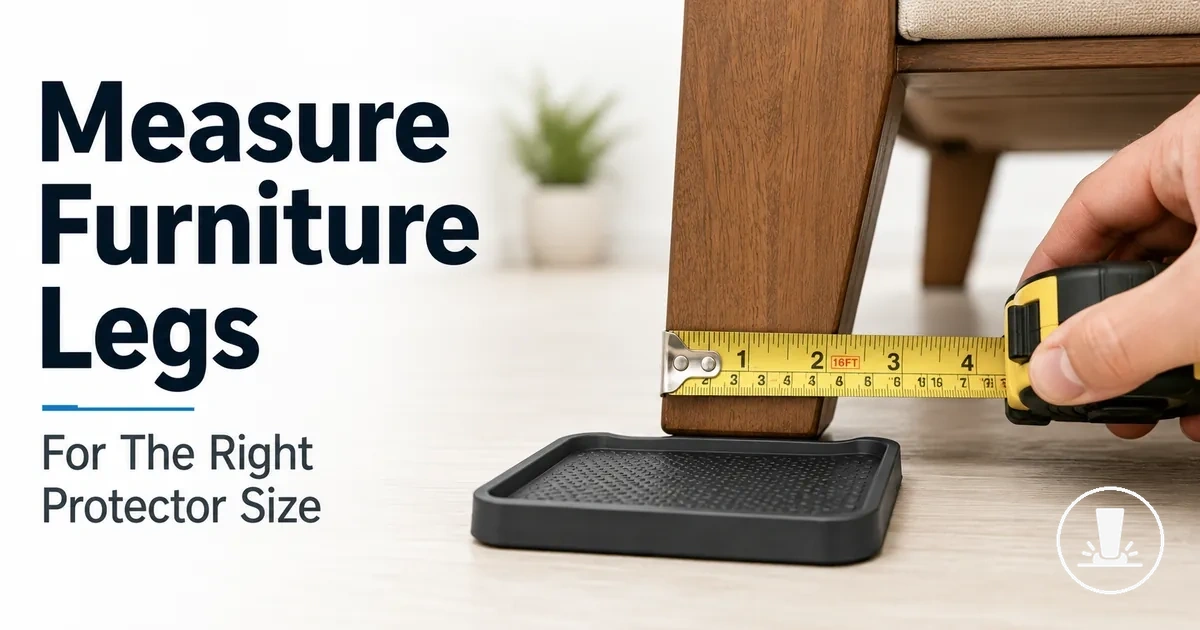
Measuring Furniture Legs for Floor Protector Size
Measuring furniture legs for floor protector size is a sizing method that matches leg dimensions to an appropriate protector range. The measurement process focuses on leg shape, measured width, protector style, and fit tolerance. Round legs, square legs, chair leg caps, and flexible protectors can use different sizing references. Fit starts with measurable leg dimensions.
Floor protector size depends on the dimensions of the furniture legs before it depends on a specific protector style. A round leg is usually assessed by diameter, while a square leg is commonly assessed by side length. The measured width is then compared with a fit range or size band that may vary by protector design. A loose fit or tight fit can depend on leg shape, protector opening, and the stated range. Measurement and product preference are separate decisions.
Poor sizing often begins when a furniture leg is estimated instead of measured. A round leg and a square leg can appear similar in width while requiring different sizing references. Identifying diameter, side length, and fit range early creates a clearer path to sizing chair leg caps, pads, or other floor protectors. The next step is understanding how measured dimensions relate to fit range and protector selection.
What Measurements Decide Floor Protector Fit
What measurements decide floor protector fit refers to the measurable furniture leg attributes that influence sizing. For furniture floor protectors, sizing is primarily determined by leg shape, bottom contact area, outside diameter, side length, and usable size range. These attributes are the main variables that affect protector fit.
A furniture leg can require different sizing references depending on its shape and contact face. A round leg is typically matched using outside diameter, while a square leg is usually matched using side length. The bottom contact area helps determine how much of the leg base aligns with a protector opening or adhesive pad. Each attribute can affect protector fit because a mismatch may increase the chance of a loose fit, a tight fit, or uneven floor contact depending on the available fit range.
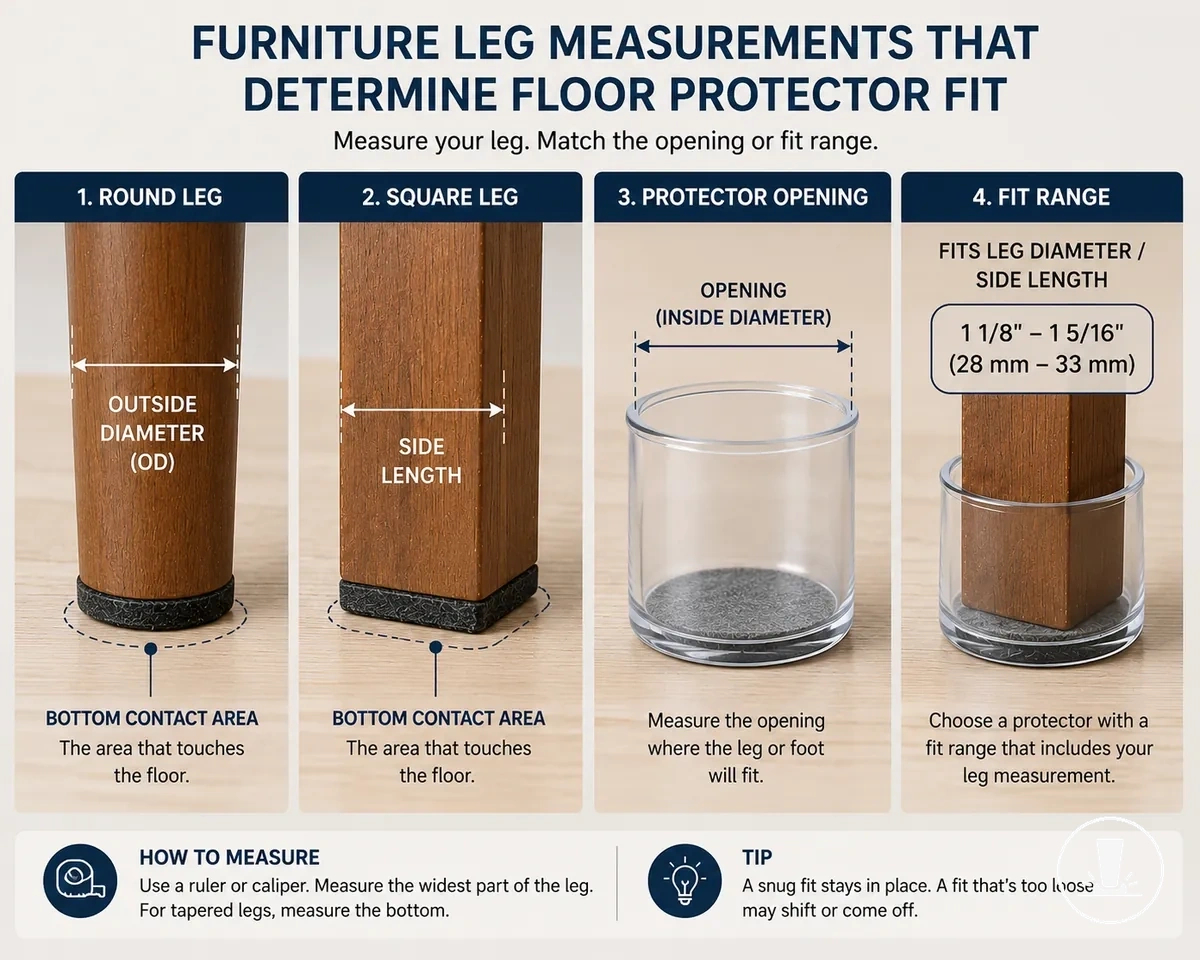
What measurements decide floor protector fit becomes clearer when each measurement is linked to its sizing outcome. The measurements below guide size choice, while material and floor-surface considerations may matter in other contexts, but measurement controls the sizing decision here.
- Leg shape: Determines whether sizing is based on outside diameter, side length, or another measured width.
- Outside diameter: Used for a round leg and compared with the protector opening and fit range.
- Side length: Used for a square leg and can influence tightness when the protector size band is close to the measured dimension.
- Bottom contact area: Affects coverage and how the protector aligns with the contact face.
- Usable size range: Defines the measurement band a protector is designed to accommodate, which may affect loose fit or tight fit outcomes.
Leg shape and bottom contact area
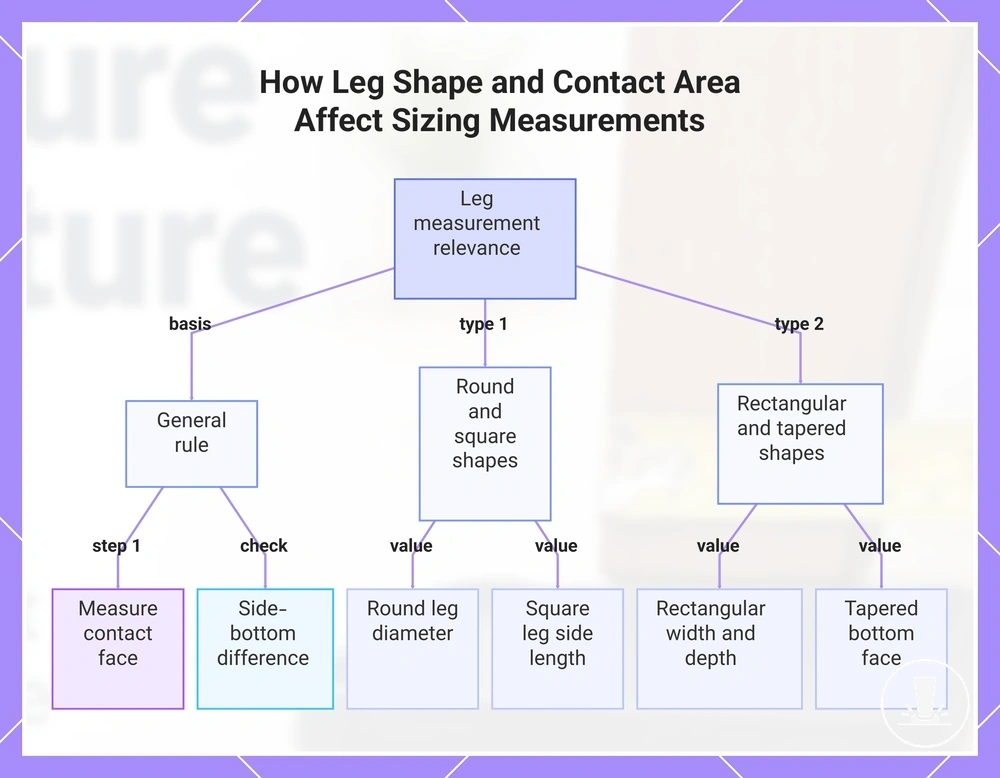
Leg shape and bottom contact area are the attributes that determine which measurement is most relevant for sizing. A round leg is usually assessed by diameter, while a square leg, rectangular leg, or tapered leg may require a measured edge or usable contact area. The measurement should be taken from the contact face that meets the floor.
When a furniture leg looks different from the side than it does at the bottom, the contact face becomes the more useful reference point. A tapered leg may appear wider higher up but have a smaller bottom face, which can change the usable contact area and may affect size selection. Shape-based differences help identify whether diameter, width, depth, or another measured edge is the better reference. For example, a leg that appears round from the side may have an uneven bottom face, making the contact area more relevant than the visible leg profile.
- Round leg: Diameter is often the primary measurement reference.
- Square leg: Side length usually guides the measured edge.
- Rectangular leg: Width and depth may both influence the protector opening.
- Tapered leg: The bottom face may be smaller than the visible profile.
This chart explains how furniture leg shape and bottom contact area determine which measurement is most relevant for sizing protectors.
Outside diameter, side length, and usable size range
Outside diameter, side length, and usable size range refer to different sizing values. The measured dimension comes from the furniture leg, while the usable size range comes from the protector opening. A round leg uses outside diameter, a square leg uses side length, and the listed range remains separate from the physical measurement.
A fixed size is compared directly to the measured dimension, while a stretch-fit design uses an accepted range or size band. The table below shows which measurement applies to each shape and what should be compared before interpreting a fit outcome. When a measurement falls near the edge of a usable size range, the result may depend on the specific protector opening and range.
| Measurement type | Applies to | What to compare | Fit risk |
|---|---|---|---|
| Outside diameter | Round leg | Protector opening or accepted range | May result in a loose fit or tight fit near range limits |
| Side length | Square leg | Fixed size or size band | May feel tight when dimensions are close |
| Longer and shorter sides | Rectangular leg | Protector opening dimensions | May not align well if only one side is compared |
| Usable size range | Stretch-fit protector | Measured width against listed range | Borderline measurements may require cautious interpretation |
How to Measure Round Furniture Legs
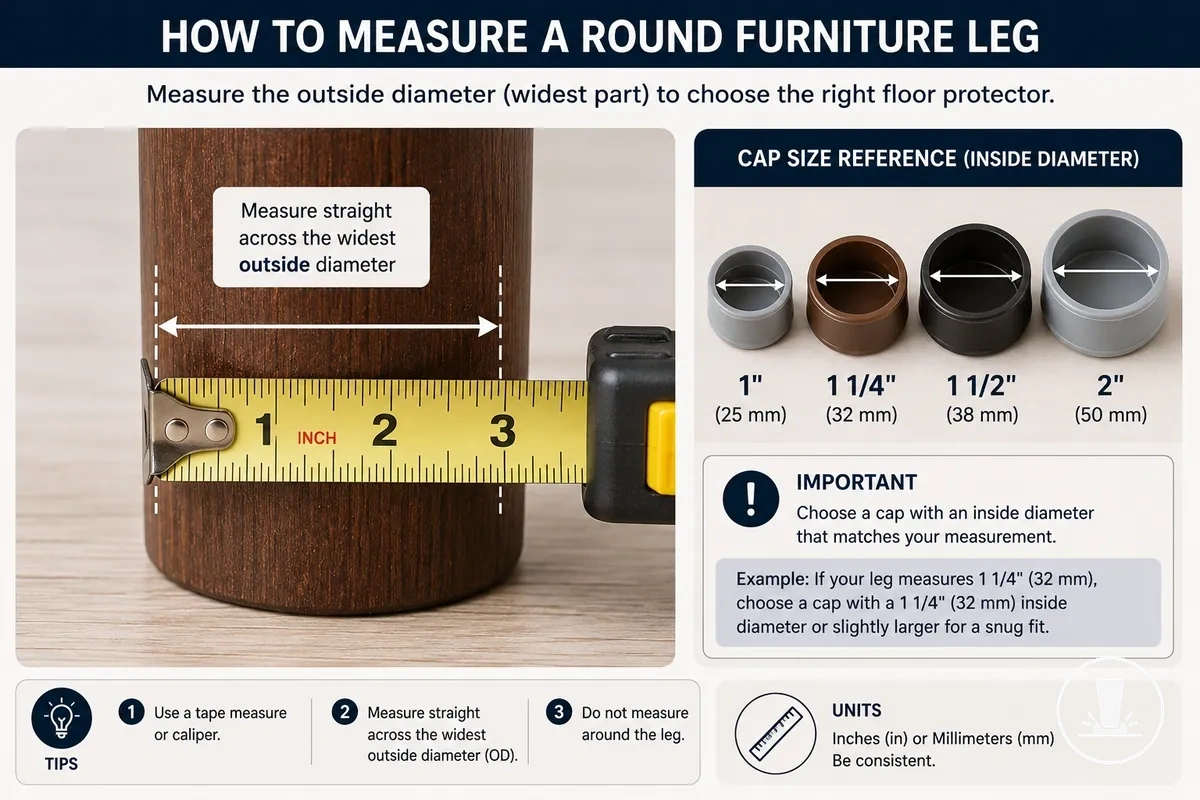
Round furniture legs should be measured across the widest outside diameter where the protector will sit. Use a tape measure or caliper to capture the diameter reading from edge to edge, not around the leg. The correct measuring point is the widest point of the outside diameter.
When a cap size seems unclear, the measurement point is often the cause. Measuring around a circular leg can create confusion because it does not provide the outside diameter used for sizing. A tape measure or caliper should be positioned straight across the leg at the intended protector location. How to measure round furniture legs is shown below with the diameter line and correct tool positioning.
- Place the tape measure or caliper straight across the round furniture leg.
- Measure the outside diameter at the widest point where the protector will sit.
- Confirm that the tool is reading edge-to-edge rather than following the curve of the leg.
- Retake the measurement if the diameter reading appears uneven or off-centre.
- Record the measurement unit in millimetres or inches before comparing it with a cap size or fit range.
If a tapered leg becomes narrower near the floor, measure at the location where the protector is expected to sit. For angled round furniture legs, keep the tape measure or caliper aligned straight across the contact area rather than along the leg profile. If the top width and bottom width differ, the selected cap size or size band may require additional caution because fit range interpretation depends on the measurement point.
How to Measure Square and Rectangular Furniture Legs
Square and rectangular furniture legs should be measured by their sides rather than by a round diameter. Square furniture legs use a side length measurement, while rectangular furniture legs require both width and depth. For these shapes, side measurements replace diameter.
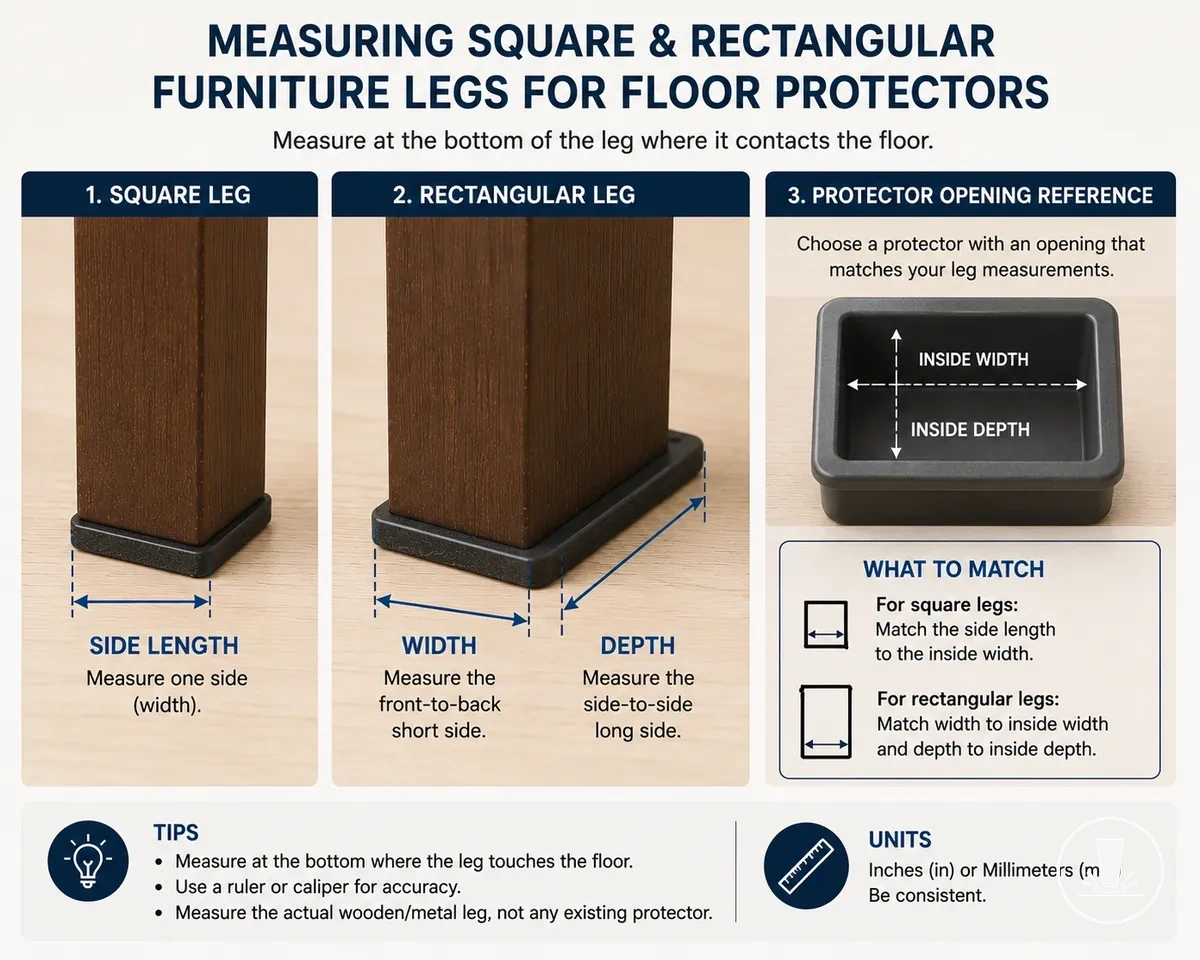
How to measure square and rectangular furniture legs becomes clearer when the measurement points are separated by shape. A square leg uses one measured side, while a rectangular leg uses two dimensions. The comparison below shows which measurements to record before checking a protector opening.
| Leg shape | Measurements to record |
|---|---|
| Square leg | Side length |
| Rectangular leg | Width and depth |
| Angled face | Usable contact side |
| Uneven bottom face | Usable contact side dimensions |
- Measure one side of square furniture legs and record the side length.
- Measure the width of rectangular furniture legs at the protector location.
- Measure the depth of the same rectangular leg at the same location.
- Compare the recorded dimensions with the protector opening and fit range.
Square furniture legs use a single side-length value, while rectangular furniture legs require two measurements. For example, a rectangular leg may have a longer side and a shorter side, and both dimensions need to fit the protector opening. This means width and depth should be checked together rather than separately.
If an angled face or uneven bottom changes the contact area, measure the usable contact side instead of a wider section higher on the leg. The measurement point may affect how the protector opening aligns with the leg. When the contact face is irregular, a cautious fit check may help determine whether the selected fit range is appropriate.
How Protector Style Changes the Measurement You Use
Protector style depends on how the floor protector contacts the furniture leg, and that contact method can change which measurement is needed. Different protector styles may use different parts of the leg for sizing, even when the same furniture leg is involved. As a result, protector style changes the measurement point.
Slip-on caps and other wraparound protectors often use outside dimensions because the protector fits around the leg. Adhesive pads, glides, and felt-bottom protectors usually rely more on the bottom contact area because they attach beneath the leg rather than around it. When the contact method changes, the measurement point can change as well. This creates a distinction between wraparound and bottom-contact logic.
The comparison below shows how protector style can influence the measurement used, the sizing decision, and the related fit risk. Attachment method is relevant here only because it can change which part of the furniture leg needs to be measured.
| Protector style | Measurement to use | Fit risk |
|---|---|---|
| Slip-on caps | Outside dimensions | Loose risk may increase when sleeve fit does not closely match the leg size |
| Adhesive pads | Bottom contact area | Overhang may occur when the pad extends beyond the contact area |
| Glides | Contact point or base size | Floor contact may vary when the measured base differs from the actual contact area |
| Felt-bottom protectors | Bottom contact area | Stability may vary depending on how closely the protector matches the contact surface |
A wraparound protector may depend on outside dimensions, while a pad style may depend on the bottom contact area. This difference can affect the measurement point used before comparing a protector opening or fit decision. For broader details about attachment choices, see attachment methods for furniture protectors. This boundary keeps the focus on measurement-point compatibility rather than attachment-method selection.
Slip-on caps and sleeve protectors
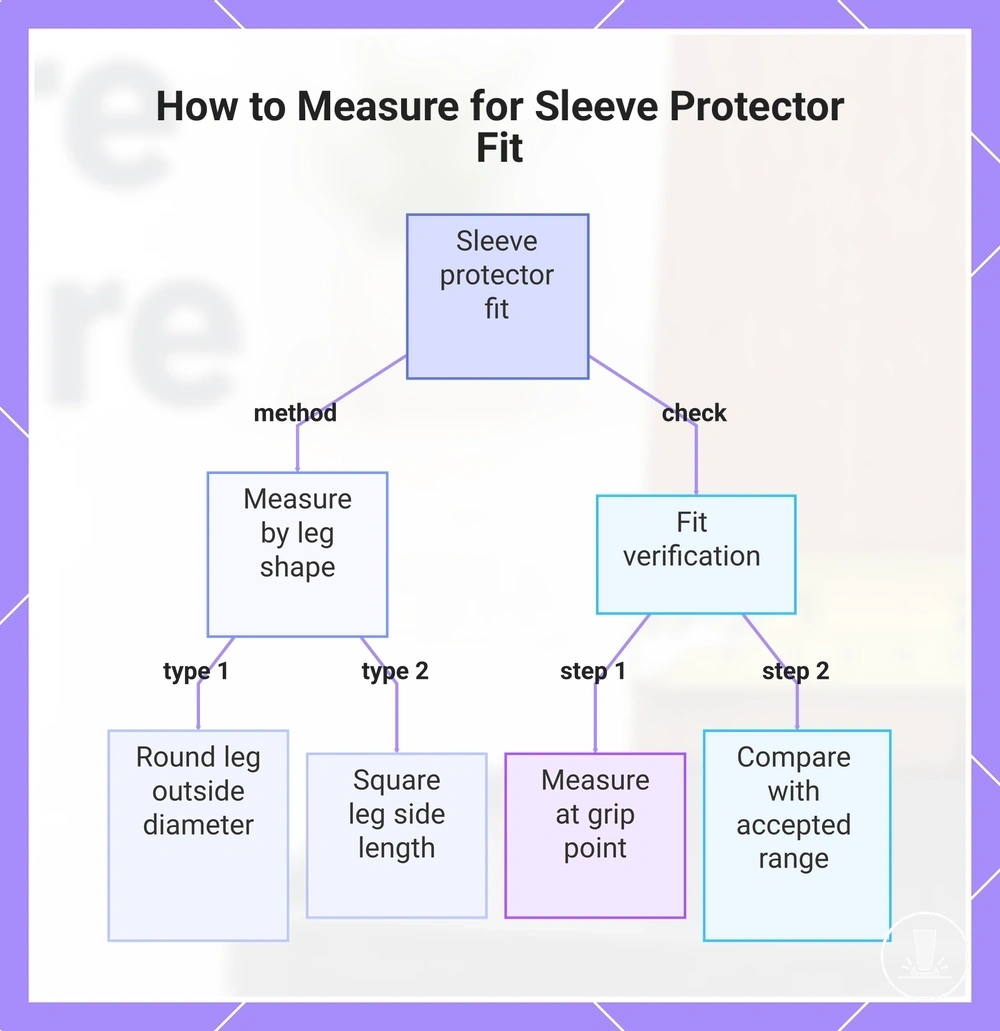
Slip-on caps and sleeve protectors usually depend on the outside dimensions of the furniture leg section they wrap around. Round legs are typically measured by outside diameter, while square legs use side length before comparing the measurement with the protector sleeve's accepted range. For wraparound caps, the outside dimension is the local measurement.
When contact height or leg width changes where chair leg sleeves grip the furniture leg, remeasuring at the actual grip point may provide a more relevant comparison with the accepted range. A tapered leg or angled leg may grip at one point but develop a loose fit at another because the outside dimension changes along the leg. In these cases, a cautious fit assessment is appropriate because sleeve fit depends on the measurement taken at the grip point.
- Outside diameter: Used for round legs with slip-on caps and sleeve protectors.
- Side length: Used for square legs when comparing with an accepted range.
- Grip height: May affect sleeve fit when the leg shape changes along its length.
- Accepted range: Compare with the outside dimension at the intended grip point.
This chart outlines the key measurement methods and verification steps for ensuring proper fit of slip-on caps and sleeve protectors on furniture legs.
Adhesive pads, glides, and felt-bottom protectors
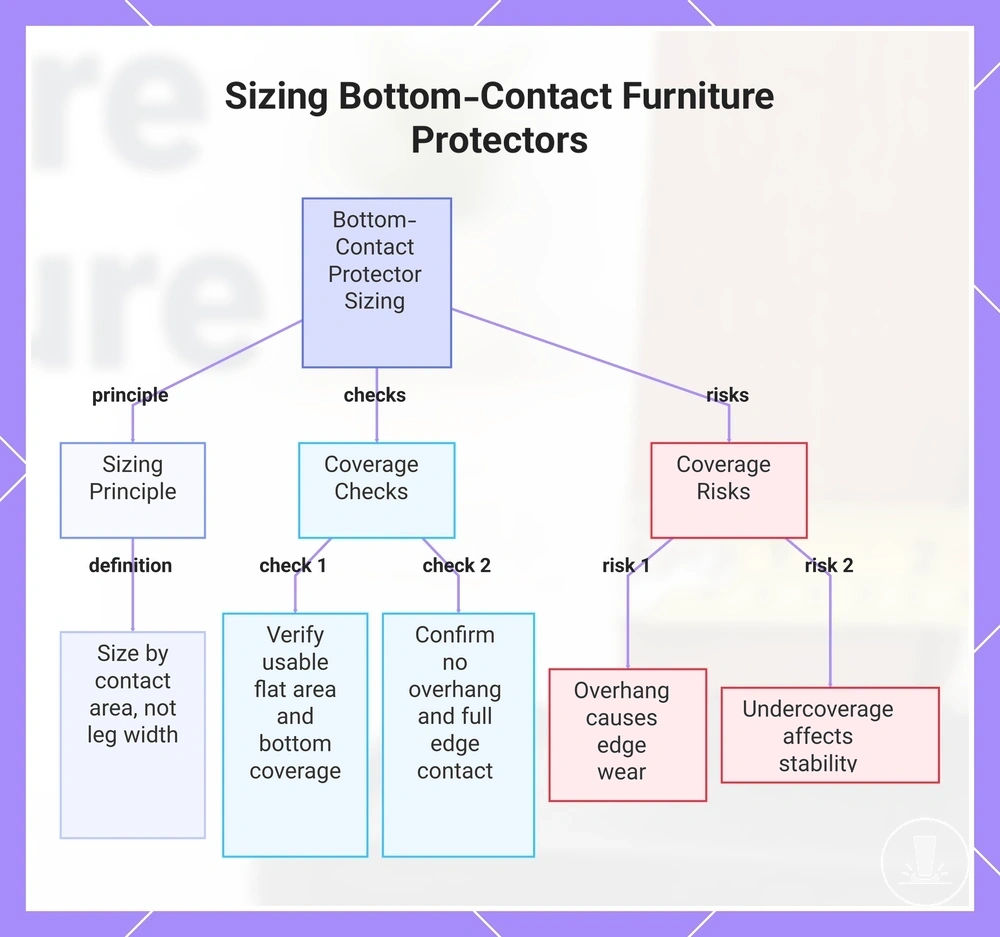
Adhesive pads, glides, and felt-bottom protectors depend more on the bottom contact area than on wraparound leg width. Unlike slip-on caps, these styles are sized according to the usable flat area that contacts the floor rather than the outside dimensions of the leg. For bottom-contact styles, sizing starts with the bottom contact area.
Before comparing sizes, check the points below to confirm that bottom coverage aligns with the contact face:
- Usable flat area: Verify that the contact face provides enough flat surface for the protector.
- Bottom coverage: Compare the pad or glide base with the bottom contact area.
- Overhang: Check whether the protector extends beyond the edge of the contact face.
- Edge contact: Confirm that the protector remains supported across the contact area.
If a furniture leg has a small usable flat area, the size of an adhesive pad, glide base, or felt-bottom protector can affect coverage differently than it would on a larger contact face. When a protector extends beyond the contact area, overhang may occur and edge wear can become more likely. When only part of the contact face is covered, undercoverage may affect stability, creating overhang or undercoverage risk.
This chart shows the sizing basis, coverage checks, and risks for adhesive pads, glides, and felt-bottom protectors.
Furniture Leg Size Chart and Fit Range Checks
Furniture leg size chart and fit range checks depend on comparing measured leg dimensions with a listed cap size, size band, or fit range. The chart organizes measurements by shape and unit so a measured dimension can be interpreted against an accepted range rather than viewed in isolation. Furniture leg size charts translate measured values into size ranges.
The table below organizes measured leg dimensions by shape, measurement method, and size listing. Read the leg shape and unit in inches or millimetres first, then compare the measured dimension with the listed size or fit range to determine how to read it.
| Leg shape | Measurement to use | Size listing to compare | Fit-range note |
|---|---|---|---|
| Round | Outside diameter | Listed cap size or fit range | Within-range values may support higher fit confidence |
| Square | Side length | Size band or listed size | Near-edge values may require a cautious choice |
| Rectangular | Width and depth | Listed size dimensions | Both measurements should be checked together |
| Stretch-fit | Measured dimension by shape | Accepted range | Borderline measurements may need closer interpretation |
A borderline measurement often requires more interpretation than a value comfortably within a fit range. For example, a measured dimension near the middle of a size band may provide stronger fit confidence, while a borderline measurement near the upper or lower edge may depend on the stated tolerance of the range. Measurements recorded in inches or millimetres should be compared using the same unit shown in the sizing chart, which supports qualified interpretation.
Within-range measurements are usually the easiest to evaluate, near-edge measurements may require additional caution, and values outside the listed range often suggest that another size band should be considered. A listed cap size functions as a comparison reference rather than an exact fit guarantee.
Inch and millimetre measurements
Inch and millimetre measurements should match the measurement unit used in the listed protector size before comparing a fit range. Converting a measured value between inch and millimetre helps align the measurement with the size listing without changing the sizing method. The goal is to compare the measured dimension and listed protector size using the same recorded measurement unit.
The conversion note below supports unit matching when reading a size listing.
| Recorded value | Listing format | How to compare |
|---|---|---|
| Inch (in) | Inch size listing | Compare directly |
| Inch (in) | Millimetre (mm) listing | Use a converted value |
| Millimetre (mm) | Millimetre (mm) listing | Compare directly |
| Millimetre (mm) | Inch size listing | Use a converted value |
Rounding can affect how a decimal or fraction value is interpreted against a size range. A fraction recorded in inches may be converted to a decimal before comparison, while a decimal value may be rounded for easier reading when matching a listed protector size. When a converted value falls near the edge of a size range, the rounding direction should be interpreted cautiously because rounding should not hide a borderline fit.
Fixed-size and stretch-fit protectors
Fixed-size protectors depend on a close match between the leg measurement and the listed protector size, while stretch-fit protectors rely on an accepted range. A leg measurement is interpreted differently for each protector type because material flexibility may provide fit allowance within a size band. This difference separates fixed-size protectors from stretch-fit interpretation.
The comparison below shows how the measured value is used for each protector type.
| Protector type | How to use the measurement | Risk if borderline |
|---|---|---|
| Fixed-size protectors | Compare the leg measurement with the listed size and look for a close match | A borderline measurement may increase the chance of a tight fit or loose fit |
| Stretch-fit protectors | Compare the leg measurement with the accepted range or stretch range | Material flexibility may provide fit allowance, but fit can depend on where the measurement falls within the range |
A leg measurement that falls clearly within an accepted range is usually easier to interpret than a value near a range edge. When a borderline measurement is close to the upper or lower limit of a size band, a cautious choice may be appropriate because material flexibility does not necessarily compensate for every mismatch. If the reading appears uncertain, retake measurement before choosing between fixed-size protectors and stretch-fit protectors.
Final Sizing Checks Before Choosing Floor Protectors
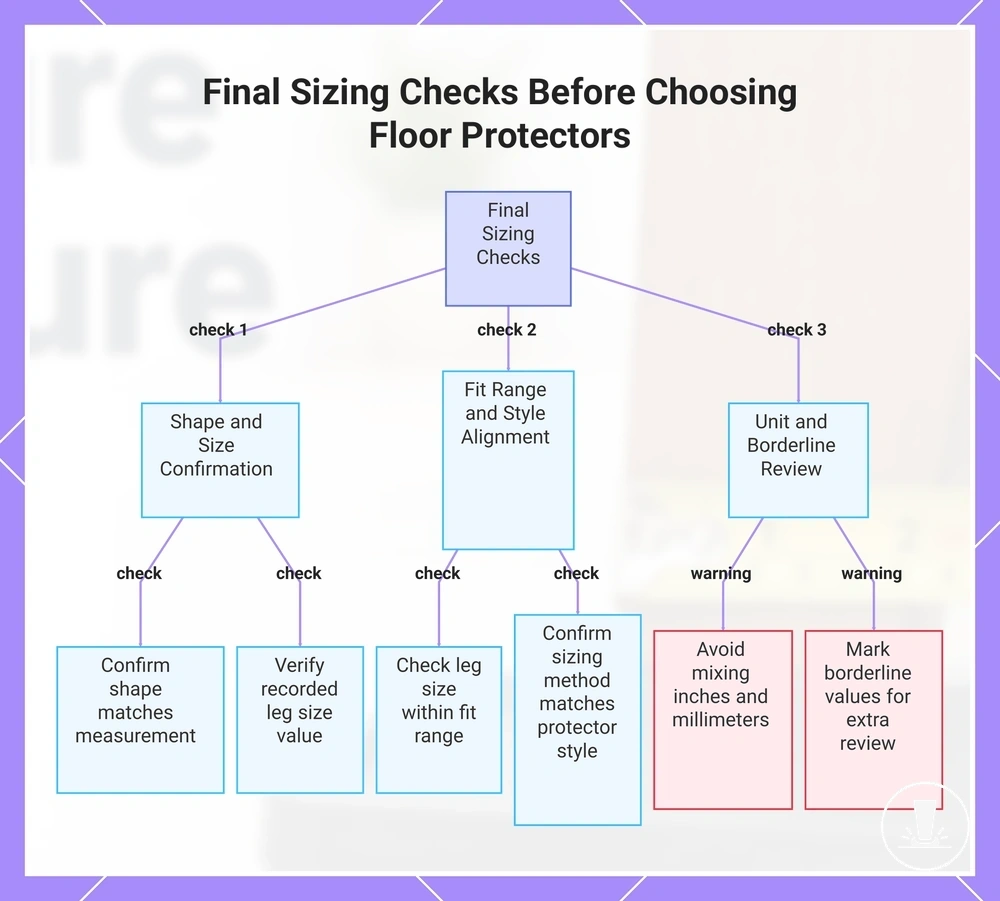
Final sizing checks verify that the measured leg size, protector style, and fit range align before choosing floor protectors. This final check can reduce the chance of a loose, tight, or unstable chair leg fit when sizing information is reviewed together. The purpose is fit verification before making a selection.
Use the checklist below after confirming the recorded dimensions and intended protector type. The checklist verifies whether the furniture leg, size range, and protector style support the same sizing decision.
- Confirmed shape: Verify the furniture leg shape matches the measurement used.
- Measured leg size: Confirm the recorded dimension is the value being compared.
- Measurement unit: Check that inches and millimetres are not mixed during comparison.
- Listed fit range: Verify the measured leg size falls within the intended size range.
- Protector style: Confirm the sizing method matches the selected protector style.
- Borderline measurement: Mark values near a range edge for additional review.
A measured leg size that sits comfortably within a fit range may support higher fit confidence than a value near a range edge. The criteria for chair leg floor protector fit should include shape confirmation, size confirmation, protector style, and fit range alignment. If one criterion remains uncertain, a selection check may be more useful before making a choice.
If a borderline measurement falls close to the upper or lower limit of a fit range, a cautious fit decision may be appropriate. When the recorded value appears inconsistent with the protector style or size range, retake measurement before choosing floor protectors. Final sizing checks are most useful when fit confidence, adjustment need, and measurement accuracy are reviewed together.
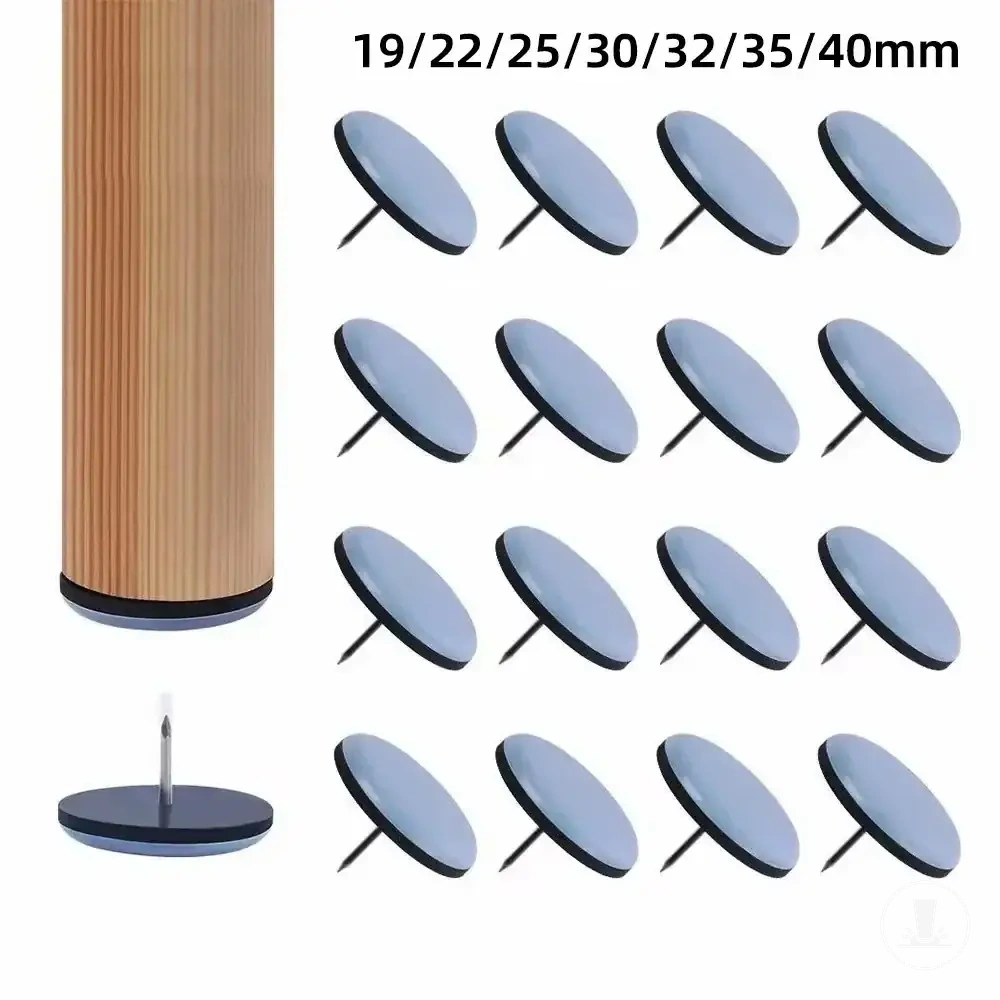
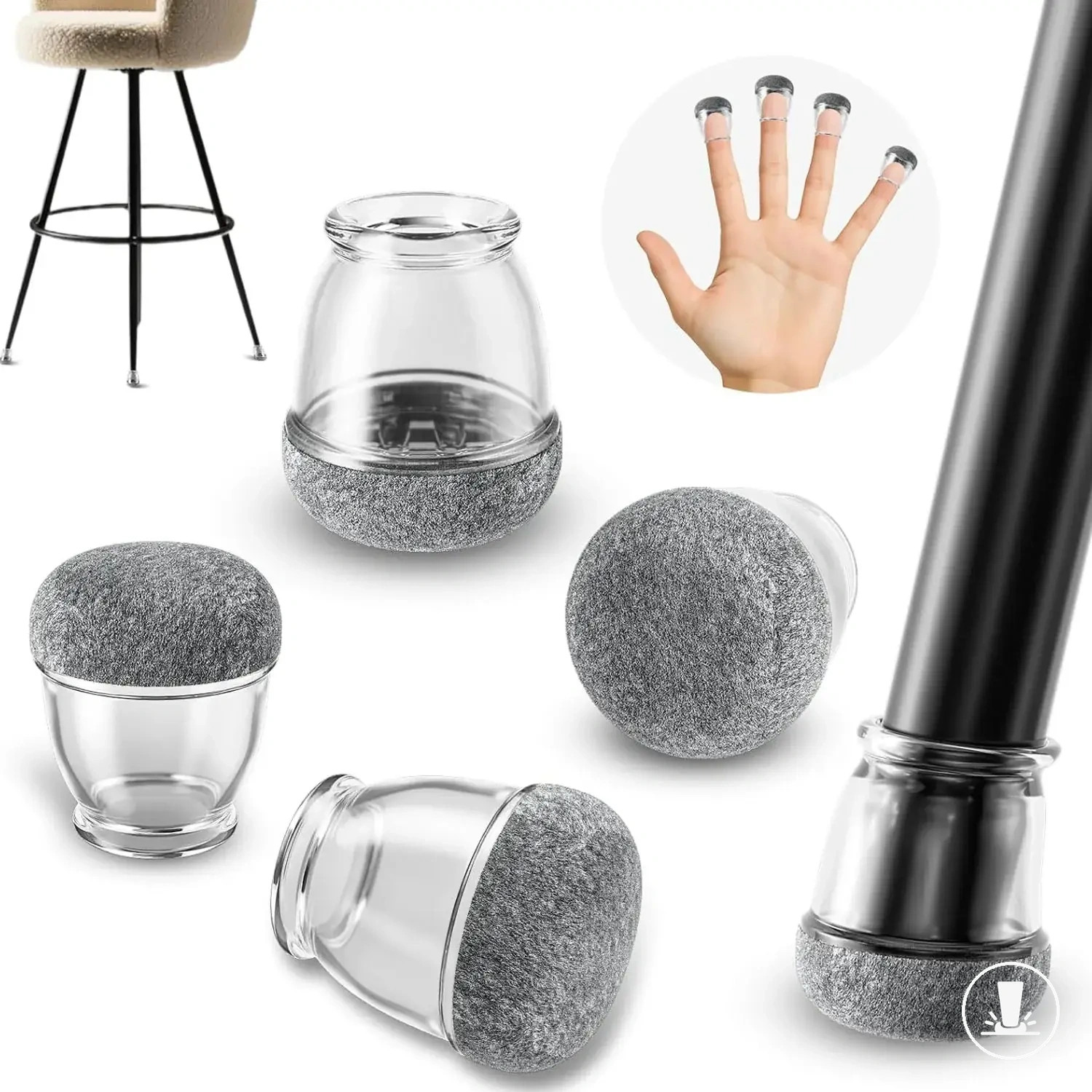
The products below are useful examples for comparing available options. Before buying, check that the compatibility criteria, key features, and product details match your needs.
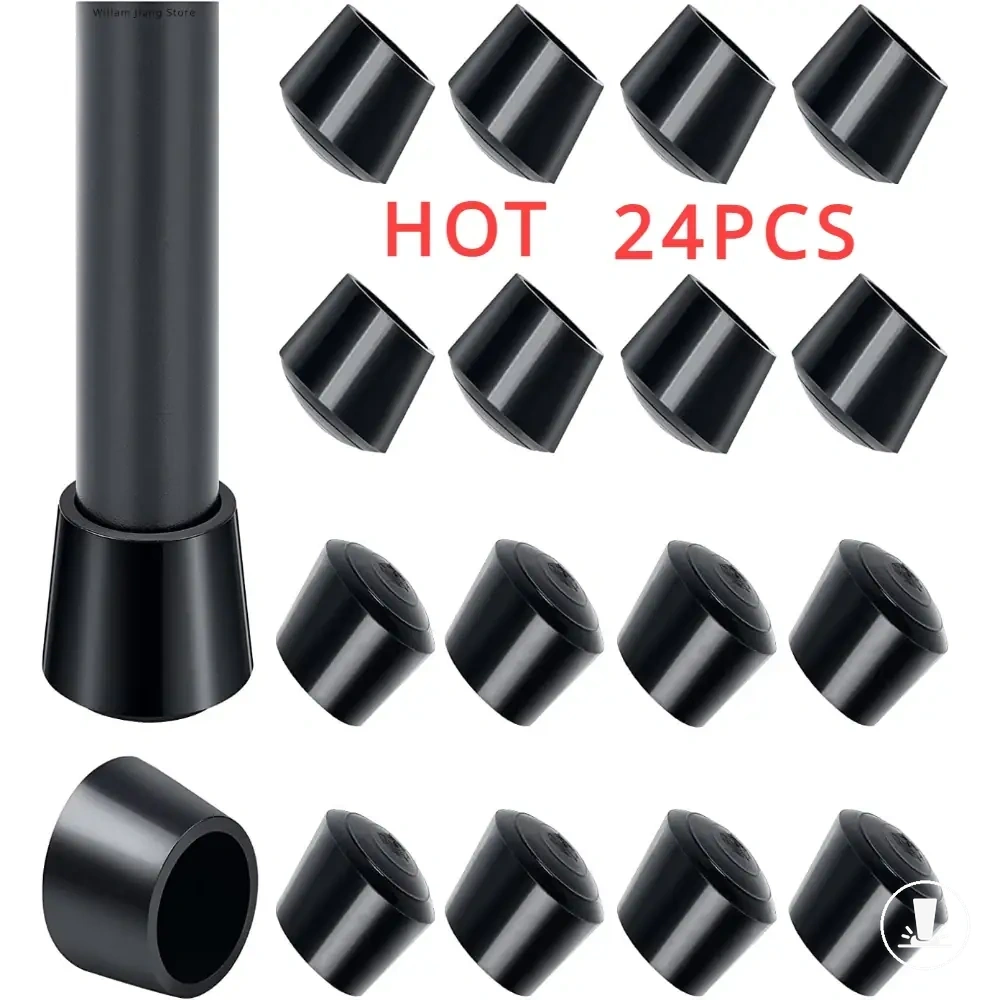
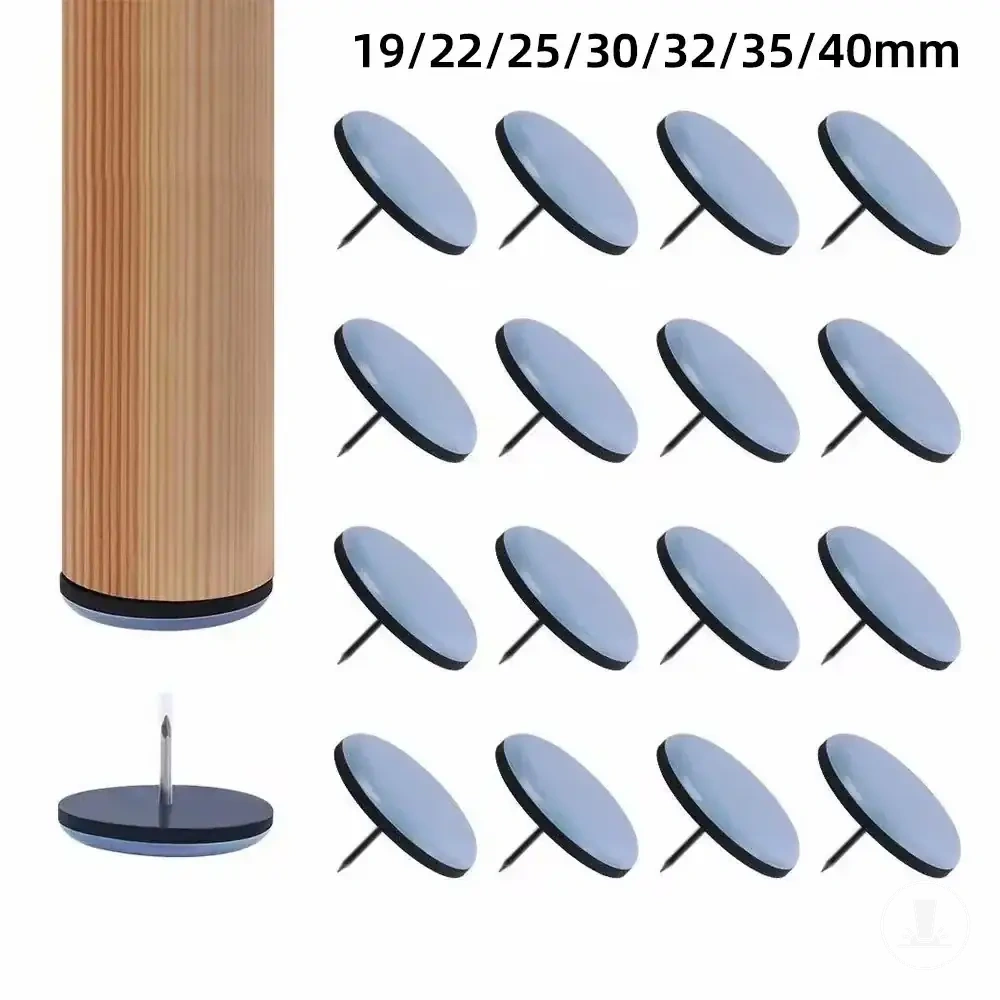
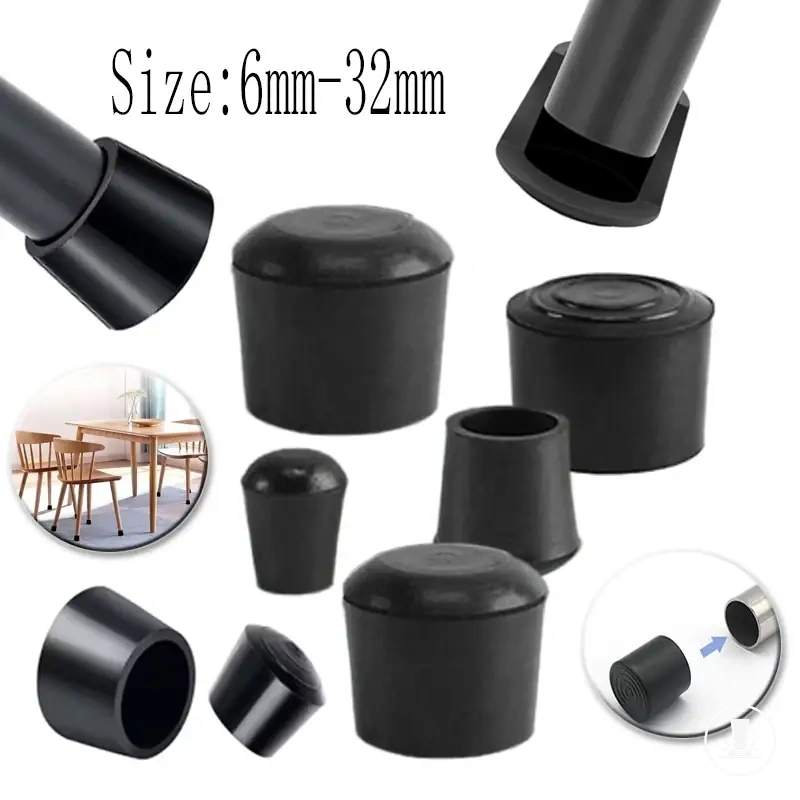
This chart shows the three main groups of final sizing checks to verify fit and reduce the risk of loose, tight, or unstable chair leg floor protector installation.
Common Measuring Mistakes That Lead to Poor Fit
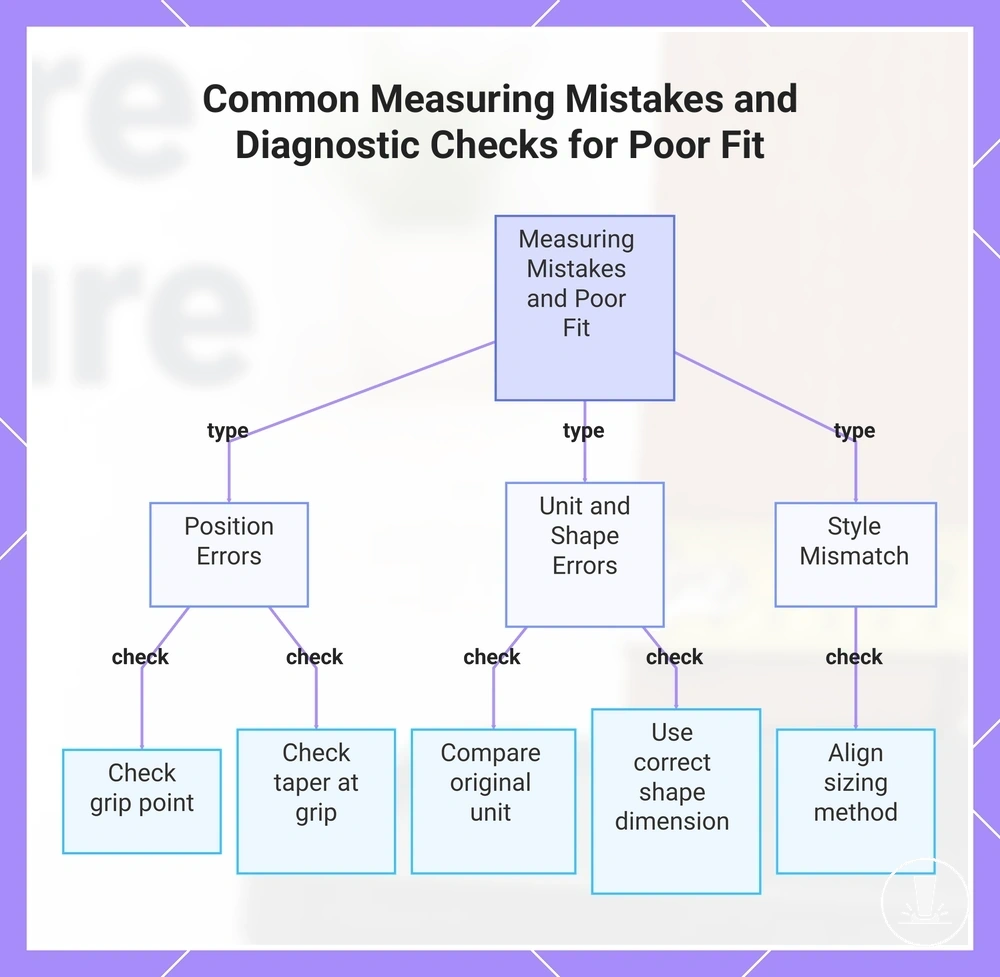
When poor fit happens, measuring mistakes often come from using the wrong measurement point or ignoring the protector's sizing method. These measurement mistakes can lead to a loose protector, tight protector, or unstable fit even when the listed size appears appropriate. Identifying the specific mistake is the first step in diagnosing poor fit.
The diagnostic checklist below connects common sizing errors to likely fit problems. It helps determine whether the cause is measurement-related before looking at other factors.
- Wrong measurement point | Loose fit or incorrect size comparison | Check whether the measurement was taken at the actual contact or grip point.
- Rounded unit | Borderline fit against a listed size range | Check the original value and compare it using the same unit shown in the size listing.
- Ignored taper | Protector movement or inconsistent grip | Check whether the furniture leg changes size at the grip point.
- Confused shape | Incorrect sizing method | Check whether a round, square, or rectangular leg was measured using the correct dimension.
- Mismatched protector style | Poor fit despite matching measurements | Check whether the sizing method matches how the protector contacts the furniture leg.
Remeasure when a wrong measurement point, rounded unit, ignored taper, or confused shape may have affected the recorded value. Reassess protector style when the measurement appears consistent but the sizing method does not align with the intended use. A fit problem should be linked to the most likely measurement cause before other explanations are considered.
If poor fit continues after measurement causes have been checked, the issue may involve attachment, wear, or another factor beyond sizing alone. In that case, why floor protectors fall off may help determine whether the problem extends beyond measurement. This boundary keeps the diagnosis focused on measurement-related causes first.
This chart shows three categories of measurement mistakes that cause poor fit and the specific checks to identify each.